
Rodrigo de Villandrando: Mercenary Power and Influence …
Years: 1433 - 1433
Rodrigo de Villandrando: Mercenary Power and Influence in France (1410–1433)
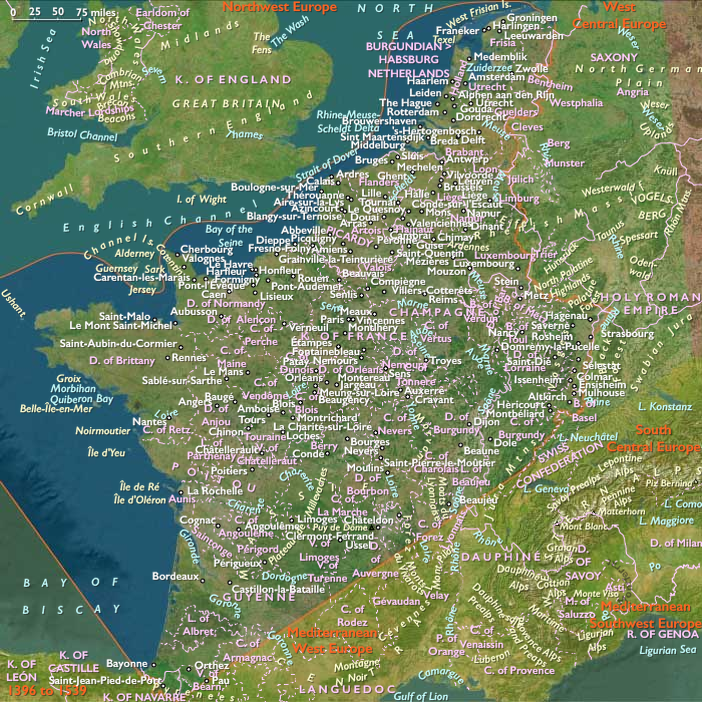
Originally from Biscay, Rodrigo de Villandrando—son of Pedro de Villandrando and Agnes de Corral—became a significant figure in the mercenary conflicts that defined Atlantic West Europe during the turbulent late stages of the Hundred Years' War. Initially admitted into the mercenary company led by Amaury de Séverac around 1410, Rodrigo swiftly rose through the ranks to become captain of the routiers, bands of professional mercenaries employed by seneschals, powerful nobles, and even ecclesiastical authorities throughout northern and western France.
Following the death of his protector, Amaury, in 1427, Rodrigo entered the service of King Charles VII of France, solidifying his position by appointing Juan Salazar as his lieutenant the next year. His early exploits were notorious for violence and brutality, marked by the pillaging of towns such as Treignac, Meymac, and Tulle.
In June 1430, Rodrigo’s forces took part in the Battle of Anthon, fighting with rudimentary yet effective weaponry, including billhooks, sledgehammers, and spades. In the aftermath, he continued aligning himself with Charles VII, notably against Louis II of Chalon-Arlay, Prince of Orange, a prominent vassal of Philip the Good of Burgundy.
Rodrigo's prominence grew rapidly: in 1431, he was rewarded by King John II of Aragon with the county of Ribadeo and bestowed the honorific privilege of dining annually at the king’s table. Despite royal favor, Rodrigo's ruthlessness persisted—demonstrated vividly when he brutally suppressed a peasant rebellion in Saint-Romain-le-Puy, massacring refugees to restore order on behalf of the French crown.
In September 1432, Rodrigo's mercenaries, funded by the influential minister Georges de La Trémoille, successfully defended Les Ponts-de-Cé against the forces of Jean V de Bueil. At the peak of his influence around 1433, Rodrigo commanded roughly ten thousand mercenaries—mostly English fighters known as Rodrigoys—who terrorized the Médoc countryside. His men habitually extorted protection money, ransomed local nobles, and systematically plundered towns and bastides, significantly destabilizing the region.
Demonstrating both military prowess and strategic cunning, Rodrigo seized the castle of Lagarde Viaur in 1433, extracting an exorbitant ransom for its return. That same year, further consolidating his status, he married Margaret, half-sister of Charles I, Duke of Bourbon, and illegitimate daughter of the imprisoned Duke John I. Leveraging familial connections, he acquired castles at Ussel and ...
Locations
People
- Charles I, Duke of Bourbon
- Charles VII of France
- Georges de la Trémoille
- John I of Bourbon
- John II of Castile
- Philip the Good
- Rodrigo de Villandrando
Groups
Topics
Commodoties
Subjects
Regions

Subregions
Years: 1433 - 1433
Locations
People
- Charles I, Duke of Bourbon
- Charles VII of France
- Georges de la Trémoille
- John I of Bourbon
- John II of Castile
- Philip the Good
- Rodrigo de Villandrando
Groups
Topics
Commodoties
Subjects
Regions
Subregions