
Robert Koch is able to discover the …
Years: 1882 - 1882
Robert Koch is able to discover the bacterium causing tuberculosis (Mycobacterium tuberculosis) in 1882 (he announces the discovery on March 24).
Koch's unsuccessful attempt to develop a cure will give rise to the tuberculin scandal in 1890.
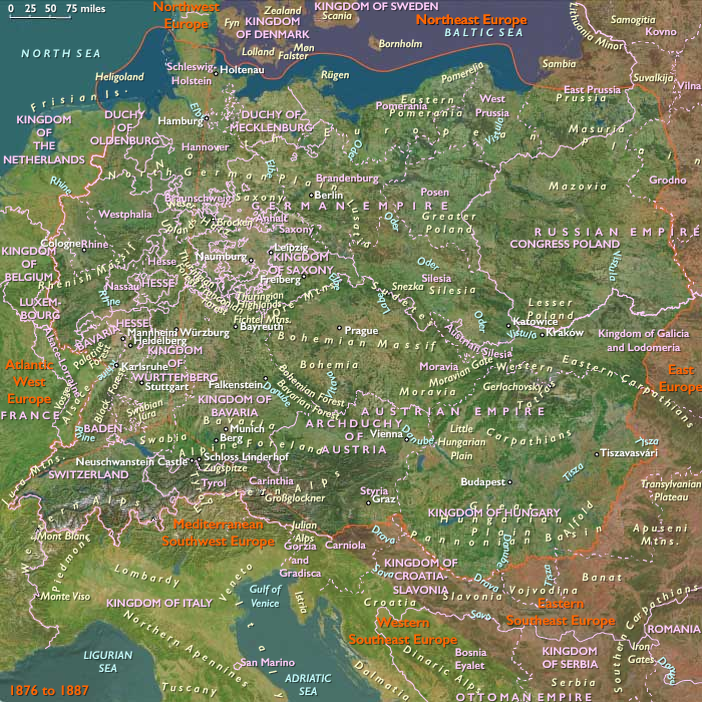
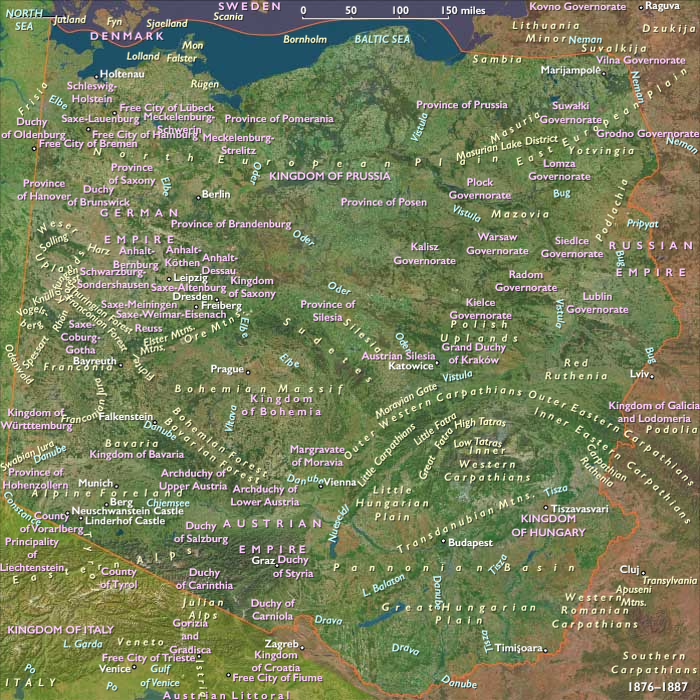
Koch was born in Clausthal in the Harz Mountains, then part of Kingdom of Hanover, as the son of a mining official.
He had studied medicine under Friedrich Gustav Jakob Henle at the University of Göttingen and graduated in 1866, then served in the Franco-Prussian War and later became district medical officer in Wollstein (Wolsztyn), Prussian Poland.
Working with very limited resources, he becomes one of the founders of bacteriology, the other major figure being Louis Pasteur.
After Casimir Davaine demonstrated the direct transmission of the anthrax bacillus between cows, Koch had studied anthrax more closely.
He has invented methods to purify the bacillus from blood samples and grown pure cultures.
He has found that, while it cannot survive outside a host for long, anthrax builds persisting endospores that can last a long time.
These endospores, embedded in soil, are the cause of unexplained "spontaneous" outbreaks of anthrax.
Koch had published his findings in 1876, and had been rewarded with a job at the Imperial Health Office in Berlin in 1880.
He had urged the sterilization of surgical instruments using heat in 1881.
In Berlin, he has improved the methods he had used in Wollstein, including staining and purification techniques and bacterial growth media, including agar plates (thanks to the advice of Angelina and Walther Hesse) and the Petri dish (named after its inventor, his assistant Julius Richard Petri).
These devices are still used today.
Locations
People
Groups
Commodoties
Subjects
Regions
Subregions
Years: 1882 - 1882
Locations
People
Groups
Commodoties
Subjects
Regions
Subregions