
Robert Holmes had first appeared in 1643 …
Years: 1661 - 1661
May
Robert Holmes had first appeared in 1643 on the Cavalier side of the Civil War, in Prince Maurice's regiment of horse as a cornet in the troop of Captain Richard Atkyns.
Thus began a lifelong friendship with Maurice's brother, Prince Rupert, whom he accompanied onto the battlefields of the continent once the Royalists had been defeated.
When in 1648 a part of the fleet went over to the exiled king, Holmes (now an army captain), following Maurice and Rupert, had come into his first contact with the navy, participating in the epic cruise of the Royalist fleet of 1649 – 1652 to Kinsale, the Mediterranean, West Africa (where, between the Gambia and Cape Verde, he was temporarily captured by the natives), and the West Indies.
The drain of manpower, through storm, action, and mutiny, was so large that at the end of the cruise, Holmes had advanced to commanding the four prizes the force brought back to France.
With Rupert returning to the exiled court, it had fallen to Holmes to see the fleet paid off.
Subsequently, Cromwell's intelligence service reported Holmes having obtained a privateer commission from the King of Spain (Thurloe State Papers VII, p. 248, 18 July 1658.
N.S.
), although the total absence of other evidence makes his actually setting out as a privateer improbable.
He may, like other Royalist, and notably Irish, officers, have taken up service with the Imperial army.
Immediately before the Restoration, Holmes had acted as a courier between Charles II and Edward Montagu, by whose commission he had obtained his first command in the navy, the Medway guardship Bramble.
Upon Charles II's return to England, Holmes had been rewarded for his services with the captaincy of Sandown Castle, Isle of Wight together with a new commission (for another guardship), this time from the Duke of York himself, who had assumed the position of Lord High Admiral.
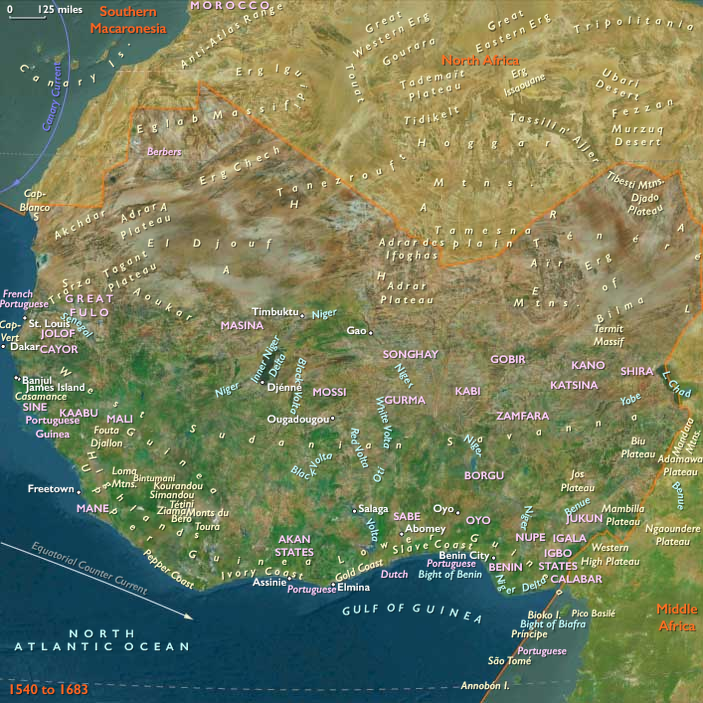
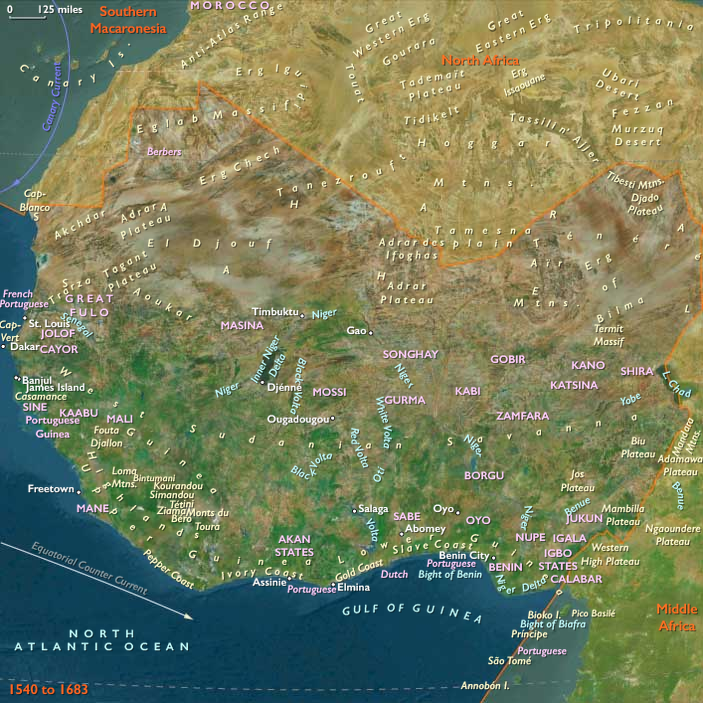
Rupert’s initial report from the Gambia of a "Mountain of Gold" for the taking prompted the Royal African Company, whose director is the Duke of York (and whose paperwork is carried out by William Coventry) to launch an expedition to the Guinea Coast, at this time mostly in Dutch hands.
Holmes is appointed captain of the flagship, Henrietta, and a squadron of four other of the King's ships: Sophia, Amity, Griffin, and Kinsale.
His orders (drafted by Coventry) are to assist the company's factors in every way conceivable and to construct a fort.
Privately, he is instructed to gather intelligence as to the expected "Mountain of Gold".
Touching at Goree, Holmes bluntly informs the Dutch governor that the King of England claims the exclusive right of trade and navigation between Cape Verde and the Cape of Good Hope (which the King and Treasury Secretary Sir George Downing are to disavow after protests from the States General and retaliatory action against English shipping).
Locations
People
Groups
- Courland and Semigallia, Duchy of
- Netherlands, United Provinces of the (Dutch Republic)
- England, (Stewart, Restored) Kingdom of
- Royal Adventurers, Company of the
Topics
- Interaction with Subsaharan Africa, Early European
- Servitude, slavery, and abolitionism
- Piracy, Golden Age of
- English Restoration
Commodoties
Subjects
Regions
Subregions
Years: 1661 - 1661
May
Locations
People
Groups
- Courland and Semigallia, Duchy of
- Netherlands, United Provinces of the (Dutch Republic)
- England, (Stewart, Restored) Kingdom of
- Royal Adventurers, Company of the
Topics
- Interaction with Subsaharan Africa, Early European
- Servitude, slavery, and abolitionism
- Piracy, Golden Age of
- English Restoration
Commodoties
Subjects
Regions
Subregions