
Filters:
Richard and Philip II’s Final Campaign Against …
Years: 1189 - 1189
Richard and Philip II’s Final Campaign Against Henry II (1189 CE)
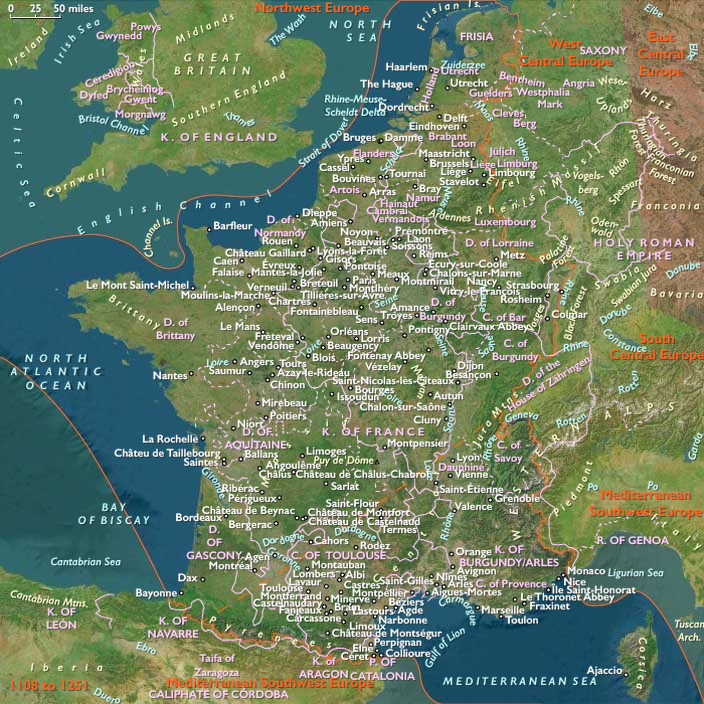
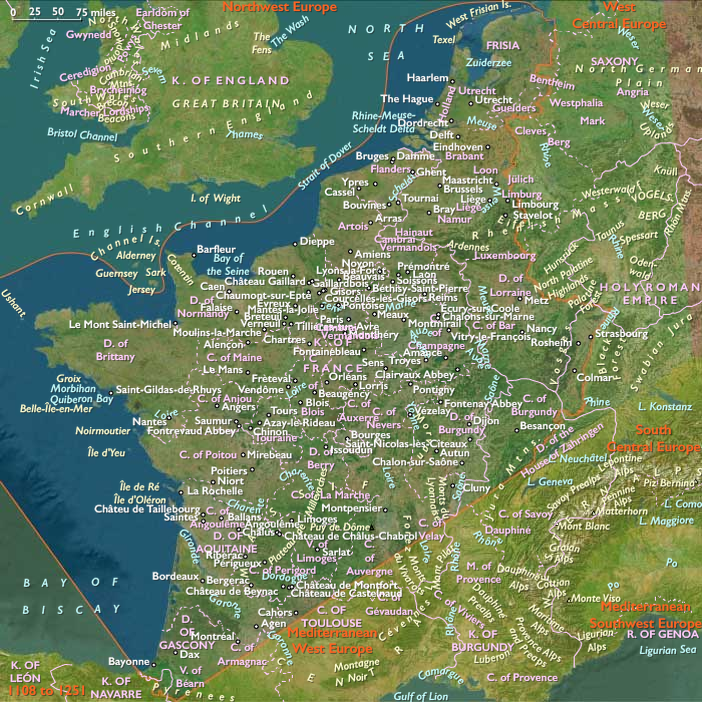
By 1189, the conflict between Henry II of England and his son Richard, Duke of Aquitaine, had reached its breaking point. After years of tensions and betrayals, Richard openly joined forces with Philip II of France, launching a final campaign to bring his father to submission.
Locations
People
Groups
- Anjou, County of
- Normandy, Duchy of
- Brittanny, Duchy of
- Aquitaine, (Angevin) Duchy of
- France, (Capetian) Kingdom of
- Christians, Roman Catholic
- England, (Plantagenet, Angevin) Kingdom of
- Angevin Empire
Topics
Commodoties
Subjects
Regions
Subregions
Related Events
Showing 2 events out of 2 total
Years: 1189 - 1189
Locations
People
Groups
- Anjou, County of
- Normandy, Duchy of
- Brittanny, Duchy of
- Aquitaine, (Angevin) Duchy of
- France, (Capetian) Kingdom of
- Christians, Roman Catholic
- England, (Plantagenet, Angevin) Kingdom of
- Angevin Empire
Topics
Commodoties
Subjects
Regions
Subregions