
Filters:
The Fatal Wounding of Richard I at …
Years: 1199 - 1199
March
The Fatal Wounding of Richard I at Châlus-Chabrol (March 25, 1199)
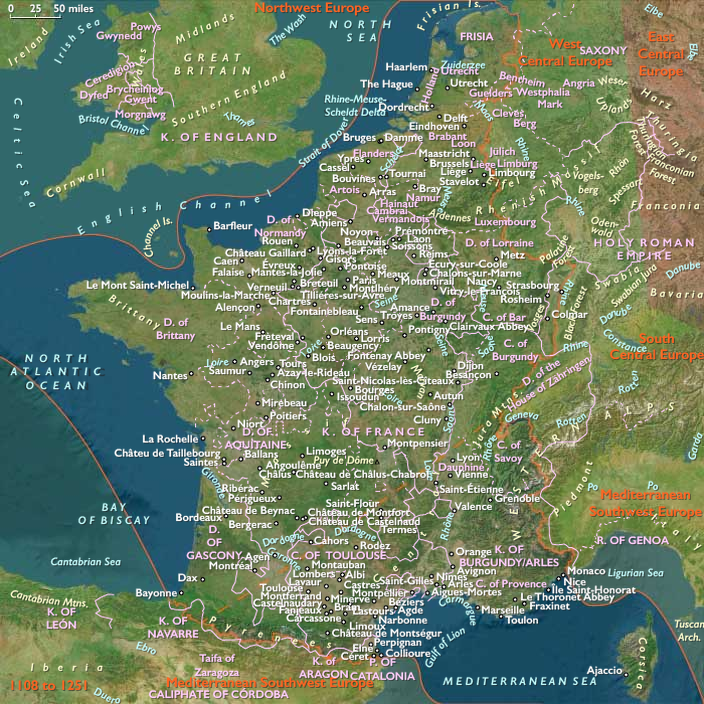
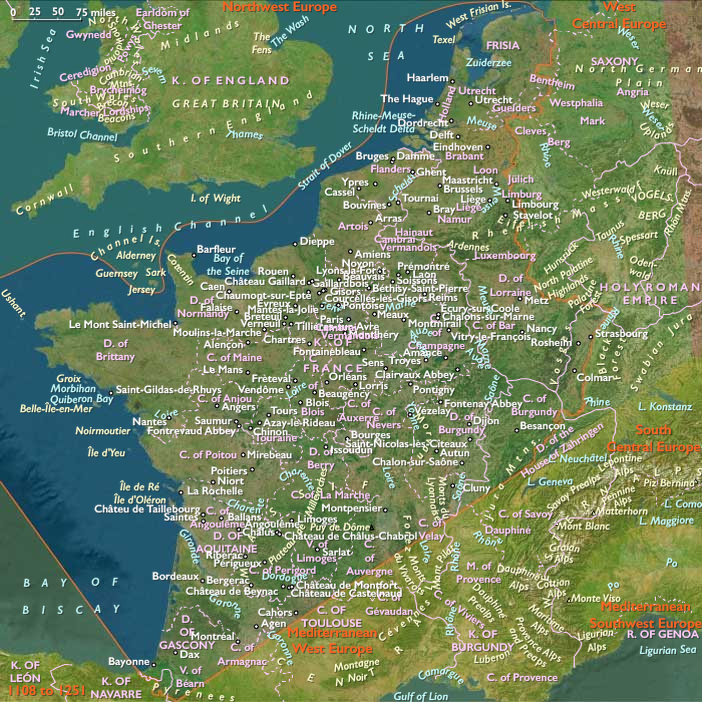
In March 1199, Richard I of England was in the Limousin, engaged in suppressing a revolt led by Viscount Aimar V of Limoges. Despite it being Lent, Richard devastated Aimar’s lands with fire and sword, as recorded by Ralph of Coggeshall (Chronicon Anglicanum, p. 94). His campaign led him to besiege the small, lightly defended castle of Châlus-Chabrol, where he suffered the wound that would ultimately claim his life.
The Siege of Châlus-Chabrol and the Crossbowman's Shot
- Some chroniclers claim that Richard attacked Châlus-Chabrol because a local peasant had uncovered a treasure hoard of Roman gold, which Richard demanded as feudal overlord.
- On the evening of March 25, 1199, Richard was walking around the castle perimeter, unarmored, personally inspecting the work of his sappers.
- Although crossbow bolts were being fired sporadically from the castle walls, they were largely ignored.
- Richard was particularly amused by one defender, a man who was using a frying pan as a shield while shooting his crossbow at the besiegers.
- As Richard applauded the man’s defiance, another crossbowman struck him in the left shoulder, near the neck.
- Retreating to his tent, Richard attempted to pull the bolt out himself but failed.
- A surgeon later removed it carelessly, mangling the King’s arm in the process.
- The wound quickly became infected and gangrenous.
The Capture and Pardon of the Crossbowman
- Knowing he was dying, Richard ordered the crossbowman to be brought before him.
- The shooter’s identity is uncertain, with chroniclers referring to him as Pierre (or Peter) Basile, John Sabroz, Dudo, or Bertrand de Gurdon (from Gourdon).
- Some accounts claim the shooter was a boy, who declared that Richard had killed his father and two brothers, and that he had shot the King in an act of vengeance.
- Expecting execution, the young man was shocked when Richard pardoned him, reportedly saying:
"Live on, and by my bounty behold the light of day."
- Richard ordered the boy to be released and given one hundred shillings.
Richard’s Final Acts and Succession
- As death approached, Richard settled his affairs:
- He bequeathed all his territories to his brother John.
- His jewels were left to his nephew, Otto IV of Germany.
- Despite his act of mercy, after Richard’s death, Mercadier, his loyal captain, flouted the King’s order and had the crossbowman flayed alive and hanged.
Legacy of Richard’s Death
- Richard died on April 6, 1199, at the age of 41, at Châlus-Chabrol.
- His death caused a succession crisis, as John faced rival claims from Arthur of Brittany.
- The Capetians under Philip II took advantage of the turmoil, accelerating the collapse of Angevin control in France.
- Richard’s death at the hands of a lowly crossbowman was ironic, given his legendary military career and battlefield prowess.
The death of Richard the Lionheart marked the end of an era, ushering in a period of instability that would ultimately favor the Capetian monarchy over the Angevins.
Locations
People
- Baldwin I of Constantinople
- John of England
- Otto IV of Brunswick
- Philip II of France
- Richard I of England
Groups
- Navarre, Kingdom of
- Flanders, County of
- Holy Roman Empire
- France, (Capetian) Kingdom of
- Welf, House of
- Angevin Empire
- England, (Plantagenet, Angevin) Kingdom of
Topics
Commodoties
Subjects
Regions
Subregions
Years: 1199 - 1199
March
Locations
People
- Baldwin I of Constantinople
- John of England
- Otto IV of Brunswick
- Philip II of France
- Richard I of England
Groups
- Navarre, Kingdom of
- Flanders, County of
- Holy Roman Empire
- France, (Capetian) Kingdom of
- Welf, House of
- Angevin Empire
- England, (Plantagenet, Angevin) Kingdom of
Topics
Commodoties
Subjects
Regions
Subregions