
Richard I of Normandy: The Fearless Duke …
Years: 996 - 996
Richard I of Normandy: The Fearless Duke and the Feudalization of Normandy (942–996)
Richard I, known as "Richard the Fearless" (Richard Sans Peur), ruled as Duke of Normandy from 942 until his death on November 20, 996. He is regarded as the first true Duke of Normandy, as he successfully consolidated Norman identity, governance, and military power, transforming the region into a strong feudal state.
Early Life and Education
- Born in 933 in Fécamp, Richard was the son of William Longsword, the second ruler of Normandy, and a Norman mother of uncertain identity.
- He was bilingual, having been educated at Bayeux, where he mastered both Old Norse and Old French, reflecting Normandy’s transition from a Scandinavian colony to a Frankish duchy.
- At the age of ten, he became Duke after his father’s assassination in 942, facing challenges from Louis IV of France and Hugh the Great, but ultimately securing his position through diplomacy and military prowess.
Marriage and the Rise of the House of Crepon
- In 960, Richard married Emma, daughter of Hugh "The Great" of France, but she died childless eight years later.
- According to Robert of Torigni, Richard, while hunting, became enamored of a forester’s wife, Seinfreda, who instead encouraged him to court her unmarried sister, Gunnor.
- Gunnor, of Danish descent, became Richard’s mistress, and later his wife, legitimizing their twelve children.
- The Crepon family rose to prominence under Richard’s rule, with Herefast de Crepon, Gunnor’s brother, playing a significant role in Norman administration and possibly involved in a controversial heresy trial.
Normandy’s Transformation Under Richard I
Richard I oversaw the full integration of Normandy into Frankish feudal society, achieving several key reforms:
- Gallicization and Christianization: By the end of his reign, Normandy had fully adopted Frankish customs, language, and religion, shedding its pagan Norse identity.
- Introduction of Feudalism: He was instrumental in introducing the feudal system, turning Normandy into one of the most thoroughly feudalized states in Europe.
- Military Reorganization: He restructured the Norman army, placing heavy emphasis on cavalry, which would later play a decisive role in William the Conqueror’s campaigns.
- Loyalty to the Danes: Despite his Frankish alliances, Richard remained sympathetic to his Danish subjects, ensuring strong trade and cultural connections with Scandinavia.
Richard as Guardian of Young Hugh Capet
- After the death of Hugh the Great in 956, Richard became guardian of young Hugh, the future Hugh Capet, fostering ties that would later aid the Capetian rise to power.
Death and Succession
Richard I died of natural causes on November 20, 996, in his birthplace of Fécamp, at the age of sixty-three. His eldest son, Richard II ("Richard the Good"), succeeded him as Duke, continuing his father’s policies and strengthening Normandy’s political and military dominance.
Legacy
Richard I’s rule cemented Normandy’s stability, ensuring that it would remain a strong feudal state and an emerging powerhouse in Western Europe. His military and administrative reforms laid the groundwork for Norman expansion, culminating in the Norman Conquest of England in 1066.
Locations
People
Groups
- Christianity, Chalcedonian
- Danes (Scandinavians)
- Norse
- Normandy, Duchy of
- Normans
- French people (Latins)
- France, (Capetian) Kingdom of
Commodoties
Subjects
Regions
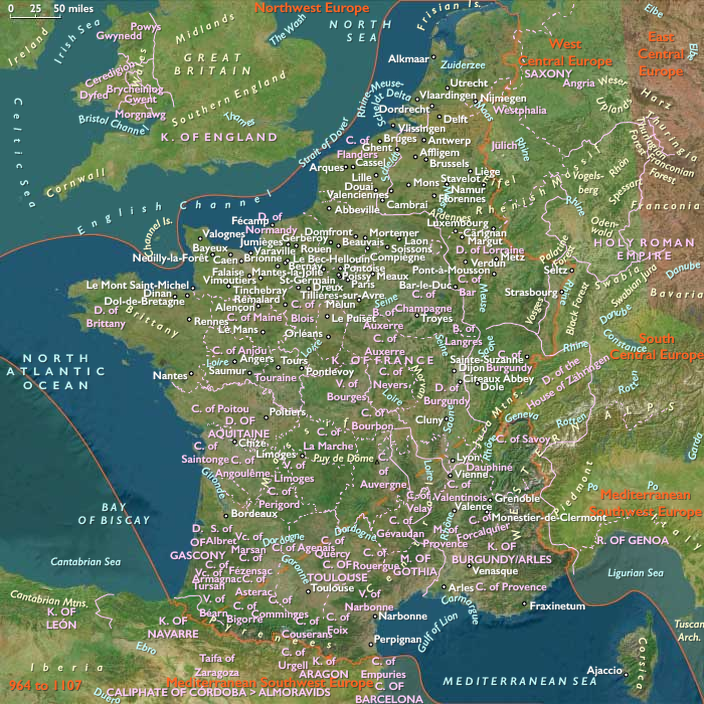
Subregions
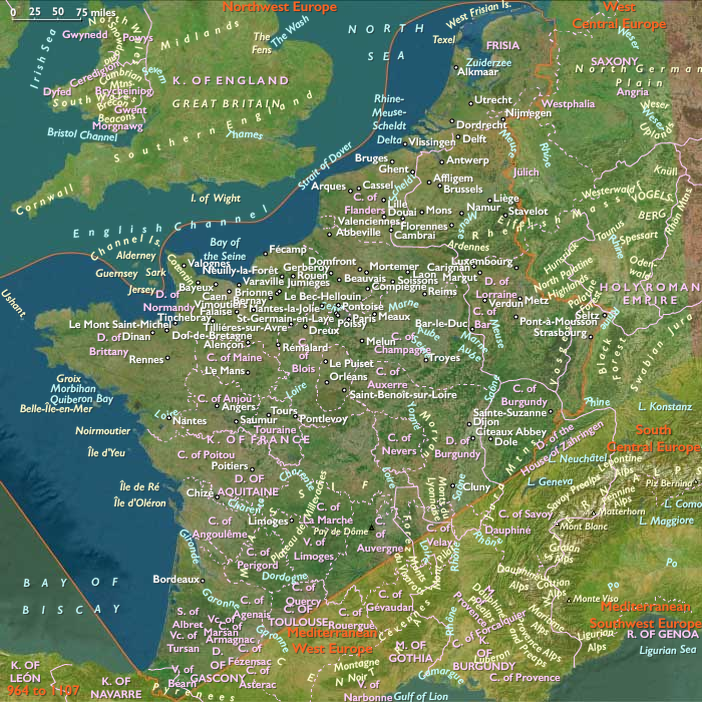
Years: 996 - 996
Locations
People
Groups
- Christianity, Chalcedonian
- Danes (Scandinavians)
- Norse
- Normandy, Duchy of
- Normans
- French people (Latins)
- France, (Capetian) Kingdom of
Commodoties
Subjects
Regions
Subregions