
Filters:
Richard extracts a huge bounty from the …
Years: 1108 - 1251
Richard extracts a huge bounty from the Cypriots when he defeats Komnenos.
He then appoints officials to administer Cyprus, leaves a small garrison to enforce his rule, and sails on to the Holy Land.
The Cypriots revolt against their new overlords a short time later.
The revolt is quickly put down, but Richard decides that the island is too much of a burden, so he sells it to the Knights Templar, a Frankish military order whose grand master is a member of Richard's coterie.
Their oppressive, tyrannical rule makes that of the avaricious Komnenos seem mild in comparison.
The people again rebel and suffer a massacre, but their persistence leads the Templars, convinced that they will have no peace on Cyprus, to depart.
Control of the island is turned over to Guy de Lusignan, the controversial ruler of the Latin kingdom of Jerusalem, who evidently agrees to pay Richard the amount still owed him by the Templars.
More than eight hundred years of Roman rule ends as the Frankish Lusignan dynasty establishes a Western feudal system on Cyprus.
Guy de Lusignan lives only two years after assuming control in 1192, but the dynasty that he founds will rule Cyprus as an independent kingdom for more than three centuries.
In religious matters, Lusignan is tolerant of the Cypriot adherence to Orthodoxy, but his brother Amaury, who succeeds him, shows no such liberality.
The stage is hence set for a protracted struggle, which dominates the first half of the Lusignan period.
At issue is the paramountcy of the Roman Catholic Church over the Orthodox church.
Latin sees are established at Famagusta, Limassol, Nicosia, and Paphos; land is appropriated for churches; and authority to collect tithes is granted to the Latins.
He then appoints officials to administer Cyprus, leaves a small garrison to enforce his rule, and sails on to the Holy Land.
The Cypriots revolt against their new overlords a short time later.
The revolt is quickly put down, but Richard decides that the island is too much of a burden, so he sells it to the Knights Templar, a Frankish military order whose grand master is a member of Richard's coterie.
Their oppressive, tyrannical rule makes that of the avaricious Komnenos seem mild in comparison.
The people again rebel and suffer a massacre, but their persistence leads the Templars, convinced that they will have no peace on Cyprus, to depart.
Control of the island is turned over to Guy de Lusignan, the controversial ruler of the Latin kingdom of Jerusalem, who evidently agrees to pay Richard the amount still owed him by the Templars.
More than eight hundred years of Roman rule ends as the Frankish Lusignan dynasty establishes a Western feudal system on Cyprus.
Guy de Lusignan lives only two years after assuming control in 1192, but the dynasty that he founds will rule Cyprus as an independent kingdom for more than three centuries.
In religious matters, Lusignan is tolerant of the Cypriot adherence to Orthodoxy, but his brother Amaury, who succeeds him, shows no such liberality.
The stage is hence set for a protracted struggle, which dominates the first half of the Lusignan period.
At issue is the paramountcy of the Roman Catholic Church over the Orthodox church.
Latin sees are established at Famagusta, Limassol, Nicosia, and Paphos; land is appropriated for churches; and authority to collect tithes is granted to the Latins.
Locations
People
- Aimery of Cyprus
- Berengaria of Navarre
- Guy of Lusignan
- Isaac Komnenos of Cyprus
- Richard I of England
- Saladin
Groups
- Abbasid Caliphate (Baghdad)
- Cyprus (theme)
- Cyprus, East Roman (Byzantine)
- Jerusalem, Latin Kingdom of
- Templar, Knights (Poor Knights of Christ and of the Temple of Solomon)
- Cyprus, Kingdom of
Topics
Commodoties
Subjects
Regions
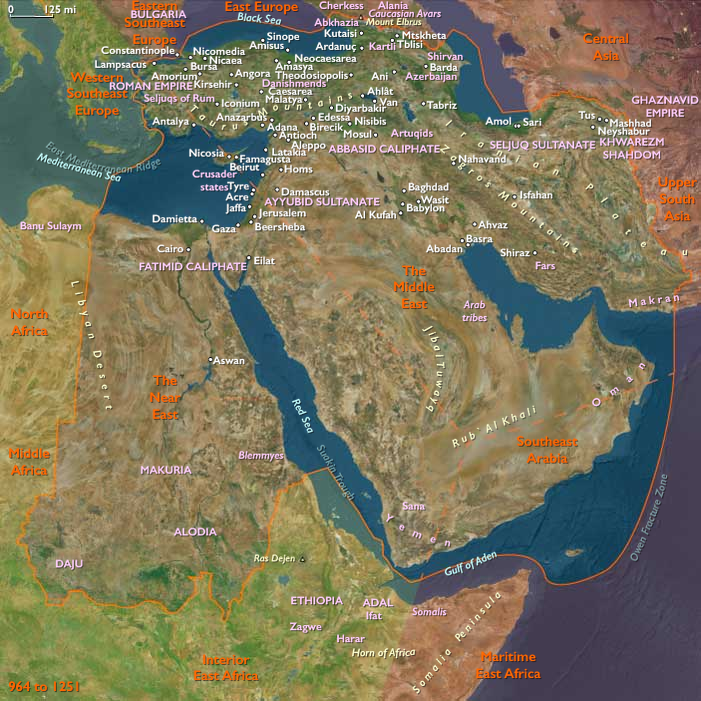
Subregions
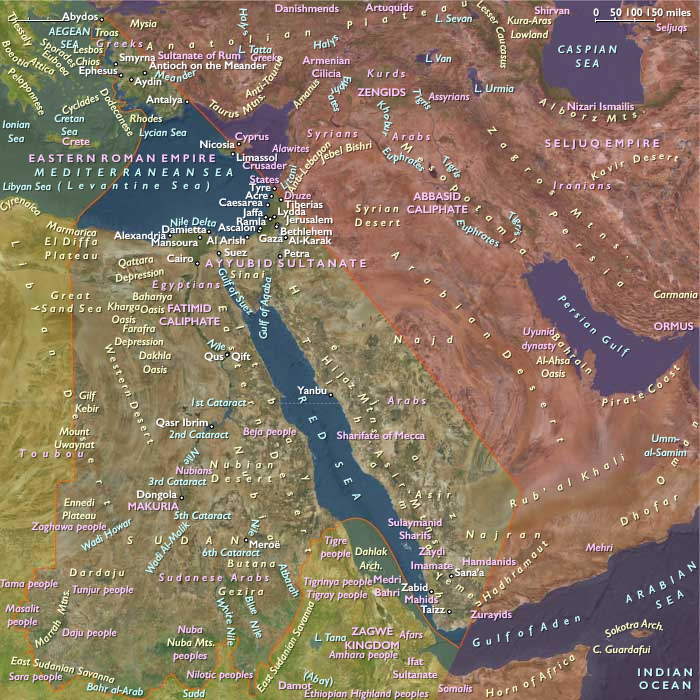
Years: 1108 - 1251
Locations
People
- Aimery of Cyprus
- Berengaria of Navarre
- Guy of Lusignan
- Isaac Komnenos of Cyprus
- Richard I of England
- Saladin
Groups
- Abbasid Caliphate (Baghdad)
- Cyprus (theme)
- Cyprus, East Roman (Byzantine)
- Jerusalem, Latin Kingdom of
- Templar, Knights (Poor Knights of Christ and of the Temple of Solomon)
- Cyprus, Kingdom of
Topics
Commodoties
Subjects
Regions
Subregions