
Filters:
The leaders of the Muslim community after …
Years: 532 - 675
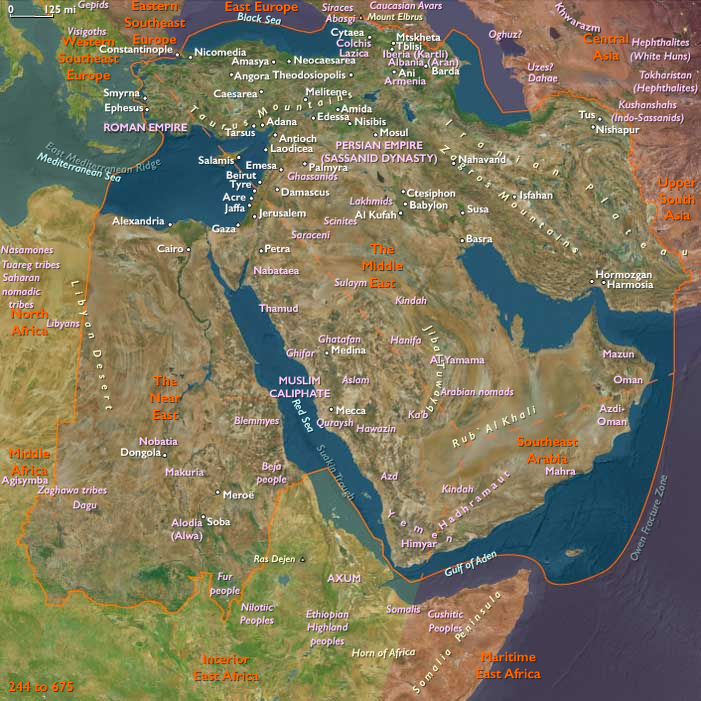
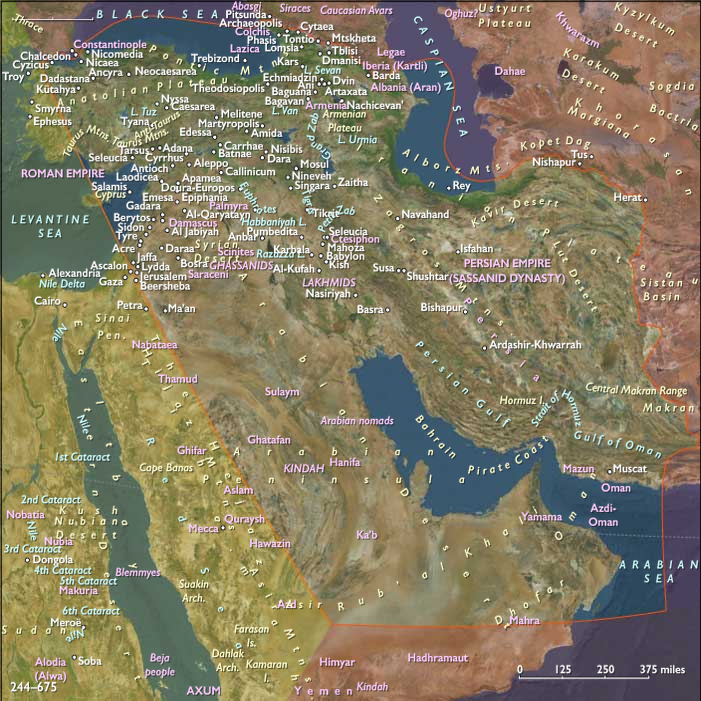
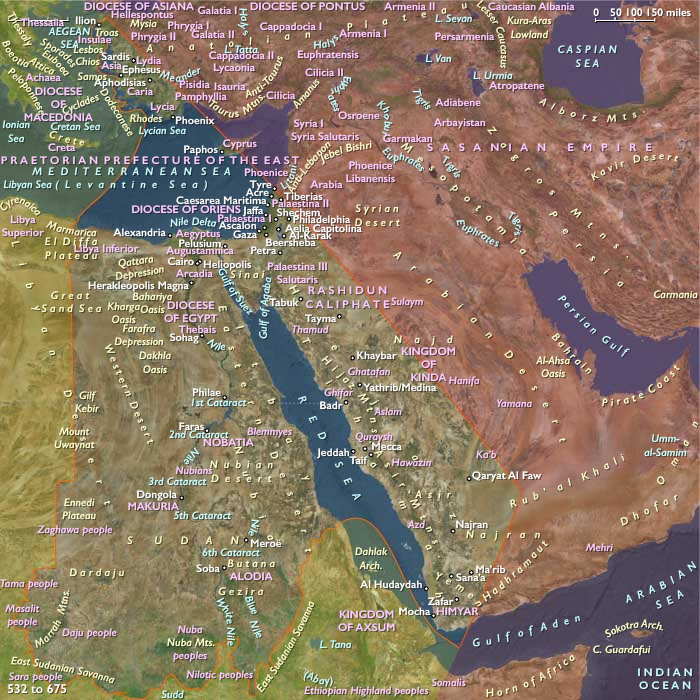
The leaders of the Muslim community after Muhammad's death choose by consensus Abu Bakr, the Prophet's father-in-law and one of his earliest followers, to succeed him.
At this time, some persons favor Ali ibn Abu Talib, Muhammad's cousin and the husband of his daughter, Fatima, but Ali and his supporters (the Shiat Ali, or Party of Ali) eventually recognize the community's choice.
The next two caliphs (successors)—Umar, who succeeds in 634, and Uthman, who takes power in 644—enjoy the recognition of the entire community.
When Ali finally succeeds to the caliphate in 656, Muawiyah, governor of Syria, rebels in the name of his murdered kinsman, Uthman.
After the ensuing civil war, Ali moves his capital to Iraq, where he is murdered shortly thereafter.
Ali's death ends the last of the so-called four orthodox caliphs and the period in which the entire community of Islam recognizes a single leader.
Muawiyah proclaims himself caliph from Damascus.
The Shiat Ali refuses to recognize him or his line, the Umayyad caliphs, and withdraws in the great schism of Islam to establish the dissident sect, known as the Shia, who support the claims of Ali's line to the caliphate based on descent from the Prophet.
The larger faction, the Sunnis, adhere to the position that the caliph must be elected, and over the centuries they will represented themselves as the orthodox branch.
At this time, some persons favor Ali ibn Abu Talib, Muhammad's cousin and the husband of his daughter, Fatima, but Ali and his supporters (the Shiat Ali, or Party of Ali) eventually recognize the community's choice.
The next two caliphs (successors)—Umar, who succeeds in 634, and Uthman, who takes power in 644—enjoy the recognition of the entire community.
When Ali finally succeeds to the caliphate in 656, Muawiyah, governor of Syria, rebels in the name of his murdered kinsman, Uthman.
After the ensuing civil war, Ali moves his capital to Iraq, where he is murdered shortly thereafter.
Ali's death ends the last of the so-called four orthodox caliphs and the period in which the entire community of Islam recognizes a single leader.
Muawiyah proclaims himself caliph from Damascus.
The Shiat Ali refuses to recognize him or his line, the Umayyad caliphs, and withdraws in the great schism of Islam to establish the dissident sect, known as the Shia, who support the claims of Ali's line to the caliphate based on descent from the Prophet.
The larger faction, the Sunnis, adhere to the position that the caliph must be elected, and over the centuries they will represented themselves as the orthodox branch.
Locations
People
Groups
Topics
Subjects
Regions
Subregions
Years: 532 - 675
Locations
People
Groups
Topics
Subjects
Regions
Subregions