
Relations between the kingdom of Makuria and …
Years: 652 - 652
Relations between the kingdom of Makuria and Rashidun Egypt had gotten off to a rocky start in 642 with the First Battle of Dongola.
After their defeat, the Arabs had withdrawn from Nubia and by 645 something of a peace had been established.
Makuria did something to violate the truce, according to the fourteenth-century Arab-Egyptian historian al-Maqrizi.
It is now that Abdullah Ibn Saad, the successor of the first governor of Arab Egypt, invades Makuria in an attempt to bring the Makurians to heel.
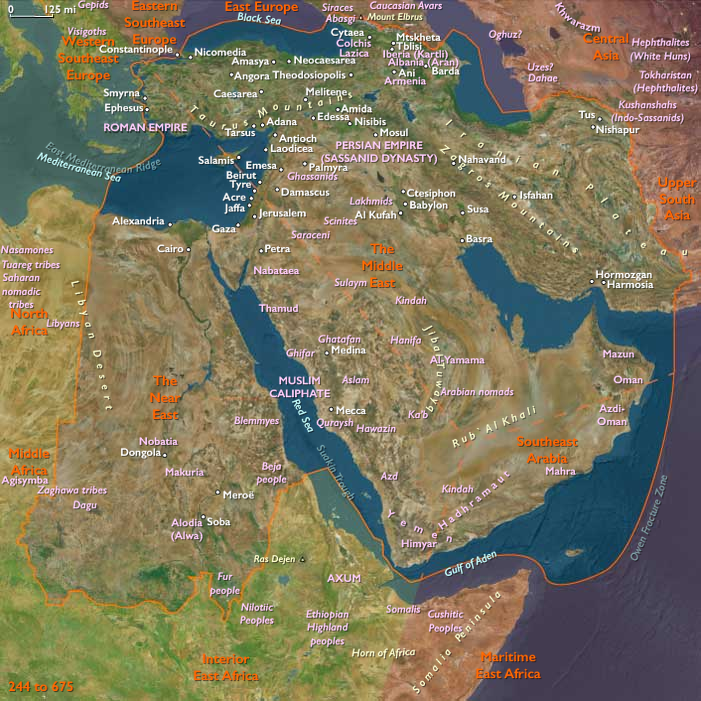
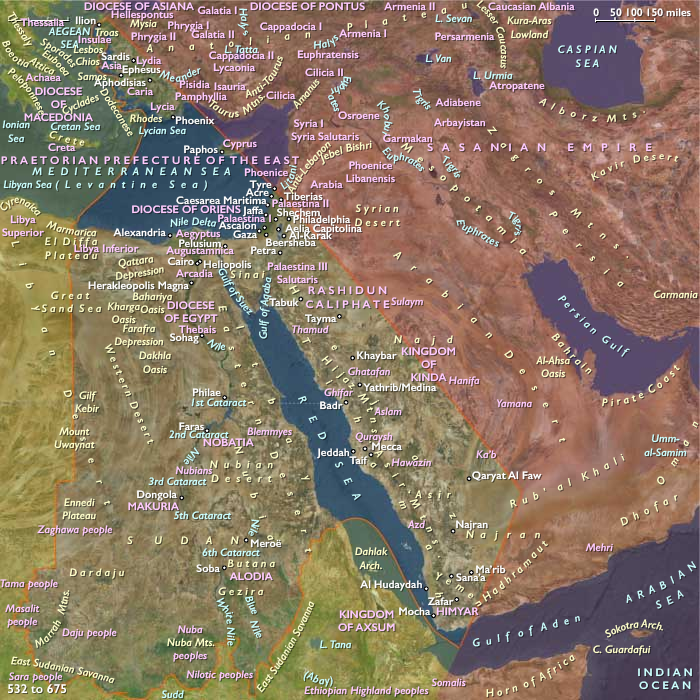
Northern and central Nubia at this time are united under the Makurian king Qalidurut.
Abdullah in 651 marches with a force of five thousand men, equipped with a catapult, to the Makurian capital of Dongola.
He then lays siege to the city, putting his cavalry in the precarious situation of storming a walled city defended by the infamous Nubian archers.
The town's cathedral during the battle is damaged by catapult fire.
The casualties incurred by Abdullah's forces are heavy, particularly to his cavalry, and Qalidurit does not sue for peace.
In the end, Abdullah calls off the siege and negotiates the baqt, one of the most famous documents in medieval history.
A negotiated peace that will last for six centuries, the baqt sets up trade relations between Muslim Egypt and Christian Nubia.
It involves the exchange of wheat, barley, wine, horses and linen from Egypt for three hundred and sixty slaves per year from Nubia.
This is an arrangement greatly in Nubia's favor.
The baqt is without precedent in the early history of Islam.
Also new to the paradigm of relations between Mulims and non-Muslims is Nubia's status as a land free from conquest.
Early Muslim thought divides the world into two spheres: the Dar el-Islam or "House of the Faithful", which includes all Muslim nations, and the Dar al-Harb, meaning "House of the Enemy", composed of all other nations (Christian, Zoroastrian, Animist, etc.).
It is the duty of the caliphate to expand the Dar el-Harb, but an exception is made for Nubia, a Christian region where its rulers will do business with Muslim rulers on equal terms well into the twelfth century, when Nubian power begins to wane.
As a result of the battle and the baqt, Islam is kept at bay and Christian Nubia gains the space to flourish for the next six hundred years.
Locations
People
Groups
- Nubians
- Arab people
- Zoroastrians
- Makuria, Kingdom of
- Christianity, Chalcedonian
- Islam
- Rashidun Caliphate
- Egypt in the Middle Ages
Topics
- Migration Period
- Sub-Saharan Africa, Late Antiquity
- Arab-Byzantine Wars
- Muslim Conquest of Egypt
- Arab-Khazar Wars
- Arab-Khazar War, First
- Byzantine-Muslim War of 645-56
- Muslim conquest of the Maghreb
- Dongola, Second Battle of
Commodoties
- Weapons
- Domestic animals
- Grains and produce
- Textiles
- Slaves
- Beer, wine, and spirits
- Manufactured goods
Subjects
Regions
Subregions
Years: 652 - 652
Locations
People
Groups
- Nubians
- Arab people
- Zoroastrians
- Makuria, Kingdom of
- Christianity, Chalcedonian
- Islam
- Rashidun Caliphate
- Egypt in the Middle Ages
Topics
- Migration Period
- Sub-Saharan Africa, Late Antiquity
- Arab-Byzantine Wars
- Muslim Conquest of Egypt
- Arab-Khazar Wars
- Arab-Khazar War, First
- Byzantine-Muslim War of 645-56
- Muslim conquest of the Maghreb
- Dongola, Second Battle of
Commodoties
- Weapons
- Domestic animals
- Grains and produce
- Textiles
- Slaves
- Beer, wine, and spirits
- Manufactured goods
Subjects
Regions
Subregions