
Filters:
Herbert Kitchener (later Lord Kitchener) assumes command …
Years: 1888 - 1899
Herbert Kitchener (later Lord Kitchener) assumes command of the Egyptian army in 1892 and begins preparations for the reconquest of Sudan.
The British decision to occupy Sudan results in part from international considerations.
By the 1890s, British, French, and Belgian territorial claims have converged at the Nile's headwaters.
Britain fears that other colonial powers will take advantage of Sudan's instability to acquire Sudanese territory previously annexed to Egypt.
Britain also wishes to secure control of the Nile's waters, upon which Egypt depends, and to safeguard a planned irrigation dam at Aswan.
The British decision to occupy Sudan results in part from international considerations.
By the 1890s, British, French, and Belgian territorial claims have converged at the Nile's headwaters.
Britain fears that other colonial powers will take advantage of Sudan's instability to acquire Sudanese territory previously annexed to Egypt.
Britain also wishes to secure control of the Nile's waters, upon which Egypt depends, and to safeguard a planned irrigation dam at Aswan.
Locations
People
- Abdullah Ibn-Mohammed Al-Khalifa
- Herbert Kitchener, 1st Earl Kitchener
- Muhammad Ahmad
- Tewfik Pasha
- Yohannes IV
Groups
- Nubians
- Arab people
- Beja people
- Ja'alin tribe
- Christians, Monophysite
- Coptic Orthodox Church of Alexandria
- Christianity, Chalcedonian
- Islam
- Muslims, Sunni
- Funj people
- Fur people (Nilo-Saharan tribe)
- Ottoman Empire
- Beja people
- Sennar, Funj Sultanate of
- Baggara
- Shaigiya
- Egypt, (Ottoman) Viceroyalty of
- Sudan, Turco-Egyptian
- Belgium, Kingdom of
- Egypt, Khedivate of
- Italy, Kingdom of
- France (French republic); the Third Republic
- Ethiopia, Solomonid Dynasty of
Topics
Commodoties
Subjects
Regions
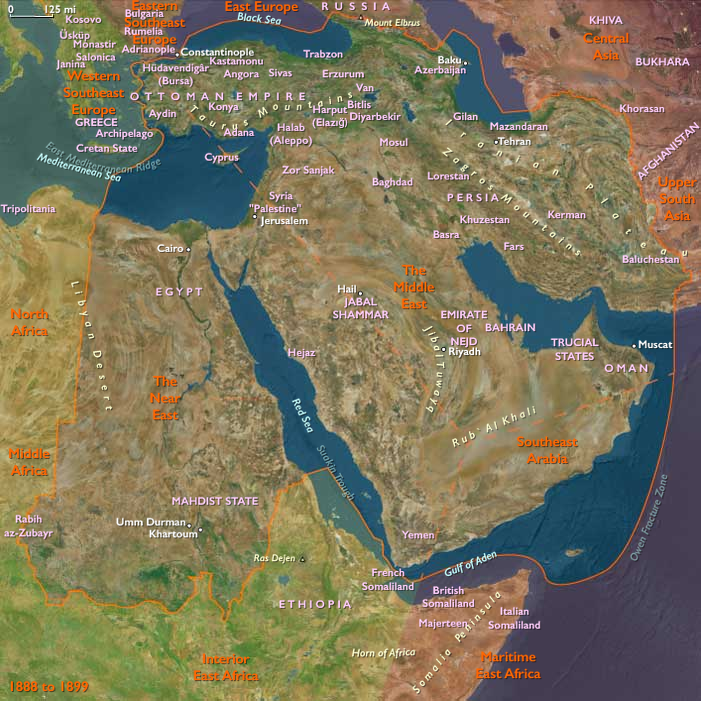
Subregions
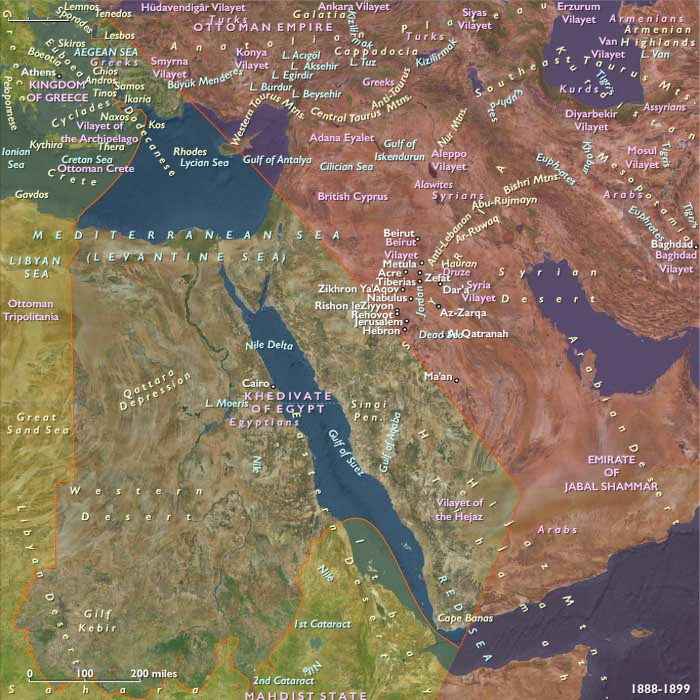
Years: 1888 - 1899
Locations
People
- Abdullah Ibn-Mohammed Al-Khalifa
- Herbert Kitchener, 1st Earl Kitchener
- Muhammad Ahmad
- Tewfik Pasha
- Yohannes IV
Groups
- Nubians
- Arab people
- Beja people
- Ja'alin tribe
- Christians, Monophysite
- Coptic Orthodox Church of Alexandria
- Christianity, Chalcedonian
- Islam
- Muslims, Sunni
- Funj people
- Fur people (Nilo-Saharan tribe)
- Ottoman Empire
- Beja people
- Sennar, Funj Sultanate of
- Baggara
- Shaigiya
- Egypt, (Ottoman) Viceroyalty of
- Sudan, Turco-Egyptian
- Belgium, Kingdom of
- Egypt, Khedivate of
- Italy, Kingdom of
- France (French republic); the Third Republic
- Ethiopia, Solomonid Dynasty of
Topics
Commodoties
Subjects
Regions
Subregions