
Regino of Prüm, according to the statements …
Years: 899 - 899
Regino of Prüm, according to the statements of a later era, was the son of noble parents and was born at the stronghold of Altrip on the Rhine near Speyer at an unknown date.
From his election as abbot and from his writings, it is evident that he had entered the Benedictine Order, probably at Prüm itself, and that he had been a diligent student.
The rich and celebrated Imperial Abbey of Prüm suffered greatly during the ninth century from the marauding incursions of the Norsemen.
It had been twice seized and ravaged, in 882 and 892.
After its second devastation by the Danes, the abbot Farabert had resigned his office and Regino had in 892 been elected his successor.
His labors for the restoration of the devastated abbey have been hampered by the struggle between contending parties in Lorraine.
Regino is driven from his office in 898 by Richarius, later Bishop of Liège, the brother of Count Gerhard and count Mattfried of Hainaut.
Richarius is made abbot; Regino resigns the position and retires to …
Locations
People
Groups
- Franks
- Christianity, Chalcedonian
- Benedictines, or Order of St. Benedict
- Francia Orientalis (East Francia), Kingdom of
- Lotharingia, Duchy of
Commodoties
Subjects
Regions
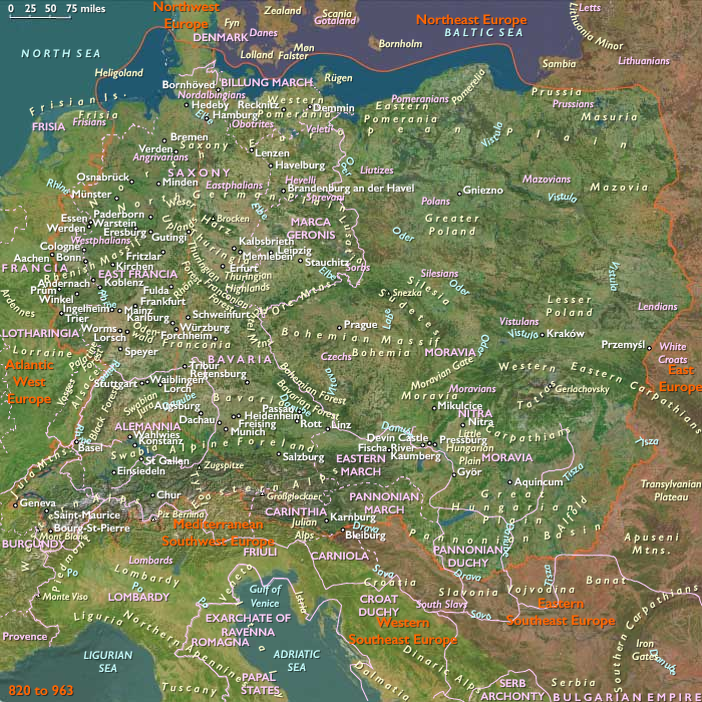
Subregions
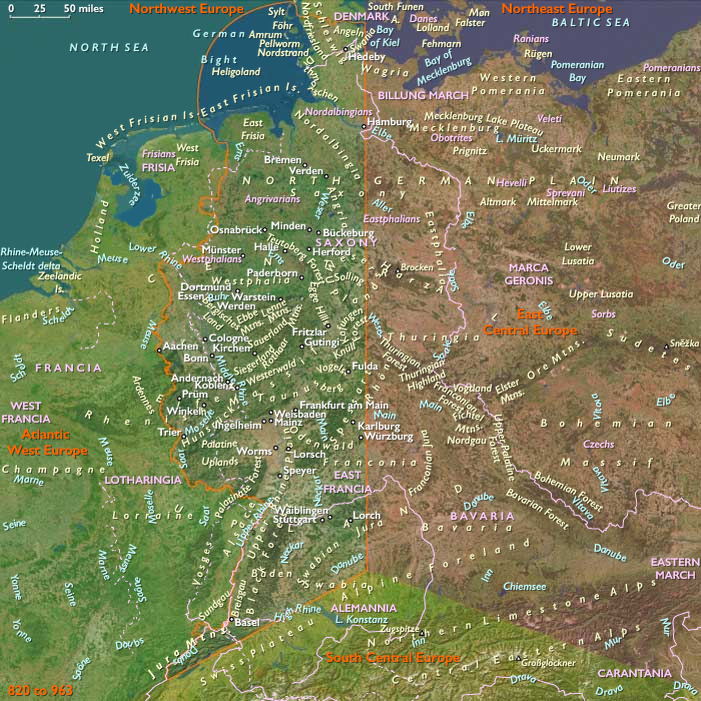
Related Events
Showing 10 events out of 53577 total
Years: 899 - 899
Locations
People
Groups
- Franks
- Christianity, Chalcedonian
- Benedictines, or Order of St. Benedict
- Francia Orientalis (East Francia), Kingdom of
- Lotharingia, Duchy of
Commodoties
Subjects
Regions
Subregions