…in spring of CE 80, a fire breaks out in Rome, burning large parts of the city for three days and three nights.
Although the extent of the damage is not as disastrous as during the Great Fire of 64—crucially sparing the many districts of insulae—Cassius Dio records a long list of important public buildings that were destroyed, including Agrippa's Pantheon, the Temple of Jupiter, the Diribitorium, parts of Pompey's Theater and the Saepta Julia among others.
Once again, Titus personally compensates for the damaged regions.
According to Suetonius, a plague similarly struck during the fire.
The nature of the disease, however, or the death toll are unknown.
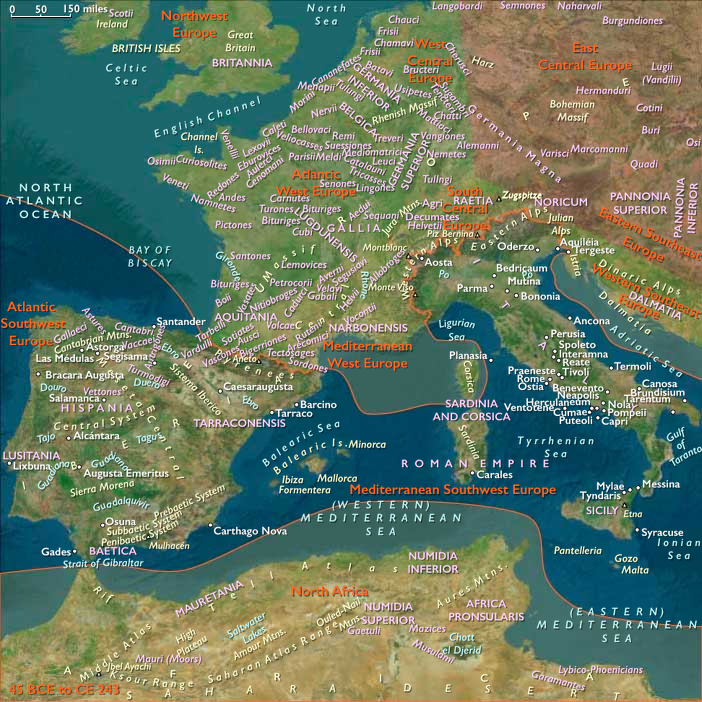
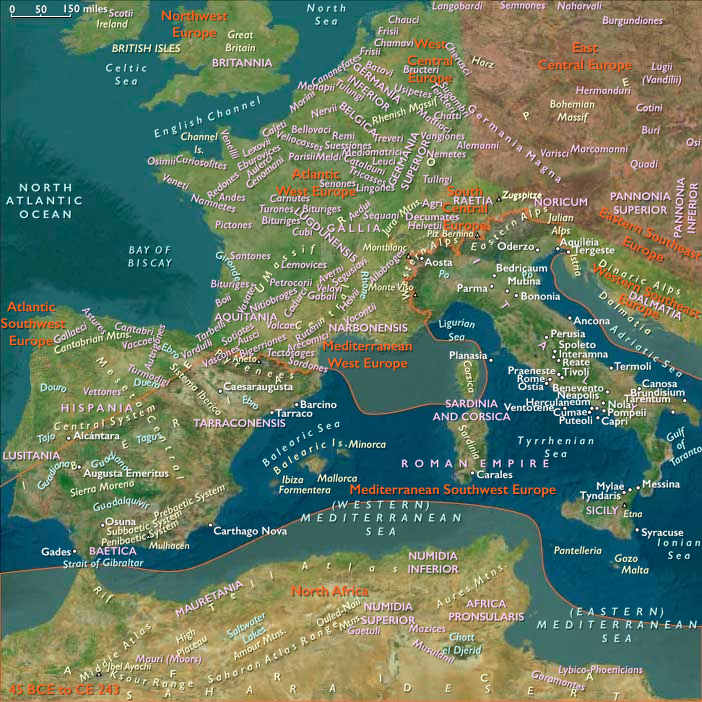
Meanwhile war has resumed in Britannia, where Agricola pushes further into Caledonia and manages to establish several forts there.
As a result of his actions, Titus receives the title of Imperator for the fifteenth time.
Titus’s reign also sees the rebellion led by Terentius Maximus, one of several false Neros who continue to appear throughout the 70s.
In addition, sources state that Titus discovered that his brother Domitian was plotting against him but refused to have him killed or banished.
Practice of the imperial cult is revived by Titus, though apparently it met with some difficulty as Vespasian was not deified until six months after his death.
To further honor and glorify the Flavian dynasty, foundations are laid for what will later become the Temple of Vespasian and Titus, which will bes finished by Domitian.
Construction of the Flavian Amphitheater, presently better known as the Colosseum, had begun in 70 under Vespasian and is finally completed in 80 under Titus.
In addition to providing spectacular entertainments to the Roman populace, the building is also conceived as a gigantic triumphal monument to commemorate the military achievements of the Flavians during the Jewish wars.
Adjacent to the amphitheater, within the precinct of Nero's Golden House, Titus had also ordered the construction of a new public bathhouse, which is to bear his name.
Construction of this building is hastily finished to coincide with the completion of the Flavian Amphitheater.
The Colosseum features an immense oval superstructure standing 160 feet high (49 meters) and covers an area 118 feet long (615 meters) by 510 feet wide (156 meters).
The exterior walls are of travertine, the inner walls of tufa, and the vaulting of the ramped seating area of monolithic concrete.
Seventy-six of the eighty bays function as entryways, so that circulation is easy.
The arches of its four-story outer wall are framed by superimposed orders: Roman Doric on the ground floor, Ionic above that, and Corinthian on the third level.
The fourth story, embellished with Corinthian pilasters, carries wooden masts from which an awning (“velarium”) is suspended to shield spectators from the sun.
Marble and wooden seating for up to about fifty thousand spectators surrounds an arena 86 meters by 280 feet by 175 feet (54 meters).
The arena’s floor is built of heavy wooden planks; chambers below house animals for the games, passed from there to the arena by means of special corridors and counterbalanced elevators.
The flooring can be removed and the entire area flooded for mock naval battles.