
Rashid ad-Din Sinan was born in Basra, …
Years: 1192 - 1192
Rashid ad-Din Sinan was born in Basra, Iraq and dies in Masyaf, Syria.
According to his autobiography, of which only fragments survive, Rashid had come as a youth to Alamut, the center of the Hashshashins, and received the typical Hashshashin training.
In 1162, the sect's leader Hassan ʿAlā Dhikrihi's Salām had sent him to Syria, where he proclaimed Qiyamah, which in Nizari terminology means the time of the Qa'im and the removal of Islamic law.
Based on the Nizari stronghold Masyaf, he controls the northern Syrian districts of Jabal as-Summaq, Maarrat Misrin and Sarmin.
His chief enemy, the Sultan Saladin, who has ruled over Egypt and Syria from 1174, had managed twice to elude assassination attempts ordered by Rashid and as he was marching against Aleppo, Saladin had devastated the Nizari possessions.
In 1176, Saladin had laid siege to Masyaf but had lifted it after two notable events that reputedly transpired between him and the Old Man of the Mountain.
According to one version, one night, Saladin's guards noticed a spark glowing down the hill of Masyaf and then vanishing among the Ayyubid tents.
Presently, Saladin awoke from his sleep to find a figure leaving the tent.
He then saw that the lamps were displaced and beside his bed laid hot scones of the shape peculiar to the Assassins with a note at the top pinned by a poisoned dagger.
The note threatened that he would be killed if he didn't withdraw from his assault.
Saladin gave a loud cry, exclaiming that Sinan himself was the figure that left the tent.
As such, Saladin told his guards to come to an agreement with Sinan.
Realizing he was unable to subdue the Assassins, he sought to align himself with them, consequently depriving the Crusaders of aligning themselves against him.
Rashid's last notable act occurs in 1192, when he orders the assassination of the newly elected King of Jerusalem Conrad of Montferrat.
Whether this happened in coordination with King Richard I of England or with Saladin remains speculation.
He dies in 1192 in Al-Kahf Castle.
He is succeeded by men appointed from Alamut, which will impose a closer supervision over Masyaf.
Locations
People
- Al-Adil I
- Conrad of Montferrat
- Guy of Lusignan
- Henry II, Count of Champagne
- Henry VI, Holy Roman Emperor
- Humphrey IV of Toron
- Isabella I of Jerusalem
- Pope Celestine III
- Pope Innocent III
- Rashid ad-Din Sinan
- Richard I of England
- Saladin
Groups
- Arab people
- Persian people
- Kurdish people
- Muslims, Sunni
- Muslims, Shi'a
- Syrian people
- Flemish people
- Turkmen people
- Cyprus, East Roman (Byzantine)
- French people (Latins)
- Christians, Roman Catholic
- Assassins
- Nizari
- Jerusalem, Latin Kingdom of
- Italians (Latins)
- Anglo-Normans
- Hospitallers of St. John of Jerusalem
- Templar, Knights (Poor Knights of Christ and of the Temple of Solomon)
- England, (Plantagenet, Angevin) Kingdom of
- Damascus, Ayyubid Dynasty of
- Egypt, Ayyubid Sultanate of
- Teutonic Knights of Acre (House of the Hospitalers of Saint Mary of the Teutons in Jerusalem)
- Cyprus, Kingdom of
Topics
Commodoties
Subjects
Regions
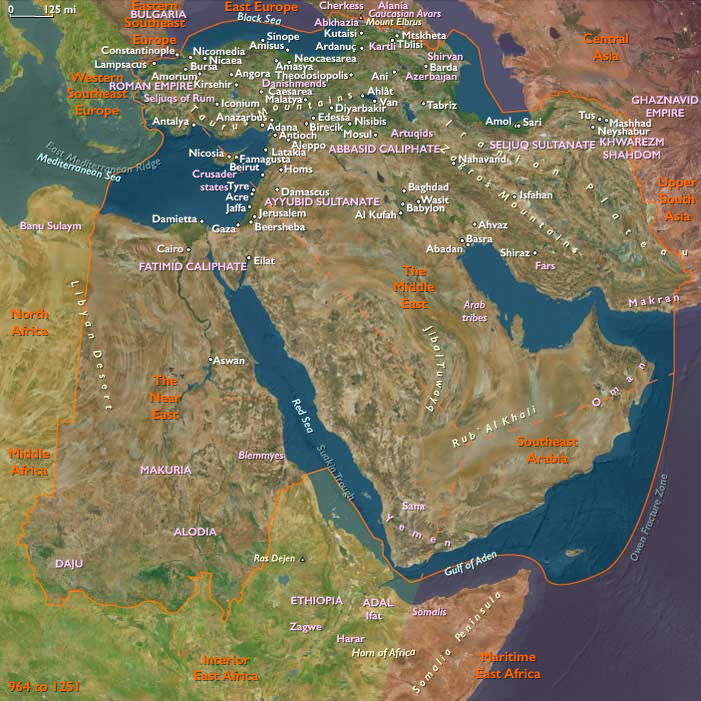
Subregions
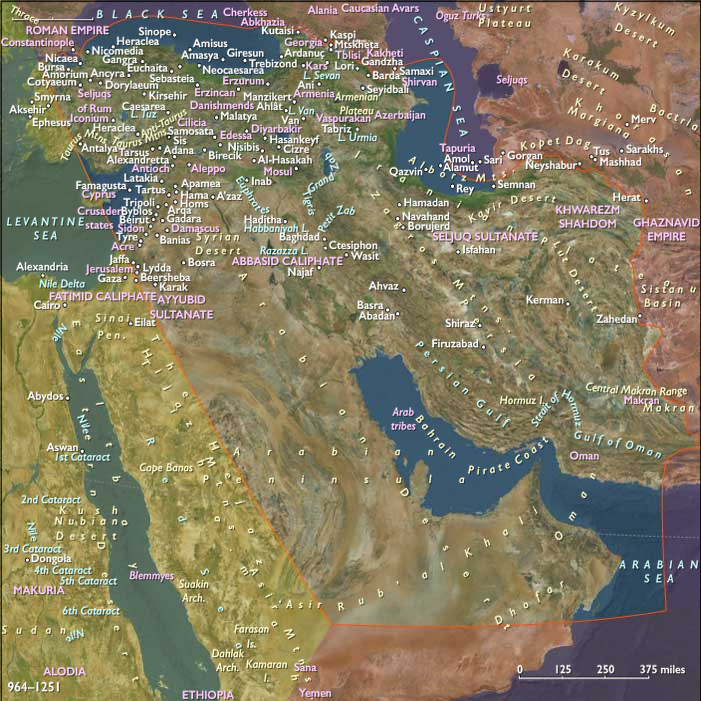
Years: 1192 - 1192
Locations
People
- Al-Adil I
- Conrad of Montferrat
- Guy of Lusignan
- Henry II, Count of Champagne
- Henry VI, Holy Roman Emperor
- Humphrey IV of Toron
- Isabella I of Jerusalem
- Pope Celestine III
- Pope Innocent III
- Rashid ad-Din Sinan
- Richard I of England
- Saladin
Groups
- Arab people
- Persian people
- Kurdish people
- Muslims, Sunni
- Muslims, Shi'a
- Syrian people
- Flemish people
- Turkmen people
- Cyprus, East Roman (Byzantine)
- French people (Latins)
- Christians, Roman Catholic
- Assassins
- Nizari
- Jerusalem, Latin Kingdom of
- Italians (Latins)
- Anglo-Normans
- Hospitallers of St. John of Jerusalem
- Templar, Knights (Poor Knights of Christ and of the Temple of Solomon)
- England, (Plantagenet, Angevin) Kingdom of
- Damascus, Ayyubid Dynasty of
- Egypt, Ayyubid Sultanate of
- Teutonic Knights of Acre (House of the Hospitalers of Saint Mary of the Teutons in Jerusalem)
- Cyprus, Kingdom of
Topics
Commodoties
Subjects
Regions
Subregions