
…Raqqada and has taken an oath of …
Years: 909 - 909
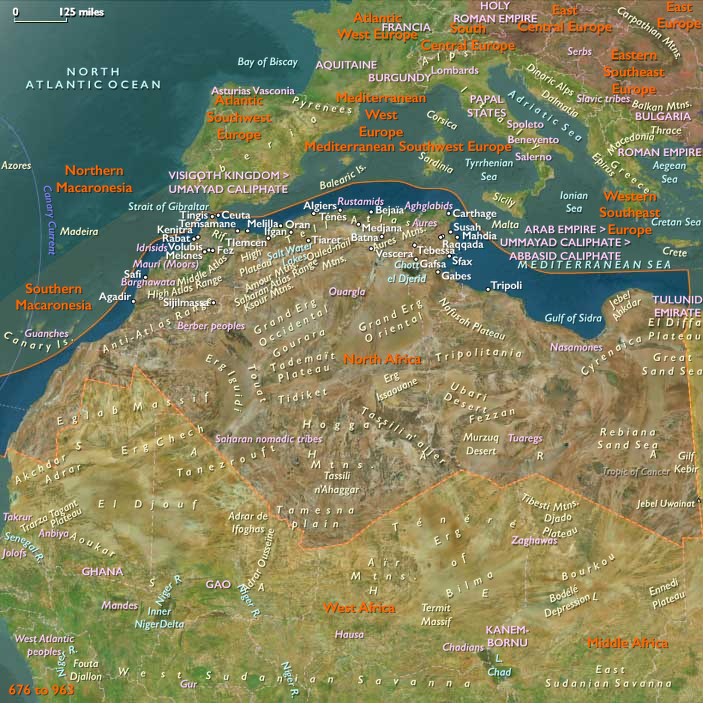
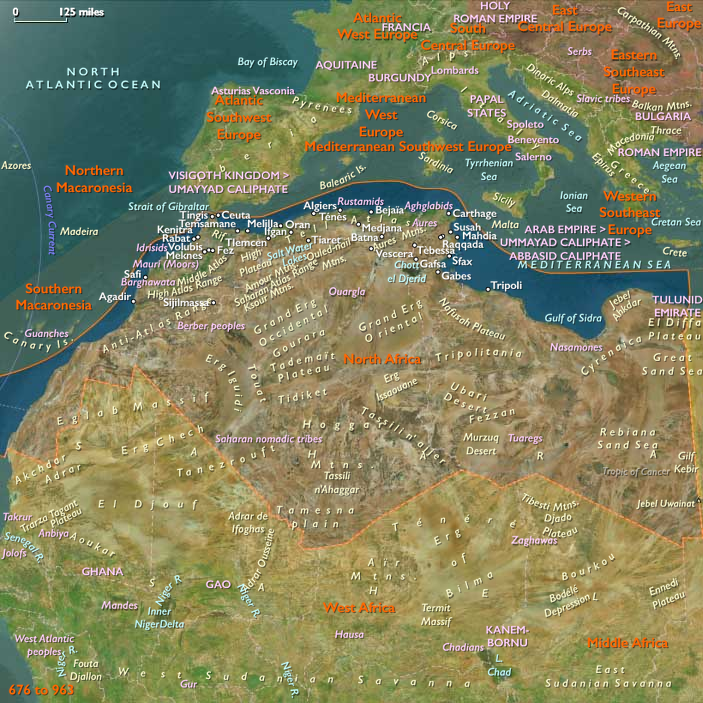
…Raqqada and has taken an oath of allegiance from the people.
By 909, the Aghlabid Dynasty is overthrown and replaced with the Ismaili Shiite Fatimid dynasty, which claims descent from Fatima, daughter of the Prophet Muhammad, through Ismail, the older, disinherited son of the sixth Shiite imam, Jafar ibn Muhammad.
Al-Mahdi Billah proclaims himself as the Imam in 909.
Locations
People
Groups
- Arab people
- Berber people (also called Amazigh people or Imazighen, "free men", singular Amazigh)
- Islam
- Muslims, Shi'a
- Ismailism
- Ifriqiya, Aghlabid Emirate of
- Ifriqiya, Fatimid Caliphate of
Topics
Commodoties
Subjects
Regions
Subregions
Related Events
Showing 10 events out of 53449 total
Years: 909 - 909
Locations
People
Groups
- Arab people
- Berber people (also called Amazigh people or Imazighen, "free men", singular Amazigh)
- Islam
- Muslims, Shi'a
- Ismailism
- Ifriqiya, Aghlabid Emirate of
- Ifriqiya, Fatimid Caliphate of
Topics
Commodoties
Subjects
Regions
Subregions