
Filters:
The Final Elimination of Ragnachar’s Line and …
Years: 509 - 509
The Final Elimination of Ragnachar’s Line and the Complete Unification of the Frankish Kingdom (509 CE)
Following the execution of Ragnachar and his brother Ricchar, Clovis ensures the total eradication of their lineage and claim to power.
The Killing of Rignomer at Le Mans
- Ragnachar’s other brother, Rignomer, survives the initial purge but remains a potential rival.
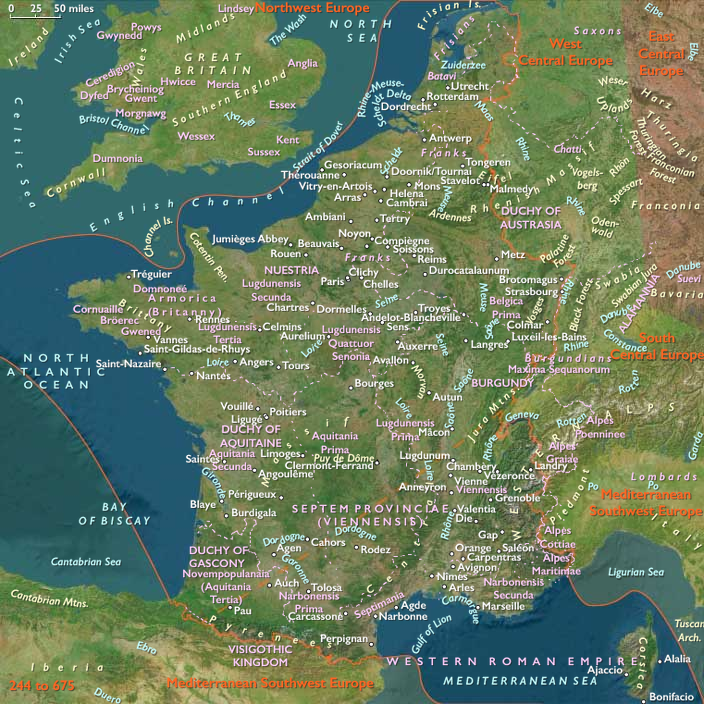
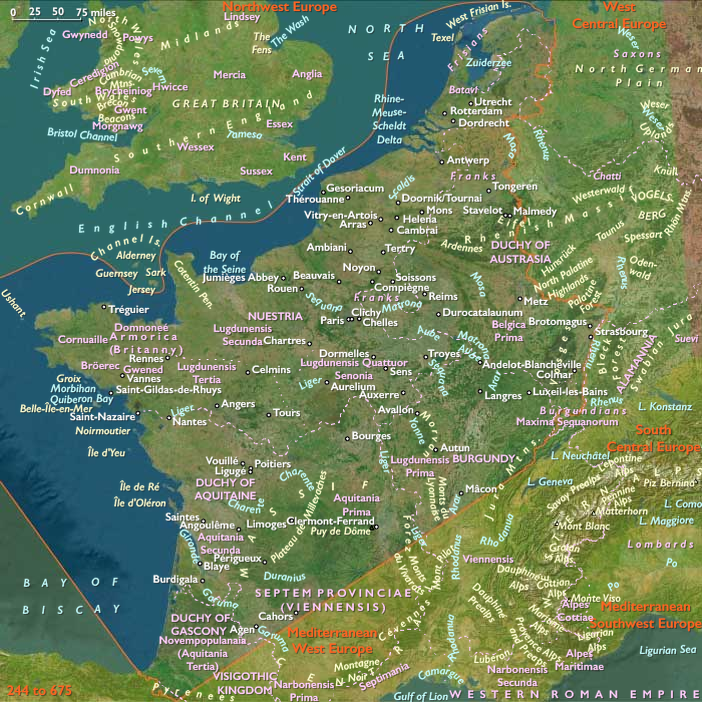
- On Clovis’ orders, Rignomer is later assassinated in Le Mans, eliminating the last member of Ragnachar’s bloodline.
- With his death, all of Ragnachar’s family wealth and his former kingdom pass to Clovis, further enriching the Merovingian royal treasury.
The Theological Framing of Clovis’ Victory
- Hincmar of Reims, writing in the ninth century, gives a Christianized account of Ragnachar’s downfall.
- He attributes Clovis' success to the "grace of Christ," reinforcing the idea that Clovis' rule is divinely sanctioned.
- According to Hincmar’s version, Ragnachar, "submitting to the shame of baseness," is betrayed by his own men and bound to be handed over to Clovis.
- Hincmar links Clovis’ victory with the mass conversion of the Franks, stating that "all the people of the Franks, by the Blessed Remigius, were converted to the faith and received baptism."
The Final Consolidation of Frankish Power
With Ragnachar, Ricchar, and Rignomer dead, Clovis has:
- Eliminated all remaining rival Frankish rulers, bringing the kingdom under sole Merovingian rule.
- Absorbed Ragnachar’s kingdom and treasure, further strengthening the centralized Frankish state.
- Solidified his image as a Christian king, with religious narratives framing his victories as part of divine providence.
By 511 CE, Clovis rules a unified Frankish kingdom, marking the true foundation of Frankish dominance in Western Europe. His strategic eliminations, political consolidation, and religious alliances set the stage for the Merovingian dynasty's long-lasting reign.
Locations
People
Groups
Topics
Commodoties
Subjects
Regions
Subregions
Years: 509 - 509
Locations
People
Groups
Topics
Commodoties
Subjects
Regions
Subregions