
Filters:
The Fall of Ragnachar and the Final …
Years: 509 - 509
The Fall of Ragnachar and the Final Unification of the Franks (509 CE)
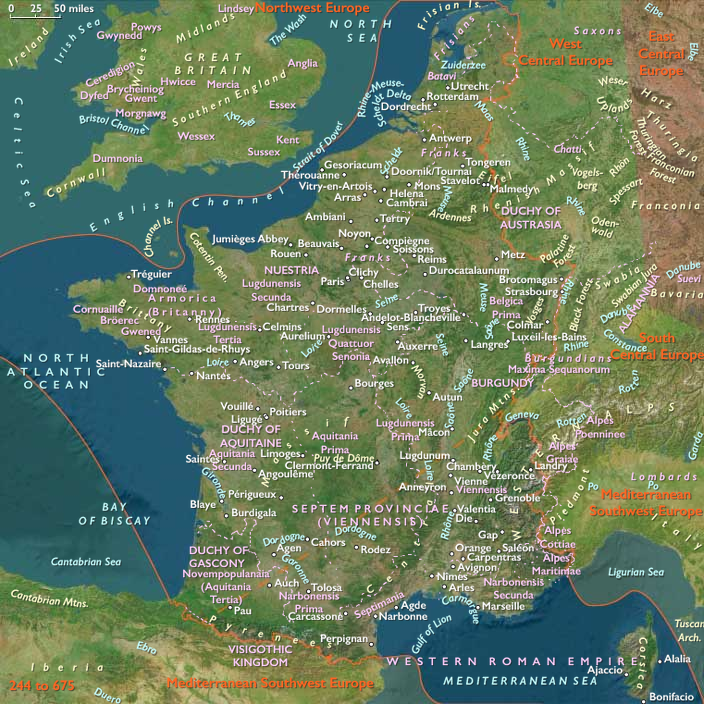
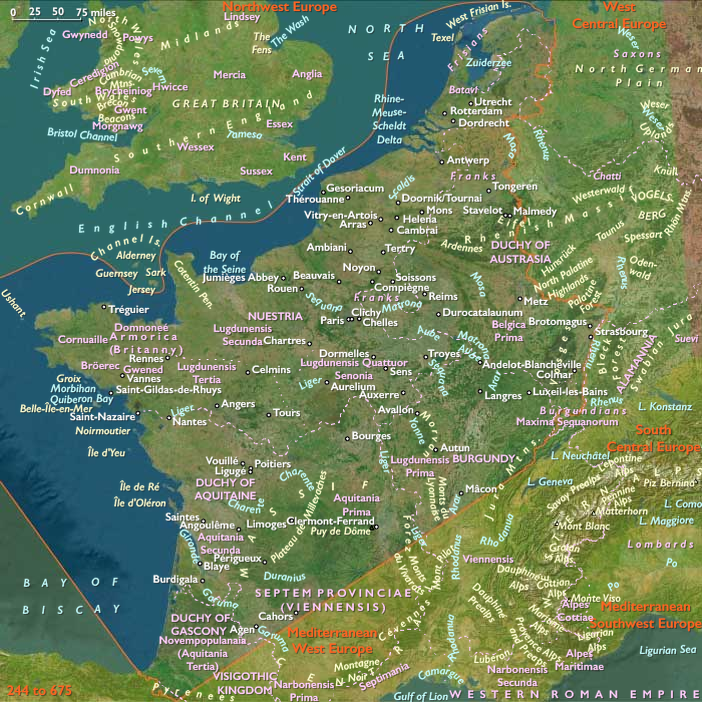
By 509 CE, Clovis I has established himself as the most powerful ruler in Gaul, having defeated the Romans, Alemanni, and Visigoths. However, internal Frankish opposition remains, particularly from Ragnachar, a Frankish reguli (petty king) who had once been Clovis' ally but later became a rival due to religious and political differences.
Ragnachar’s Early Alliance with Clovis (486 CE)
- In 486 CE, Ragnachar joins Clovis in his attack on Syagrius, the last Roman ruler in Gaul, aiding in the conquest of Soissons.
- However, tensions arise after Clovis’ conversion to Christianity in 496 CE.
Ragnachar’s Pagan Resistance and the Frankish Schism
- Following Clovis’ baptism into Catholic Christianity, a division forms within the Frankish army.
- Around half of the Frankish warriors refuse to convert and instead cleave to Ragnachar, who remains a traditional pagan.
- Hincmar of Reims, in his Life of Saint Remigius, states that many Franks followed Ragnachar across the Somme, separating from Clovis.
Ragnachar’s Unpopularity Among His Own Warriors
- Ragnachar earns a negative reputation due to his corrupt leadership and favoritism toward his counselor, Farro.
- Gregory of Tours writes that Ragnachar divides all gifts and food between himself and Farro, dismissing complaints from his men with the phrase, “Enough for me and my Farro.”
- His Franks grow resentful, and when his spies return from observing Clovis' army, they mockingly say it is “sufficient strength for you and your Farro.”
Clovis Exploits Discontent and Deceives Ragnachar’s Leudes
- Clovis seizes on the growing resentment within Ragnachar’s ranks.
- He bribes Ragnachar’s leudes (military followers) with false gifts—armlets and belts gilded with bronze to appear as gold, tricking them into betrayal.
- Deprived of support, Ragnachar loses the loyalty of his warriors and is left vulnerable.
The Battle and Capture of Ragnachar (509 CE)
- Clovis declares war and confronts Ragnachar in battle.
- Defeated and fleeing, Ragnachar and his brother Ricchar are captured by their own men and delivered to Clovis, hands bound behind their backs.
Clovis Executes Ragnachar and Ricchar
- Gregory of Tours recounts that when Ragnachar is brought before Clovis, the king taunts him:
- "Why have you humiliated our family by permitting yourself to be bound? It would have been better for you to die."
- Clovis then executes Ragnachar with an ax.
- He turns to Ricchar and says:
- "If you had aided your brother, he would not have been bound."
- Ricchar is then killed in the same manner.
The Final Unification of the Franks
With Ragnachar’s death and his kingdom absorbed, Clovis achieves:
- The final elimination of the last Frankish rival rulers.
- The unification of all Frankish territories under a single king.
- A fully centralized Merovingian kingdom, ending the era of multiple competing reguli.
By the time of his death in 511 CE, Clovis has successfully:
- Created the first fully unified Frankish kingdom,
- Established Catholic Christianity as the state religion,
- Replaced all former rival warlords, ensuring the Merovingian dynasty's uncontested rule.
With all enemies vanquished, the Frankish kingdom, under Clovis, stands as the dominant power in Western Europe, laying the foundation for medieval France and the Holy Roman Empire.
Locations
People
Groups
Topics
Commodoties
Subjects
- Commerce
- Environment
- Labor and Service
- Decorative arts
- Conflict
- Mayhem
- Faith
- Government
- Technology
- Movements
Regions
Subregions
Years: 509 - 509
Locations
People
Groups
Topics
Commodoties
Subjects
- Commerce
- Environment
- Labor and Service
- Decorative arts
- Conflict
- Mayhem
- Faith
- Government
- Technology
- Movements
Regions
Subregions