
Qutayba builds a mosque in Bukhara’s citadel …
Years: 713 - 713
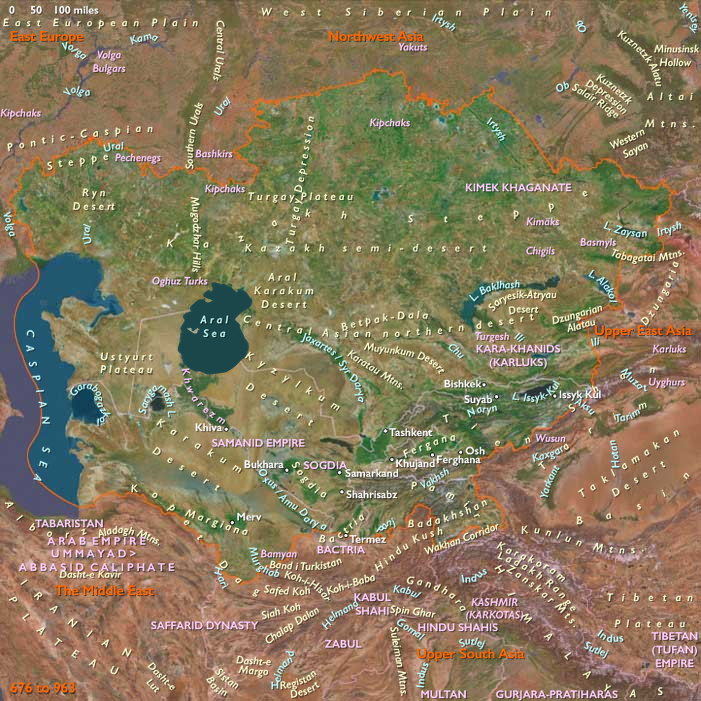
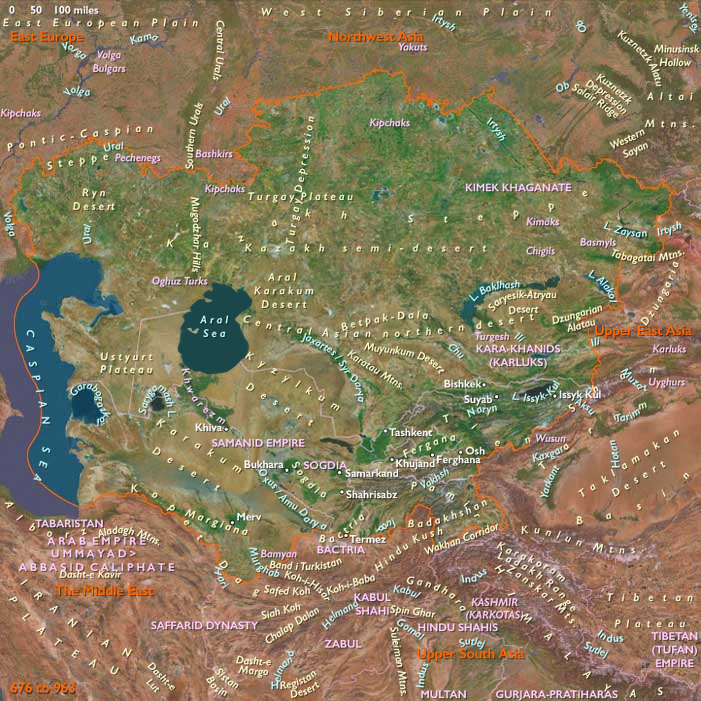
Qutayba builds a mosque in Bukhara’s citadel in 712/713, but although the Arab authorities encourage the conversion of the native population by paying them to attend prayers, Islamization proceeds slowly.
At the same time, Qutayba begins to adopt a measure that marked a radical departure from previous practice in the East: he orders the raising of native Khurasani auxiliary levies, usually some ten to twenty thousand strong and mostly composed of non-converts, to supplement the Arab tribal army, the muqatila.
This measure will later be expanded to include the newly conquered territories in Sogdiaand Khwarizm.
Gibb suggests that this move may be seen as an answer to the need for more troops to control the conquered territories and continue Muslim expansion, as well as a means of placing the local manpower in Arab service and depleting it at the same time, reducing the risk of anti-Arab revolts.
Gibb also suggests that the creation of an indigenous force may have been an attempt by Qutayba to establish a power base of his own. (Gibb, H. A. R. (1923). The Arab Conquests in Central Asia. London: The Royal Asiatic Society.)
From around 712, Qutayba also appears to have recruited a special corps, known as the "Archers", from among the Khurasani, Tokharian and Sogdian nobility.
Their skill is such that they are known as rumāt al-buduq ("archers who pierce the pupils of the eyes"), and they apparently serve as a bodyguard.
Among the local Khurasani converts, Hayyan an-Nabati emerges as the foremost leader, and appears frequently in Tabari's account both as the main military leader of the Khurasani conscripts and as chief negotiator with the Sogdians.
Qutayba's victories, parallel with the conquests of Muhammad ibn Qasim in northwestern India, awake such enthusiasm and hopes among the Muslims that al-Hajjaj is reputed to have offered the governorship of China to whomever of the two first reaches it.
Locations
People
Groups
- Iranian peoples
- Arab people
- Sogdia
- Khwarezm
- Transoxiana
- Tokharistan (Kushan Bactria)
- Khorasan, Greater
- Islam
- Chinese Empire, Tang Dynasty
- Khazar Khaganate
- Umayyad Caliphate (Damascus)
- Türgesh Kaganate
Topics
Commodoties
Subjects
Regions
Subregions
Years: 713 - 713
Locations
People
Groups
- Iranian peoples
- Arab people
- Sogdia
- Khwarezm
- Transoxiana
- Tokharistan (Kushan Bactria)
- Khorasan, Greater
- Islam
- Chinese Empire, Tang Dynasty
- Khazar Khaganate
- Umayyad Caliphate (Damascus)
- Türgesh Kaganate
Topics
Commodoties
Subjects
Regions
Subregions