
Quintus Horatius Flaccus (anglicized as Horace), the …
Years: 34BCE - 34BCE
Quintus Horatius Flaccus (anglicized as Horace), the son of a former slave who had moved from Venusia in southern Italy to Rome to secure a better education for his son, had responded to Brutus’ speech to the Romans in Athens by enlisting, at twenty, in the republican army, in which he had fought as a staff officer (tribunus militum) under Brutus in the Battle of Philippi.
Alluding to such famous literary models as Archilochus, he will later claim that he had saved himself by throwing away his shield and fleeing.
When an amnesty was declared for those who had fought against the victorious Octavian, Horace, his military career and political aspirations shattered, had made an abject return to Rome to find his father dead and his estate confiscated.
Though later claiming that he was reduced to poverty, he nevertheless had had the means to purchase a profitable lifetime appointment as a scriba quaestorius, an official of the Treasury, which will allow him to get by comfortably and practice his poetic art.
Eventually finding employment as an ill-paid public clerk, Horace has spent his free time writing poetry and haunting literary circles.
His literary endeavors had attracted the attention of Virgil, who, in early 38, had introduced him to Gaius Maecenas, a man of letters from Etruria, a patron of the arts, and a powerful councilor to Octavian.
Maecenas has formed a friendship with Horace, granting him a country villa in the Sabine Hills (near modern Tivoli) that finally affords Horace the financial freedom to concentrate on his poetry.
Horace produces a collection of ten satirical poems written in hexameter verse, Sermonum Liber primus (also known as Satires I).
The Satires reflect Horace's adhesion to Octavian's attempts to deal with the contemporary challenges of restoring traditional morality, defending small landowners from large estates (latifundia), combating debt and usury, and encouraging novi homines (“new men”) to take their place next to the traditional republican aristocracy.
The Satires often exalt the new man, who is the creator of his own fortune and does not owe it to noble lineage.
Horace develops his vision with principles taken from Hellenistic philosophy: metriotes (the just mean) and autarkeia (the wise man's self-sufficiency).
The ideal of the just mean allows Horace, who is philosophically an Epicurean, to reconcile traditional morality with hedonism.
Self-sufficiency is the basis for his aspiration for a quiet life, far from political passions and unrestrained ambition.
Published probably in 35 and at the latest by 33, this first book of Satires represents Horace's first published work and establishes him as one of the great poetic talents of what will be known to history as the Augustan Age.
Locations
People
Groups
Topics
Commodoties
Subjects
- Commerce
- Writing
- Environment
- Labor and Service
- Conflict
- Faith
- Government
- Technology
- Philosophy and logic
Regions
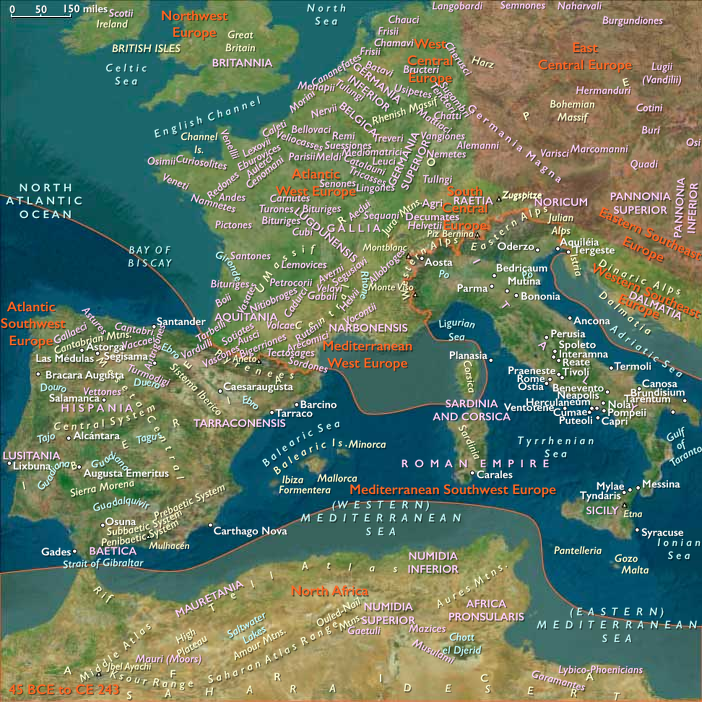
Subregions
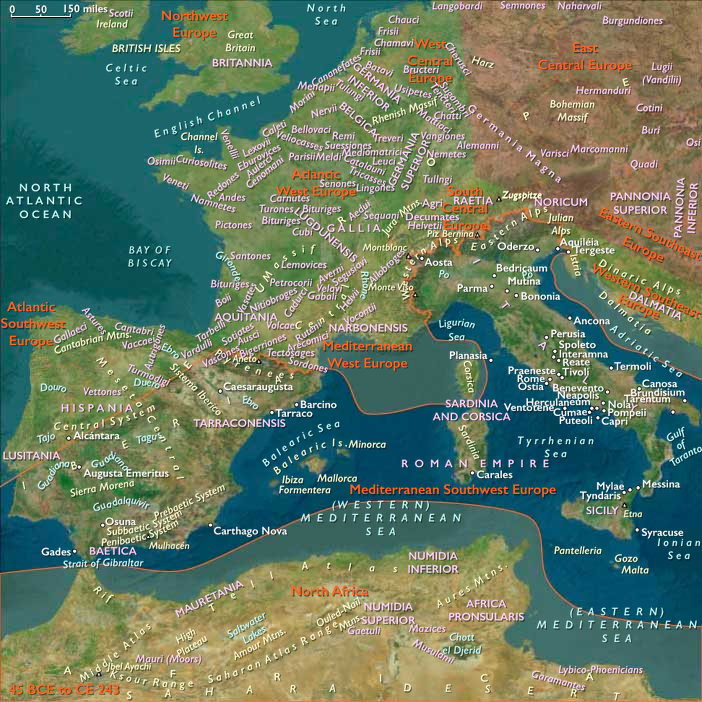
Related Events
Showing 10 events out of 62256 total
Years: 34BCE - 34BCE
Locations
People
Groups
Topics
Commodoties
Subjects
- Commerce
- Writing
- Environment
- Labor and Service
- Conflict
- Faith
- Government
- Technology
- Philosophy and logic
Regions
Subregions