
Pandulf’s Alternative Target: Flanders With his …
Years: 1213 - 1213
May
Pandulf’s Alternative Target: Flanders
With his grand plan for an English conquest foiled, Philip II turned his forces against Flanders.
- The Count of Flanders, Ferdinand of Portugal, had resisted Philip’s authority, previously refusing to support the English invasion.
- He had denied Philip the right to attack England while John was still excommunicated, which Philip and Pandulf now framed as disobedience.
- Pandulf advised Philip to punish Flanders instead, turning the assembled French invasion force against the Flemish.
- Philip, eager for a new campaign, accepted the suggestion without hesitation and quickly marched his army into Flanders.
The French Fleet Moves to Damme
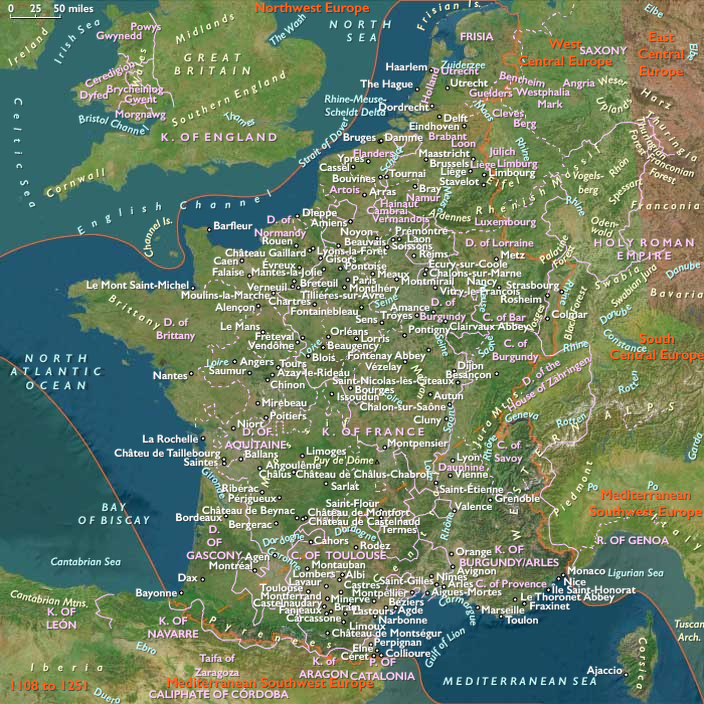
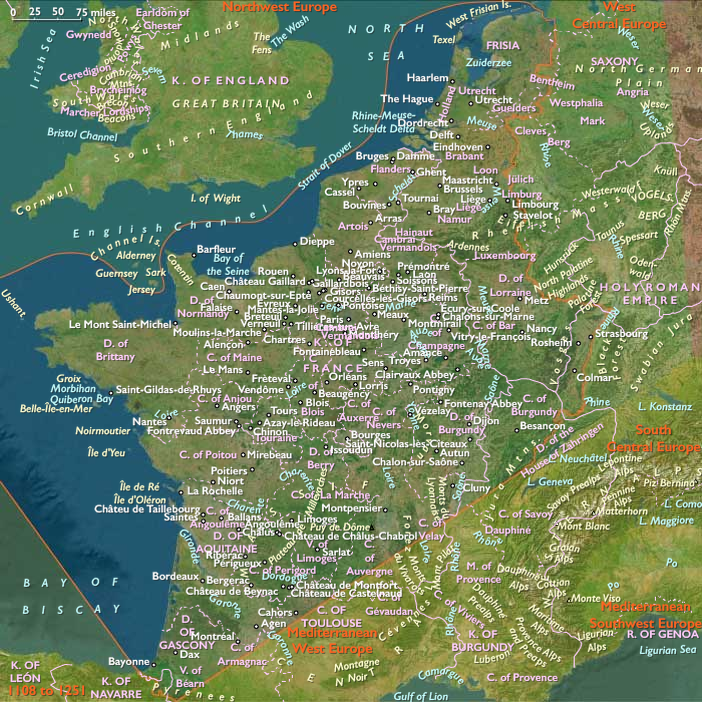
- The French fleet, reportedly numbering some 1,700 ships, first proceeded to Gravelines, then to the harbor of Damme, a key Flemish port on the North Sea.
- Philip planned to use Damme as a naval base for his Flemish campaign, intending to conquer and punish Flanders.
Consequences and the Shift to the Battle of Bouvines (1214)
- Philip’s failed invasion of England led him to focus on consolidating his power in Flanders.
- This decision ultimately resulted in the Battle of Bouvines in 1214, where Philip achieved one of his greatest military victories against the Anglo-Flemish-German coalition.
- The redirection of Philip’s forces played a crucial role in shaping the power balance in Western Europe, securing Capetian dominance in France.
Philip’s eager acceptance of Pandulf’s alternative target—Flanders—demonstrates his adaptability, turning what could have been a major setback into a new opportunity for conquest and expansion.
Locations
People
- Frederick II
- Guillaume de Nogaret
- Infante Ferdinand of Portugal
- John of England
- Louis VIII of France
- Otto IV of Brunswick
- Pandulf Verraccio
- Philip II of France
- Pope Innocent III
Groups
- Papal States (Republic of St. Peter)
- Flemish people
- Flanders, County of
- Holy Roman Empire
- France, (Capetian) Kingdom of
- Christians, Roman Catholic
- Portugal, Burgundian (Alfonsine) Kingdom of
- England, (Plantagenet, Angevin) Kingdom of
Topics
Commodoties
Subjects
Regions
Subregions
Related Events
Showing 10 events out of 47382 total
Years: 1213 - 1213
May
Locations
People
- Frederick II
- Guillaume de Nogaret
- Infante Ferdinand of Portugal
- John of England
- Louis VIII of France
- Otto IV of Brunswick
- Pandulf Verraccio
- Philip II of France
- Pope Innocent III
Groups
- Papal States (Republic of St. Peter)
- Flemish people
- Flanders, County of
- Holy Roman Empire
- France, (Capetian) Kingdom of
- Christians, Roman Catholic
- Portugal, Burgundian (Alfonsine) Kingdom of
- England, (Plantagenet, Angevin) Kingdom of
Topics
Commodoties
Subjects
Regions
Subregions