
Qing emperor Daoguang, having ascended the throne …
Years: 1849 - 1849
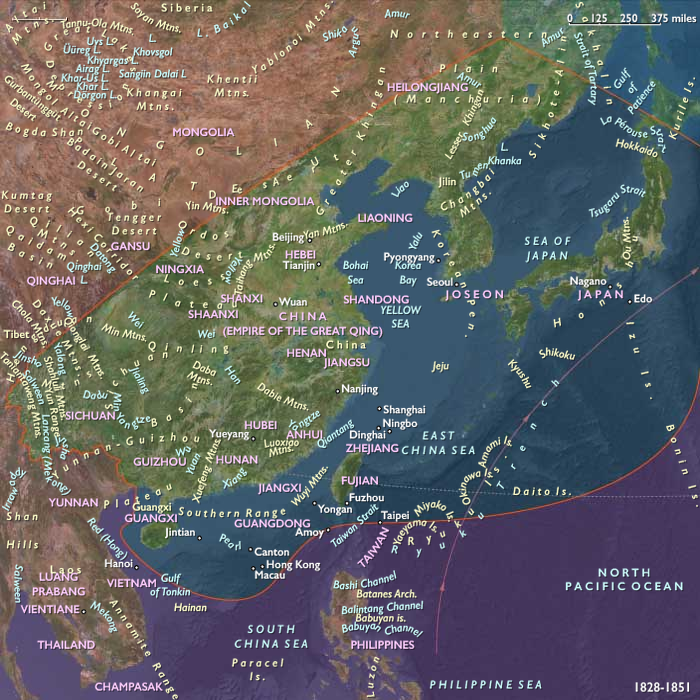
Qing emperor Daoguang, having ascended the throne in 1820 with the Imperial treasury having greatly depleted during previous reigns, has attempted to restore the nation's finances by personal austerity.
His attempts to stop the opium trade carried on by Western merchants results in the first Opium War between Britain and China.
The cost of the war and the large indemnity paid under terms of the peace treaty further increases discontent.
The need to repair the dikes along the Yellow River to prevent flooding and further famine becomes urgent, as does repair of the Grand Canal, which brings rice from South China to the capital at Peking.
Yet corrupt officials embezzle money for repairs, and the Daoguang emperor fears to reduce the size of the labor force lest repair problems increase.
By 1849, the Grand Canal is impassable, and the rice shipments have to be made by sea, where pirates endanger them.
The thousands of unemployed canal boatmen help fan the flames of unrest.
China's problems are compounded by natural calamities of unprecedented proportions, including droughts, famines, and floods.
Government neglect of public works is in part responsible for this and other disasters, and the Qing administration does little to relieve the widespread misery caused by them.
Locations
People
Groups
Topics
Commodoties
Subjects
Regions

Subregions
Related Events
Showing 10 events out of 16552 total
Years: 1849 - 1849
Locations
People
Groups
Topics
Commodoties
Subjects
Regions
Subregions