
Pyrrhus's retreat from Italy proves unlucky for …
Years: 273BCE - 273BCE
Pyrrhus's retreat from Italy proves unlucky for Antigonus II Gonatus of Macedon.
Returning to Epirus with an army of eight thousand foot and five hundred horse, he was in need of money to pay them.
This had encouraged him to look for another war, so the next year, after adding a force of Gallic mercenaries to his army, he invaded Macedonia with the intention of filling his coffers with plunder.
The campaign goes better than expected.
Making himself master of several towns and being joined by two thousand deserters, his hopes start to grow and he goes in search of Antigonus, attacking his army in a narrow pass and throwing it into disorder.
Antigonus's Macedonian troops retreat, but his own body of Gallic mercenaries, who have charge of his elephants, stand firm until Pyrrhus's troops surround them, whereupon they surrender both themselves and the elephants.
Pyrrhus now chases after the rest of Antigonus's army which, demoralized by its earlier defeat, declines to fight.
As the two armies face each other, Pyrrhus calls out to the various officers by name and persuades the whole body of infantry to desert.
Antigonus escapes by concealing his identity.
Pyrrhus now takes control of upper Macedonia and Thessaly while Antigonus holds onto the coastal towns.
Pyrrhus now wastes his victory.
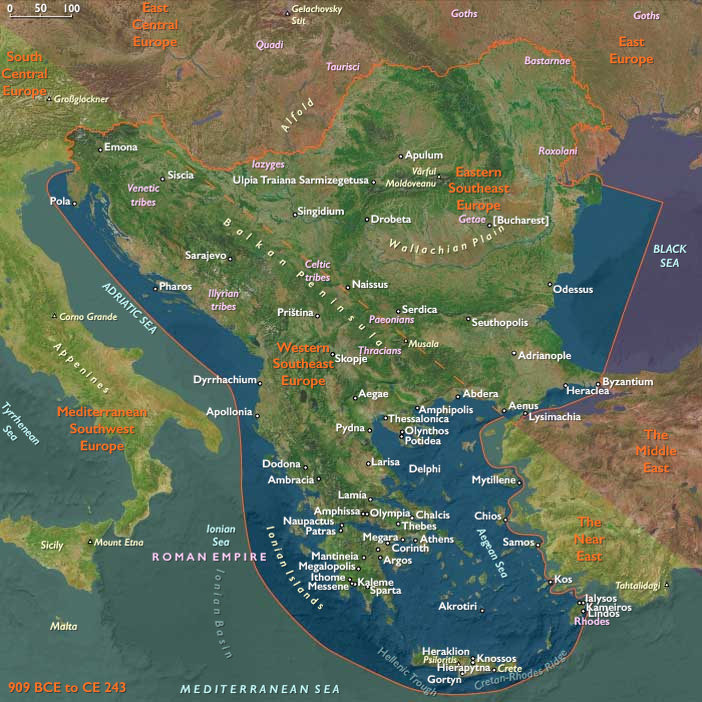
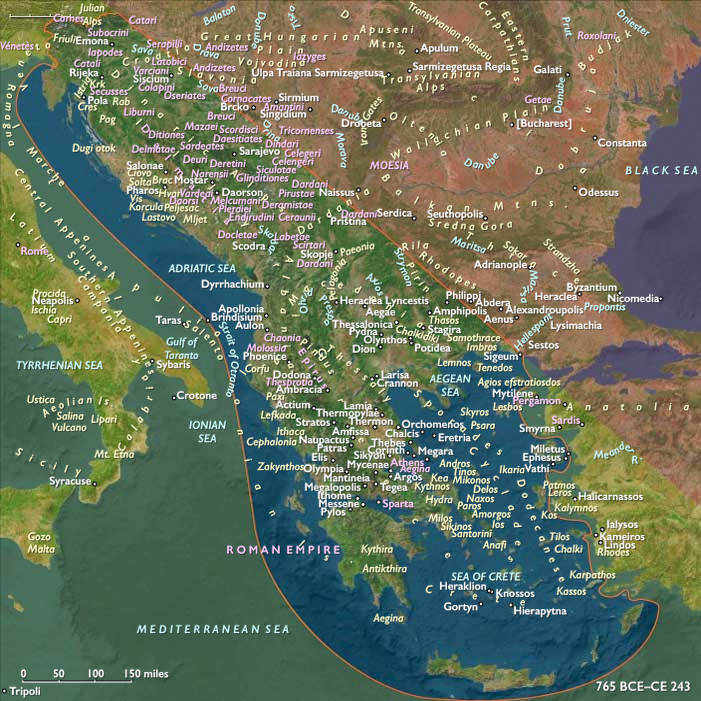
Taking possession of Aegae, the ancient capital of Macedonia, he installs a garrison of Gauls, who greatly offend the Macedonians by digging up the tombs of their kings and leaving the bones scattered about as they search for gold.
He also neglects to finish off his enemy.
Leaving Antigonus in control of the coastal cities, he contents himself with insults.
He calls Antigonus a shameless man for still wearing the purple, but he does little to destroy the remnants of his power.
Locations
People
Groups
- Celts
- Gauls
- Epirus, Kingdom of
- Greece, Hellenistic
- Greeks, Hellenistic
- Macedon, Antigonid Kingdom of
Topics
Commodoties
Subjects
Regions
Subregions
Related Events
Showing 10 events out of 63980 total
Years: 273BCE - 273BCE
Locations
People
Groups
- Celts
- Gauls
- Epirus, Kingdom of
- Greece, Hellenistic
- Greeks, Hellenistic
- Macedon, Antigonid Kingdom of
Topics
Commodoties
Subjects
Regions
Subregions