
The Eruption of Puy de Dôme (c. …
Years: 8690BCE - 8690BCE
The Eruption of Puy de Dôme (c. 8690 BCE)
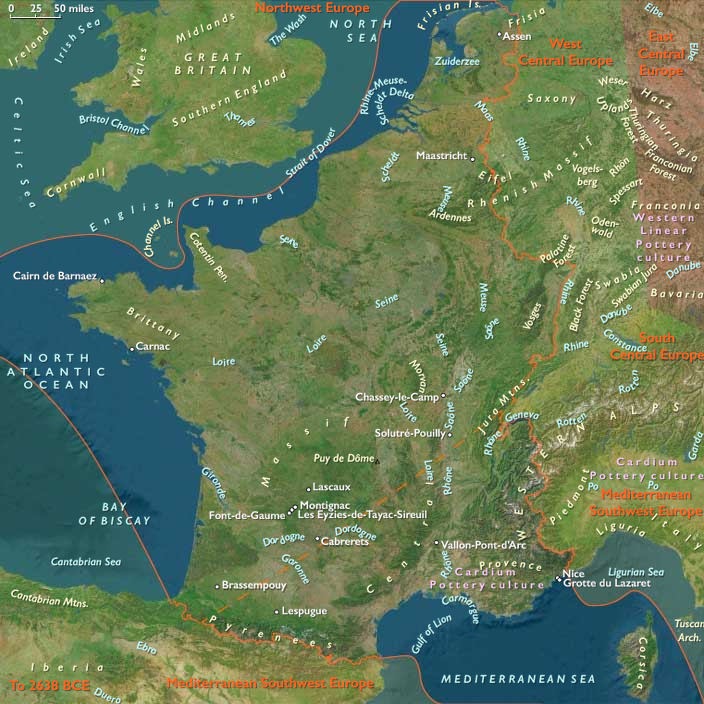
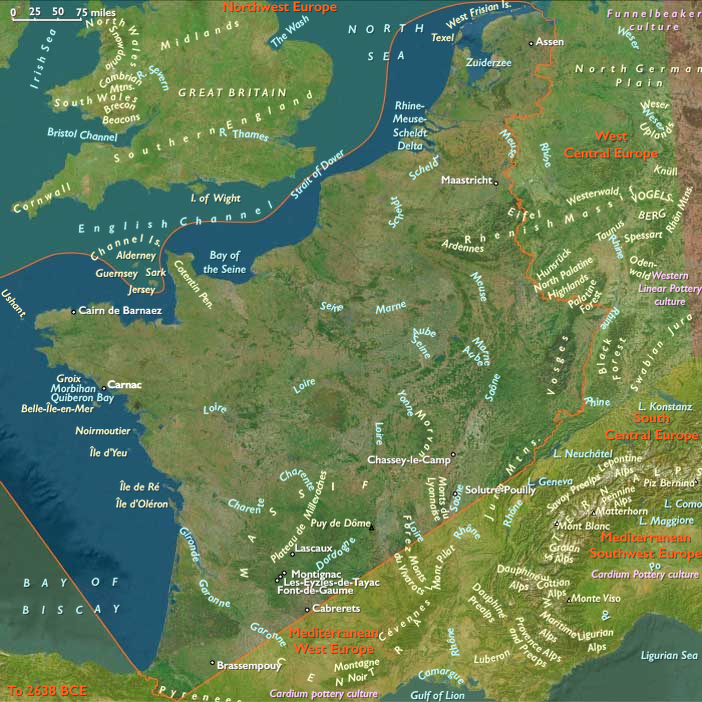
The Puy de Dôme, a prominent lava dome volcano in the Chaîne des Puys region of the Massif Central in south-central France, erupted around 8690 BCE, marking a significant event in the postglacial volcanic activity of the region.
Geological Context of Puy de Dôme
- Puy de Dôme is one of the youngest volcanoes in the Chaîne des Puys, a volcanic field consisting of over 80 cinder cones, lava domes, and maars.
- It is classified as a trachytic lava dome, meaning its eruptions primarily involve viscous lava, leading to explosive activity and dome growth.
The 8690 BCE Eruption and Its Impact
- The eruption likely produced pyroclastic flows, ash fallout, and lava extrusion, shaping the distinctive dome structure visible today.
- This period of volcanic activity occurred during the Early Holocene, a time of climatic warming following the Last Glacial Maximum, which may have influenced magma dynamics beneath the Massif Central.
- The eruption altered local landscapes, potentially affecting prehistoric human populations in the region, who were beginning to adapt to the Mesolithic environment.
Legacy and Current Status
- Today, Puy de Dôme stands at 1,465 meters (4,806 feet) and remains dormant, though the Chaîne des Puys volcanic field is still considered potentially active.
- The region, now a UNESCO World Heritage site, provides crucial geological insights into continental intraplate volcanism.
The 8690 BCE eruption of Puy de Dôme is an important event in the volcanic history of France, demonstrating the dynamic geological processes that have shaped the Massif Central over thousands of years.
Locations
Topics
Subjects
Regions
Subregions
Related Events
Filter results
Showing 10 events out of 69354 total
The original inhabitants of Sicily are three defined groups of the ancient peoples of Italy, the most prominent and by far the earliest of which are the Sicani, who according to Thucydides arrived from the Iberian Peninsula (perhaps Catalonia).
Important historical evidence has been discovered in the form of cave drawings by the Sicani, dated from the end of the Pleistocene epoch, around 8000 BCE.
The arrival of the first humans is correlated with extinction of dwarf hippos and dwarf elephants.
In ancient literature, the Sicani are distinguished from the later Elymi of western Sicily and the Siculi of eastern Sicily.
Southeast Indian Ocean (7,821–6,094 BCE): Holocene Beginnings in the Subantarctic
Geographic & Environmental Context
The subregion of Southeast Indian Ocean includes Kerguelen east of 70°E and Heard Island and McDonald Islands. Kerguelen’s fjord-indented eastern coasts and basaltic plateaus were reshaped by glacial retreat, while Big Benon Heard Island remained crowned with ice. The McDonald group continued as small, volcanic outcrops.
Climate & Environmental Shifts
This was the early Holocene, marked by rising global temperatures and accelerating sea-level rise. Glaciers on Kerguelen retreated into upland pockets, and Heard’s icefields shrank, though remaining substantial. Sea levels approached modern levels, submerging exposed shelves from the glacial lowstand. Strong circumpolar westerlies and storm systems continued, though seasonal variability grew with a slightly warmer and wetter climate.
Subsistence & Settlement
Still without human settlement, ecosystems grew increasingly complex. Mosses, lichens, and grasses spread rapidly across deglaciated ground. On Heard and Kerguelen, penguin rookeries expanded as ice-free shores became abundant, while elephant seals and fur seals established dense colonies. Seabird guano enriched soils, accelerating plant colonization. Offshore, whales and fish thrived in plankton-rich upwellings.
Technology & Material Culture
Globally, Holocene societies were beginning to shift toward agriculture in some regions, but such developments lay far from the subantarctic. No material culture touched these islands; their isolation was complete.
Movement & Interaction Corridors
The Antarctic Circumpolar Current and storm tracks continued to define ecological movement. Migratory species linked these islands with Antarctica, Australia, and Africa. These corridors would one day guide human navigation but remained exclusively biological in this epoch.
Cultural & Symbolic Expressions
No symbolic or cultural imprint was left here. However, the ecological richness of the islands—seabird gatherings, volcanic peaks, and storm-swept coasts—echoed themes of resilience and endurance that human societies elsewhere were embedding in their ritual landscapes.
Environmental Adaptation & Resilience
The resilience of life in the subantarctic was clear: seals and penguins adapted to new habitats, plants colonized ash-rich volcanic soils, and ecosystems stabilized under Holocene warmth. Volcanic activity on Heard and McDonald Islands periodically disrupted landscapes, but pioneer vegetation swiftly recolonized.
Transition
By 6,094 BCE, the Southeast Indian Ocean islands stood as thriving ecological refuges of the early Holocene. Still unknown to humans, they embodied the interplay of glacial legacy, volcanic dynamism, and biological resilience.
Southwest Indian Ocean (7,821–6,094 BCE): Ecological Renewal after the Ice
Geographic & Environmental Context
The subregion of Southwest Indian Ocean includes Kerguelen west of 70°E, the Îsles Crozet, Prince Edward Island, and Marion Island. Western Kerguelen’s plateaus were increasingly ice-free, the Crozet Islands rose as rocky volcanic bastions, and Prince Edward and Marion maintained their smaller, storm-battered profiles.
Climate & Environmental Shifts
The early Holocene brought climatic moderation. Glaciers on Kerguelen retreated into highlands, exposing lakes, valleys, and fertile coastal plains. The Crozets and Prince Edward Islands, less glaciated, saw expanding tundra vegetation. Rising sea levels drowned glacial shelves, bringing coastlines closer to their present shape. Wind intensity remained high, but longer ice-free periods reshaped ecological rhythms.
Subsistence & Settlement
No humans yet inhabited the islands, but biological communities thrived. Vegetation covered freshly deglaciated surfaces, creating niches for invertebrates. Penguins, albatrosses, and petrels flourished, while seals expanded breeding grounds on accessible coasts. Offshore, whales and fish followed currents that made these islands focal points of subantarctic productivity.
Technology & Material Culture
Human technological innovations in this epoch included microlithic tools, pottery in some regions, and the beginnings of settled farming. Yet these developments remained far from the storm-swept subantarctic. The Southwest Indian Ocean remained untouched.
Movement & Interaction Corridors
The circumpolar ocean system connected these islands ecologically with South Africa, Antarctica, and Australasia. Migratory seabirds nested here before dispersing across hemispheres. These corridors ensured that even in isolation, the islands played a vital role in the wider Southern Ocean ecology.
Cultural & Symbolic Expressions
No cultural expressions occurred here. Globally, humans were beginning to ritualize new landscapes—rivers, hills, and domesticated fields—yet the subantarctic islands remained outside human knowledge.
Environmental Adaptation & Resilience
Plant communities and seabird rookeries adapted dynamically to changing ice margins. Nutrient cycles intensified as populations of marine animals expanded. The volcanic soils of the Crozets and Prince Edward Islands became fertile hubs of tundra biodiversity.
Transition
By 6,094 BCE, the islands of the Southwest Indian Ocean had entered the Holocene firmly. Their landscapes were transformed from ice-dominated to biologically rich, though still unvisited by humans. They stood as ecological strongholds in a warming world.
The period of human history that begins not long after 8000 BCE, which we are about halfway through, is one characterized by the increasing global integration of the various populations of Homo sapiens sapiens.
Human agency also brings about the global integration of various plant and animals, heretofore combined to the continents on which they originally developed.
Another hypothesis suggests the southwestern corner of the Arabian peninsula, in modern-day Yemen, where three now-dry riverbeds indicate good natural pastures existed long ago, perhaps as far back as the Ice Age.
This hypothesis will gaine renewed attention following a 2010 discovery of artifacts dated between 6590 and 7250 BCE in Al-Magar, in southwestern Saudi Arabia, that appear to portray horses.
Regional Variability in the Emergence of the Neolithic
The Neolithic period was marked by the transition from hunter-gatherer societies to farming and permanent settlements, but these developments did not occur simultaneously or in the same order across different regions. Instead, the characteristic elements of the Neolithic—agriculture, animal domestication, pottery, and permanent settlements—emerged at different times and in different sequences around the world.
Divergent Paths to Agriculture and Settlement
- In the Near East, where some of the earliest farming societies developed, pottery was not initially used. Early Neolithic communities practiced cultivation and animal domestication while continuing to rely on stone tools and basketry for food storage.
- In Britain, the extent to which plant domestication played a role in the earliest Neolithic remains uncertain. It is also unclear whether permanently settled communities had fully developed in the initial stages or whether mobility remained a key aspect of life.
Independent Neolithic Developments Beyond Europe and Southwest Asia
While the Near East and Europe were among the first regions to develop agriculture-based societies, other parts of the world experienced independent Neolithic transitions, each following distinct cultural and technological trajectories:
- In Africa, early agricultural systems arose in multiple regions, including the Sahel, the Nile Valley, and Ethiopia, where sorghum and millet were cultivated.
- In South Asia, the Mehrgarh culture (c. 7000 BCE) in present-day Pakistan is one of the earliest known farming communities, practicing wheat and barley cultivation and early forms of cattle domestication.
- In Southeast Asia, rice cultivation developed independently, leading to the formation of distinct Neolithic cultures that spread across the region.
Early Pottery Without Agriculture: The Case of Japan
A striking example of cultural variation in Neolithic development is found in Japan, where early societies produced pottery before adopting agriculture. The Jōmon culture (c. 14,000–300 BCE) crafted some of the earliest known ceramics, used primarily for cooking and storage, long before transitioning to farming practices.
Conclusion: A Complex and Varied Neolithic Transition
The Neolithic transition was not a single, uniform process but rather a series of regionally distinct developments. Some societies adopted agriculture before pottery, while others developed ceramic traditions long before farming. Understanding these regional variations provides deeper insight into the diverse pathways that led to the rise of complex societies across the world.
The Boreal Period: A Transitional Phase in Holocene Climate (c. 9500–7000 BCE)
The Boreal Period (c. 9500–7000 BCE) represents a key transitional phase in the Holocene paleoclimate, situated between the Younger Dryas—the last cold snap of the Pleistocene—and the Atlantic Period, which ushered in warmer and moister conditions than those of the present day.
Although the Boreal climate varied over time, it generally resembled modern conditions, with fluctuating temperatures and precipitation patterns. However, ice core data suggests that around 7911 BCE, a series of seven massive volcanic eruptions—from unknown locations—triggered a prolonged cooling event, which lasted for several centuries and ended around 7090 BCE.
The Transition to the Holocene Climatic Optimum
As the Boreal Period faded, it gave way to:
- The Neolithic Subpluvial (also known as the Holocene Climatic Optimum or Holocene Wet Phase)—a prolonged wet and rainy period that dramatically affected northern Africa, transforming what is now the Sahara Desert into a lush, habitable environment.
- The Atlantic Period, the warmest phase of the Holocene, coinciding with the Neolithic Subpluvial and further shaping the rise of early human civilizations through agriculture and permanent settlement expansion.
Glacial Retreat and Rising Sea Levels in the Holocene
The Holocene Epoch is characterized by the gradual retreat of glacial ice, which reshaped landscapes worldwide. However, between 12,000 and 5000 BCE, massive inland flooding occurred in various regions, leading to abrupt sea level rises.
These rising waters significantly altered coastal landscapes, forcing human populations to migrate inland and adapt to changing environmental conditions. Such rapid shifts may have contributed to oral traditions and flood mythsfound in various ancient cultures, reflecting the profound impact of these climatic events on early human societies.
The Boreal Period thus stands as a pivotal era, bridging the Ice Age and the Holocene's stable climate, setting the stage for human expansion, agriculture, and the development of early civilizations.
A sudden decrease in global temperatures occurred approximately eight thousand two hundred years before the present, or around 6200 BCE, and lasted for the next two to four centuries, an event that climatologists have named he 8.2-kiloyear event.
Swiss botanist Heinrich Zoller first identified a rapid cooling event in 8200 BP in 1960; he named the it the Misox oscillation (for the Val Mesolcina); it is also known in Norway as the Finse event.
Bond, et al., argued that the origin of the 8.2 kiloyear event is linked to a fifteen hundred-year climate cycle; it correlates with Bond event 5.
Milder than the Younger Dryas cold spell that preceded it, but more severe than the Little Ice Age that will follow, the 8.2 kiloyear cooling is a significant exception to general trends of the Holocene climatic optimum.
The strongest evidence for the event comes from the North Atlantic region; the disruption in climate shows clearly in Greenland ice cores and in sedimentary and other records of the temporal and tropical North Atlantic.
It is less evident in ice cores from Antarctica and in South American indices.
The effects of the cold snap are global, however, most notably in changes in sea level during the relevant era.
The initial meltwater pulse may have raised sea levels by as much as 1.2 meters (four feet), but the cooling that followed allows a glacial advance and consequent marine regression.
After two centuries, or by eight thousand years before the present (6000 BCE), global sea level had dropped by fourteen meters (forty-six feet).
After this point, however, milder climate conditions reasserted themselves; by seven thousand eight hundred years before the present (5800 BCE), the global climate returned to pre-event levels.
Temperatures rise, probably to levels similar to those today, and forests expand further, with the ending of the most recent ice age around ten thousand years ago and the beginning of the Holocene era.
The rising sea levels caused by the melting glaciers cut Britain off from Ireland by nine thousand five hundred years ago, and by around 6500 to 6000 BCE, continental Europe is cut off for the last time.
The warmer climate changes the Arctic environment to one of pine, birch, and alder forest; this less open landscape is less conducive to the large herds of reindeer and wild horse that had previously sustained humans.
Those animals are replaced in people's diets by pig and less social animals such as elk, red deer, roe deer, wild boar and aurochs (wild cattle) which would have required different hunting techniques.
Tools change to incorporate barbs that can snag the flesh of an animal, making it harder for it to escape alive.
Tiny microliths are developed for hafting onto harpoons and spears.
Woodworking tools such as adzes appear in the archaeological record, although some flint blade types remain similar to their Paleolithic predecessors.
The dog is domesticated because of its benefits during hunting and the wetland environments created by the warmer weather would have been a rich source of fish and game.
It is likely that these environmental changes are accompanied by social changes.
Humans spread and reach the far north of Scotland during this period.
