
Proselytes to Judaism, though not constituting a …
Years: 69BCE - 58BCE
Proselytes to Judaism, though not constituting a class, have become increasingly numerous both in Palestine and especially in the Diaspora (the Jews living beyond Palestine).
Scholarly estimates of the Jewish population of this age range from seven hundred thousand to five million in Palestine and from two million to five million in the Diaspora, with the prevailing opinion being that about one-tenth of the population of the Mediterranean world at the beginning of the Christian Era was Jewish.
Such numbers represent a considerable increase from previous eras and must have included large numbers of proselytes.
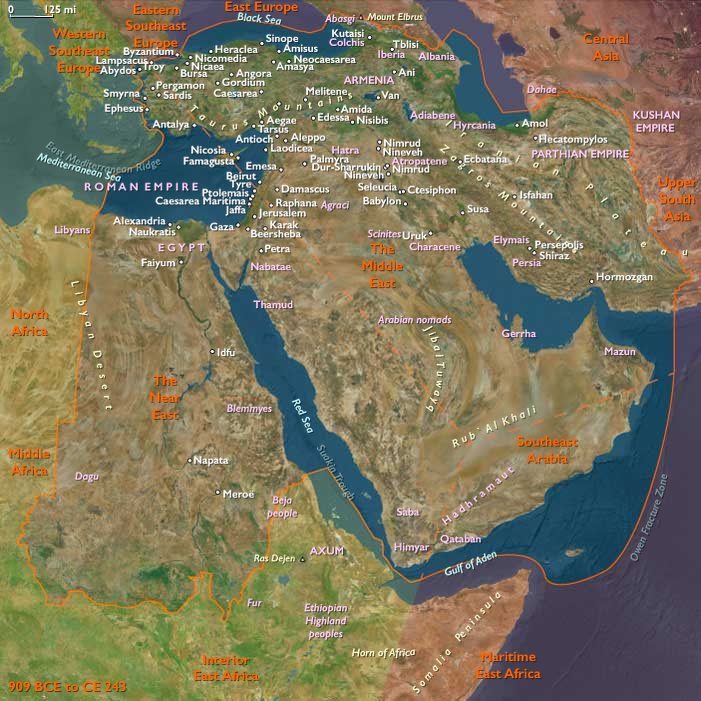
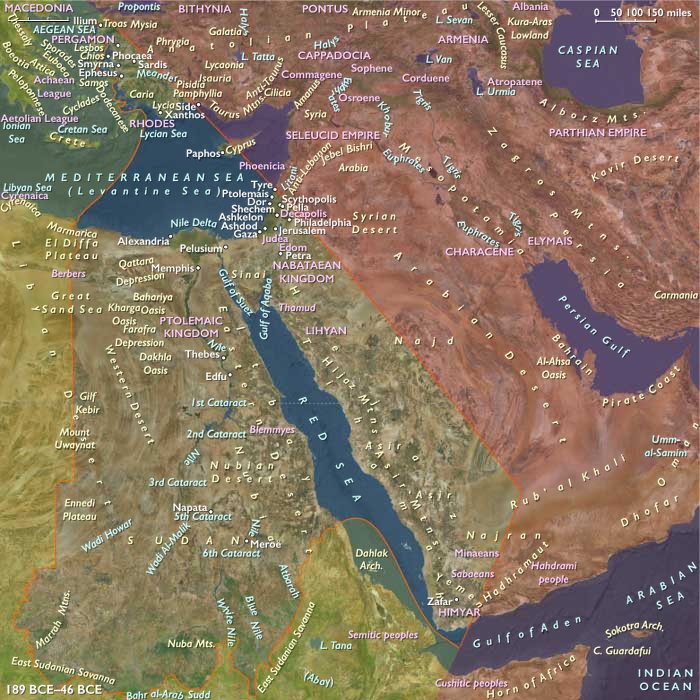
During the time of the Hasmonean ruler John Hyrcanus (134-104 BCE), Judea had conquered Edom (Idumea) and forced the Edomites to convert to Judaism.
The Edomites had been gradually integrated into the Judean nation, and some of them have reached high ranking positions.
In the days of Alexander Jannaeus, an Edomite named Antipas had been appointed governor of Edom.
His son Antipater, father of Herod the Great, is the chief adviser to Hasmonean Hyrcanus II and manages to establish a good relationship with the Roman Republic, who at this time (63 BCE) extends its influence over the region, following the conquest of Syria and intervention in a civil war in Judea.
The Jews soon lose their independence to Rome, never to regain it while the Romans maintain their empire.
Commodoties
Subjects
Regions
Subregions
Related Events
Showing 2 events out of 2 total
Years: 69BCE - 58BCE
Commodoties
Subjects
Regions
Subregions