
Profound changes continue in Saudi society, its …
Years: 1990 - 1990
Profound changes continue in Saudi society, its values and mores affected by urbanization, mass public education, the presence of numerous foreign workers, and access to new media.
Although the political elite comes to include more bureaucrats and technocrats, real power continues in the hands of the dynasty, and political processes remain static.
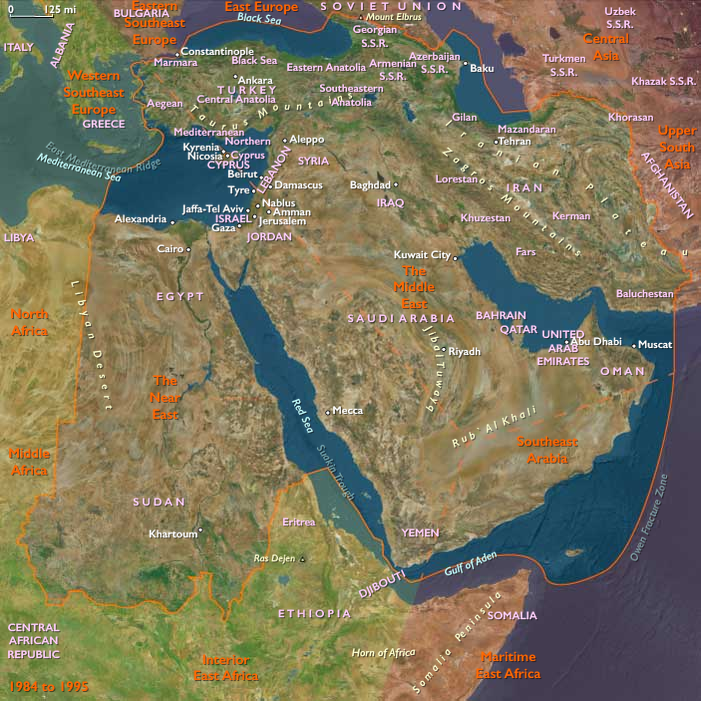
Iraq, after rejecting attempted Saudi mediation, invades neighboring Kuwait on August 2, 1990.
The Kuwaiti government flees to Saudi Arabia, and King Fahd denounces the Iraqi invaders.
Despite Saudi assistance to Iraq during the Iran-Iraq War of 1980-90, as well as the nonagression pact concluded between the two countries in 1989, Saddam Hussein calls for a jihad against the Saudis who have allied with the West against him.
Therefore, the Saudis hurriedly invite the United States and other countries to send troops to protect the kingdom.
By mid-November, the United States has sent 230,000 troops, which are the most important part of the coalition armed forces that, ultimately, includes soldiers from many other countries.
The Saudis adroitly coordinate Arab and Muslim contingents, and establish diplomatic ties with China, the Soviet Union and, later, Iran.
King Fahd expands his goal beyond the protection of Saudi Arabia to include the liberation of Kuwait and, if possible, the overthrow of Saddam Hussein.
Saudi Arabia houses and assists not only foreign troops but also Kuwaiti civilians, while at the same time expelling Yemenis and Jordanians, whose countries support Iraq diplomatically.
Locations
People
Groups
- United States of America (US, USA) (Washington DC)
- Saudi Arabia, Kingdom of
- Jordan, Hashemite Kingdom of
- China, People's Republic of
- Iraq, First Republic of
- Kuwait
- Iran (Islamic republic)
- Yemen, Republic of
Regions
Subregions
Years: 1990 - 1990
Locations
People
Groups
- United States of America (US, USA) (Washington DC)
- Saudi Arabia, Kingdom of
- Jordan, Hashemite Kingdom of
- China, People's Republic of
- Iraq, First Republic of
- Kuwait
- Iran (Islamic republic)
- Yemen, Republic of
Regions
Subregions