
Priscillian, a rigorous Spanish Christian ascetic apparently …
Years: 382 - 382
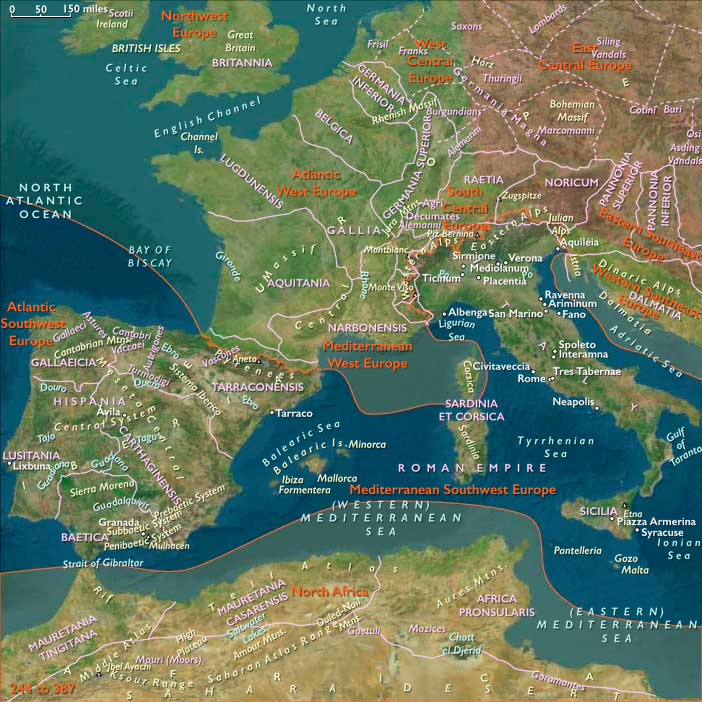
Priscillian, a rigorous Spanish Christian ascetic apparently influenced by gnosticism and Manichaean dualism, espouses an unorthodox doctrine similar to both in its dualistic belief that matter is evil and the spirit good.
He teaches that angels and human souls emanate from the Godhead, that bodies are creations of the devil, and that human souls are joined to bodies as a punishment for sins.
Leading his followers in a quasi-secret society that aims for higher perfection through ascetic practices and proscribes all sensual pleasure, marriage, and the consumption of wine and meat, his movement, called Priscillianism, spreads throughout western and southern Spain and in southern Gaul.
Despite his unorthodox views, Priscillian had become bishop of Ávila in 380.
The Spanish church, led by bishops Hyginus of Mérida and Ithacius of Ossonoba, had soon opposed the movement.
A council of Spanish and Aquitanian bishops had adopted at Saragossa eight canons bearing more or less directly on the prevalent heresy of Priscillianism.
Priscillian’s enemies now persuade the devoutly Christian Gratian to exile the bishop and his primary disciples to Italy.
Locations
People
Groups
- Hispania Tarraconensis (Roman province)
- Gnosticism
- Manicheanism
- Spains, Diocese of the
- Christianity, Nicene
- Priscillianism
- Roman Empire: Valentinian dynasty (Rome)
- Roman Empire: Theodosian dynasty (Constantinople)
Topics
Subjects
Regions
Subregions
Related Events
Showing 10 events out of 59568 total
Years: 382 - 382
Locations
People
Groups
- Hispania Tarraconensis (Roman province)
- Gnosticism
- Manicheanism
- Spains, Diocese of the
- Christianity, Nicene
- Priscillianism
- Roman Empire: Valentinian dynasty (Rome)
- Roman Empire: Theodosian dynasty (Constantinople)
Topics
Subjects
Regions
Subregions