
The Treaty of Dancing Rabbit Creek, signed …
Years: 1830 - 1830
September
The Treaty of Dancing Rabbit Creek, signed on September 27, 1830 (it will be proclaimed on February 24, 1831) between the Choctaw American Indian tribe and the United States Government, is the first removal treaty carried into effect under the Indian Removal Act.
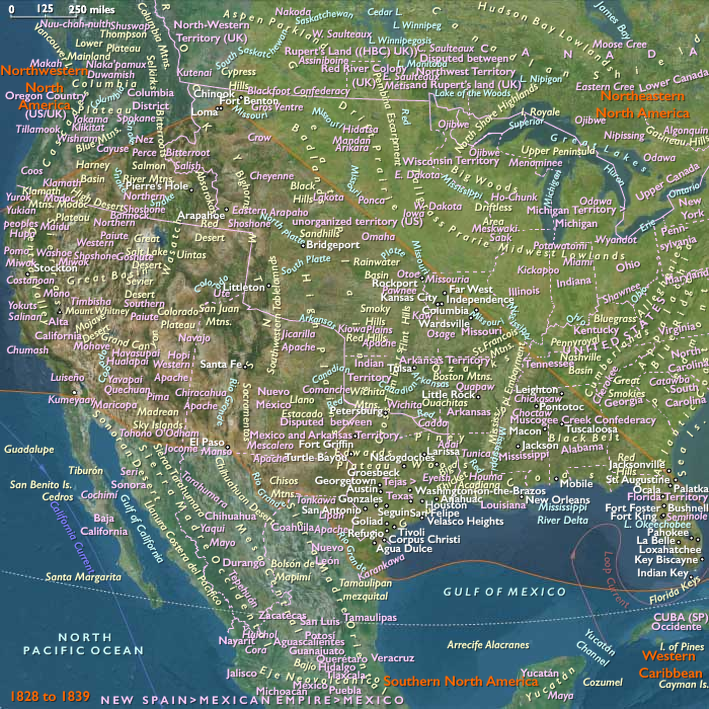
The treaty cedes about eleven million acres (forty-five thousand square kilometers) of the Choctaw Nation in what is now Mississippi in exchange for about fifteen million acres (sixty-one thousand square kilometers) in the Indian territory, now the state of Oklahoma.
The principal Choctaw negotiators are Chief Greenwood LeFlore, Musholatubbee, and Nittucachee; the U.S. negotiators are Colonel John Coffee and Secretary of War John Eaton.
The site of the signing of this treaty is in the southwest corner of Noxubee County; the site is known to the Choctaw as Bok Chukfi Ahilha (creek "bok" rabbit "chukfi" place to dance "a+hilha" or Dancing Rabbit Creek).
The Treaty of Dancing Rabbit Creek is the last major land cession treaty signed by the Choctaw.
With ratification by the U.S. Congress in 1831, the treaty will allow those Choctaw who choose to remain in Mississippi to become the first major non-European ethnic group to gain recognition as U.S. citizens.
On August 25, 1830, the Choctaw were supposed to meet with Andrew Jackson in Franklin, Tennessee, but Greenwood Leflore had informed the Secretary of War, John H. Eaton, that the chiefs were fiercely opposed to attending.
Jackson appointed Eaton and General John Coffee as commissioners to represent him to meet the Choctaws.
The commissioners met with the chiefs and headmen on September 15, 1830, at Dancing Rabbit Creek.
In a carnival-like atmosphere, the U.S. officials explained the policy of removal through interpreters to an audience of six thousand men, women and children.
The Choctaws faced migration west of the Mississippi River or submitting to U.S. and state law as citizens.
The treaty will sign away the remaining traditional homeland to the United States; however, a provision in the treaty makes removal more acceptable.
The Treaty of Dancing Rabbit Creek is one of the largest land transfers ever signed between the United States Government and Native Americans in a time of peace.
The Choctaw cede their remaining traditional homeland to the United States.
Article 14 allows for some Choctaw to remain in the state of Mississippi, if they want to become citizens:
The treaty cedes about eleven million acres (forty-five thousand square kilometers) of the Choctaw Nation in what is now Mississippi in exchange for about fifteen million acres (sixty-one thousand square kilometers) in the Indian territory, now the state of Oklahoma.
The principal Choctaw negotiators are Chief Greenwood LeFlore, Musholatubbee, and Nittucachee; the U.S. negotiators are Colonel John Coffee and Secretary of War John Eaton.
The site of the signing of this treaty is in the southwest corner of Noxubee County; the site is known to the Choctaw as Bok Chukfi Ahilha (creek "bok" rabbit "chukfi" place to dance "a+hilha" or Dancing Rabbit Creek).
The Treaty of Dancing Rabbit Creek is the last major land cession treaty signed by the Choctaw.
With ratification by the U.S. Congress in 1831, the treaty will allow those Choctaw who choose to remain in Mississippi to become the first major non-European ethnic group to gain recognition as U.S. citizens.
On August 25, 1830, the Choctaw were supposed to meet with Andrew Jackson in Franklin, Tennessee, but Greenwood Leflore had informed the Secretary of War, John H. Eaton, that the chiefs were fiercely opposed to attending.
Jackson appointed Eaton and General John Coffee as commissioners to represent him to meet the Choctaws.
The commissioners met with the chiefs and headmen on September 15, 1830, at Dancing Rabbit Creek.
In a carnival-like atmosphere, the U.S. officials explained the policy of removal through interpreters to an audience of six thousand men, women and children.
The Choctaws faced migration west of the Mississippi River or submitting to U.S. and state law as citizens.
The treaty will sign away the remaining traditional homeland to the United States; however, a provision in the treaty makes removal more acceptable.
The Treaty of Dancing Rabbit Creek is one of the largest land transfers ever signed between the United States Government and Native Americans in a time of peace.
The Choctaw cede their remaining traditional homeland to the United States.
Article 14 allows for some Choctaw to remain in the state of Mississippi, if they want to become citizens:
Locations
People
Groups
- Choctaw (Amerind tribe)
- United States of America (US, USA) (Washington DC)
- Mississippi, State of (U.S.A.)
- Indian Territory
Topics
- Party System, Second (United States)
- Jacksonian Democracy (United States)
- Indian Removal (United States)
Subjects
Regions

Subregions
Related Events
Showing 10 events out of 19109 total
Years: 1830 - 1830
September
Locations
People
Groups
- Choctaw (Amerind tribe)
- United States of America (US, USA) (Washington DC)
- Mississippi, State of (U.S.A.)
- Indian Territory
Topics
- Party System, Second (United States)
- Jacksonian Democracy (United States)
- Indian Removal (United States)
Subjects
Regions
Subregions