
Prince William II Villehardouin, a grandnephew of …
Years: 1309 - 1309
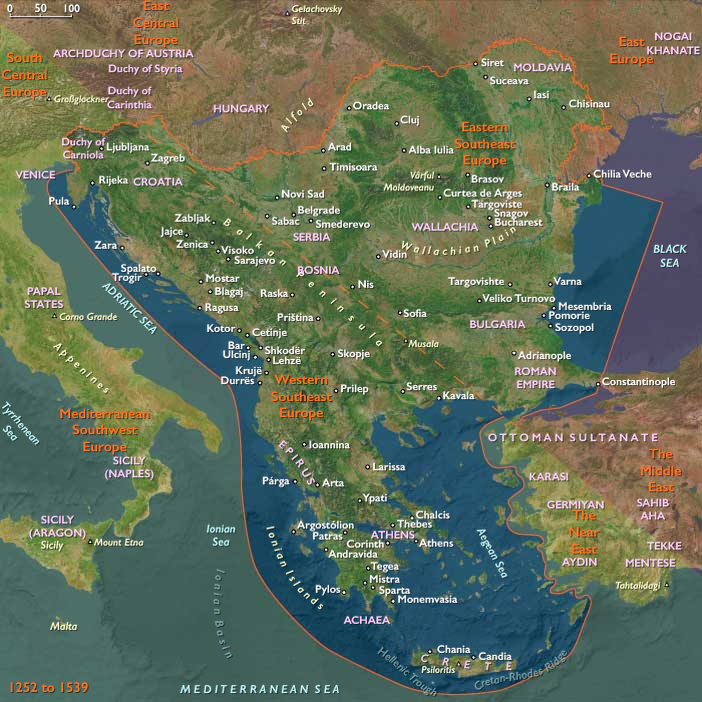
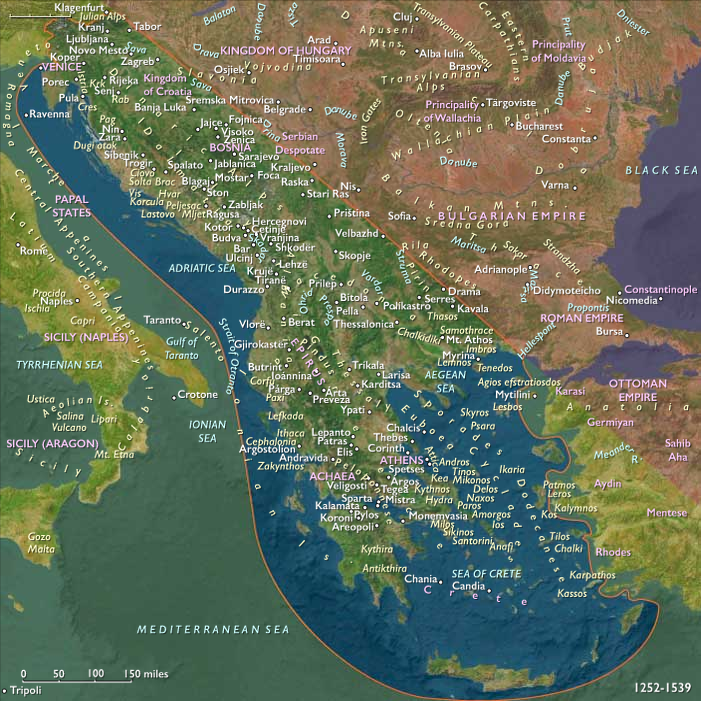
Prince William II Villehardouin, a grandnephew of the Fourth Crusade historian Geoffrey of Villehardouin, was the ruler of the Frankish Principality of Achaea, established in 1205 after the conquest of Constantinople during the Fourth Crusade.
William had in 1249 built a strong castle, the "Oriokastro", which is to play an important role in the history of the last centuries of the Eastern Roman Empire.
The Latins in 1261 had ceded Mystras and other forts in the southeastern Peloponnese as ransom for William II, who had been captured in Pelagonia, and Michael VIII Palaeologus had made the city the seat of the new Despotate of Morea.
It has remained the capital of the despotate, ruled by relatives of the Greek emperor, although the Venetians still control the coast and the islands.
Mystras and the rest of Morea have become relatively prosperous since 1261, compared to the rest of the empire.
In an action which ignored the rights of the Villehardouin Princes, Charles of Anjou had been given Achaea in 1267 by the exiled Baldwin II of Constantinople, who hoped Charles could help him restore the Latin Empire.
Charles and his descendants will not rule in Achaea personally, but they will send money and soldiers to help the principality defend against the Greeks.
The principality has since been governed essentially as a province of the Kingdom of Naples.
With the decreasing power and influence of Achaea, the Duchy of Athens has become the most powerful state in Greece.
Charles II of Naples had at first granted the fiefdom of Morea or Achaea to Princess Isabella of Villehardouin, but he had deposed her in 1307 and granted it to his brother, Philip I of Taranto, inaugurating what is to be a three-generations long and sometimes violent succession dispute.
Locations
People
Groups
Commodoties
Subjects
Regions
Subregions
Related Events
Showing 10 events out of 44896 total
Years: 1309 - 1309
Locations
People
Groups
Commodoties
Subjects
Regions
Subregions