
Prince Naka no Ōe, the son of …
Years: 645 - 645
July
Prince Naka no Ōe, the son of Emperor Jomei, plays a crucial role in ending the near-total control the Soga clan have over the imperial family.
From 644, seeing the Soga continue to gain power, he conspires with Nakatomi no Kamatari and Soga no Kurayamada no Ishikawa no Maro to assassinate Soga no Iruka in what has come to be known as the Isshi Incident.
The assassination of Iruka takes place on July 10, 645, during a court ceremony at which memorials from the Three Kingdoms of Korea are being read to Empress Kōgyoku by Ishikawa no Maro.
Prince Naka no Ōe has made elaborate preparations, including closing the palace gates, bribing several palace guards, hiding a spear in the hall where the ceremony is to take place and ordering four armed men to attack Iruka.
However, when it becomes clear that the four men are too frightened to carry out the orders, Naka no Ōe rushes Iruka himself and cuts open his head and shoulder.
Iruka is not killed immediately, but protests his innocence and pleads for an investigation.
Prince Naka no Ōe pleads his case before Empress Kōgyoku, and when she retires to consider the matter, the four guards finally rush Iruka again and complete the killing.
Shortly afterwards, Iruka's father Soga no Emishi kills himself by setting fire to his residence.
The conflagration destroys the manuscript copy of the Tennōki and many other Imperial treasures which had been taken for safekeeping by the Soga, but Fune no Fubitoesaka quickly grabs the burning Kokki from the flames.
Later, he is said to have presented it to Naka no Ōe; but no known extant copies of the work remain.
The violence actually unfolded in Kōgyoku's presence.
The Empress responds to this shock by determining to renounce the throne.
Japanese society during the Asuka period is sensitive to issues of "pollution," both spiritual and personal.
Deaths—especially a violent killing that, conducted in close physical proximity to the Empress, is considered to be among the worst possible acts of pollution—would warrant days of seclusion in an uncertain process attempting to redress what is been construed as a kind of profanity.
Although Kōgyoku wants to abdicate immediately in favor of Naka no Ōe, Nakatomi no Kamatari insists that throne should pass instead to his older brother, Furuhito no Ōe, or to his maternal uncle (Kōgyoku's brother) Prince Karu.
Furuhito no Ōe resolves the impasse by declaring his intention to renounce any claim to the throne by taking the tonsure of a Buddhist monk.
This same day—traditionally said to be July 12, 645—Furuhito no Ōe shaves off his hair at Hōkō-ji, in the open air between the Hall of Buddha and the pagoda.
At this point, Kōgyoku does abdicate in favor of her brother, who shortly thereafter accedes to the throne as Emperor Kōtoku (645-654).
Following the Isshi Incident, Iruka's adherents disperse largely without a fight, and Naka no Ōe is named heir apparent.
He also marries the daughter of his ally Soga no Kurayamada, thus ensuring that a significant portion of the Soga clan's power is on his side.
Locations
People
- Emperor Kōtoku
- Emperor Tenji
- Empress Kōgyoku
- Fujiwara no Kamatari
- Prince Yamashiro
- Soga no Emishi
- Soga no Iruka
- Soga no Kurayamada no Ishikawa no Maro
Groups
Topics
Commodoties
Subjects
Regions
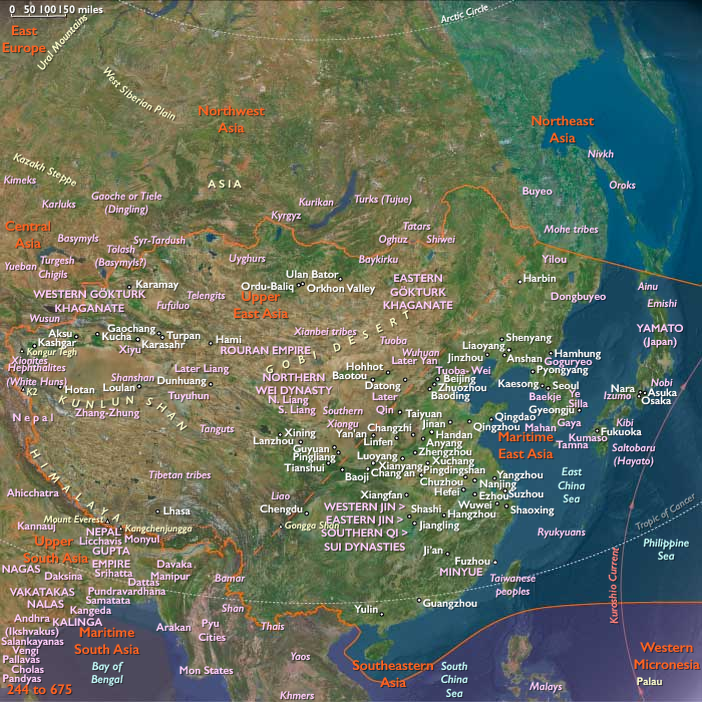
Subregions
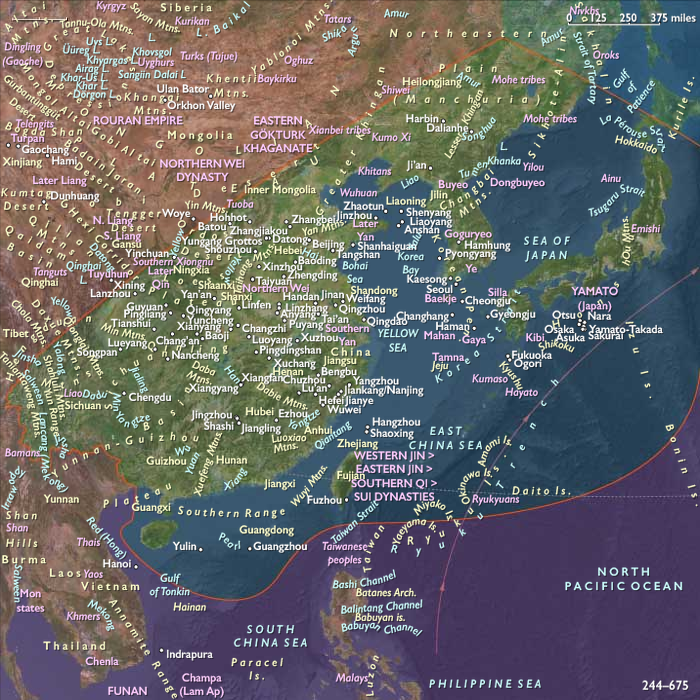
Related Events
Showing 10 events out of 56478 total
Years: 645 - 645
July
Locations
People
- Emperor Kōtoku
- Emperor Tenji
- Empress Kōgyoku
- Fujiwara no Kamatari
- Prince Yamashiro
- Soga no Emishi
- Soga no Iruka
- Soga no Kurayamada no Ishikawa no Maro
Groups
Topics
Commodoties
Subjects
Regions
Subregions