
Pressing south, Cadamosto and Usodimare finally discover …
Years: 1455 - 1455
August
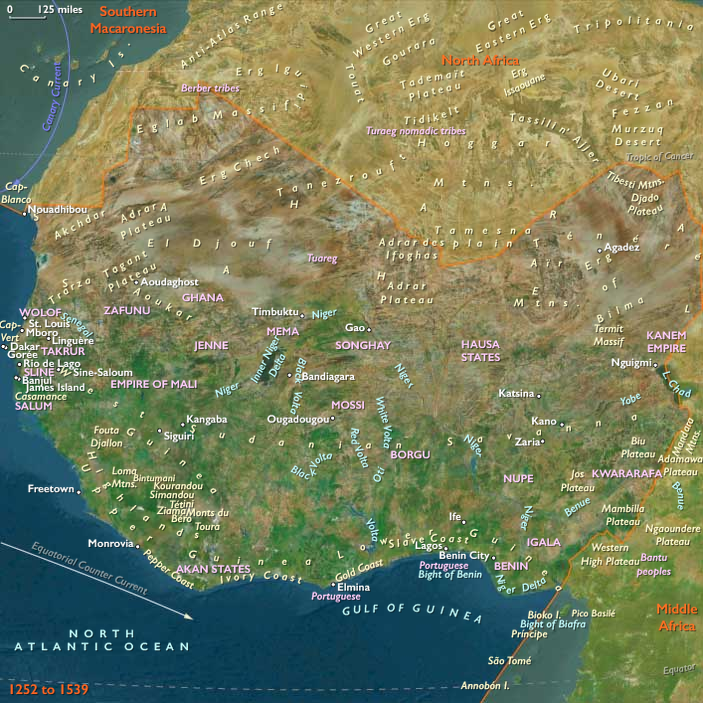
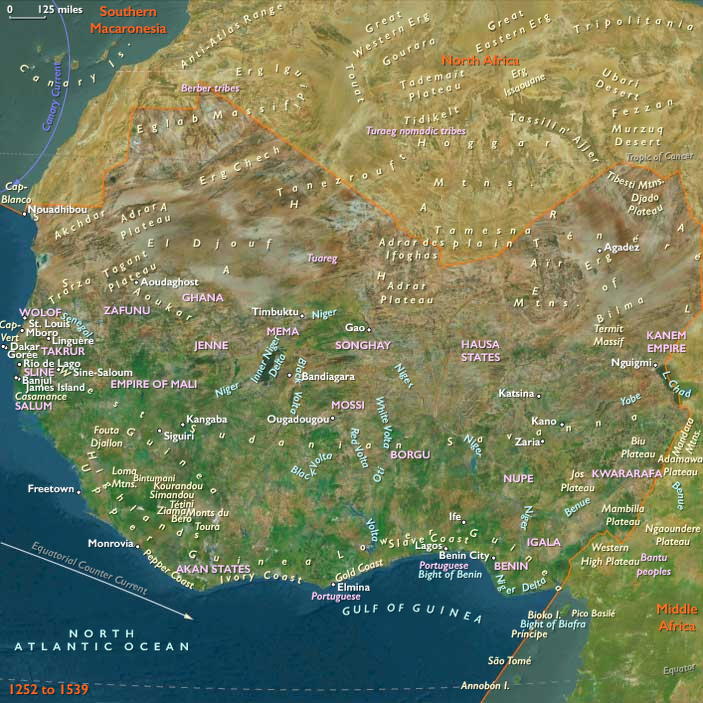
Pressing south, Cadamosto and Usodimare finally discover the mouth of the Gambia River in late June or early July, 1455.
They set about sailing upriver, but their advance faces unremitting hostility from the Mandinka inhabitants upriver.
Subjected to intense missile fire, they barely fend off a massed canoe attack that seeks to trap and board them.
According to Cadamosto's interpreters, the Mandinka believe the Portuguese are cannibals, that they have come to the region to buy black men to eat.
Urged by their frightened crews (and probably desirous to keep his human cargo intact—he has been carrying a shipload of slaves since Cayor), Cadamosto decides to call off venturing further and backs out of the river.
Cadamosto does not supply details of the return trip to Portugal.
At the mouth of the Gambia, Cadamosto makes a note of the near-disappearance of the northern Pole Star on the horizon, and roughly sketches a bright constellation to the south, believed to be the first known depiction of the Southern Cross constellation (albeit wrongly positioned and with too many stars—a more accurate rendition will have to wait until Mestre João Faras in 1500.)
Cadamosto calls it the carro dell' ostro (southern chariot).
It is known that the fleet was back in Portugal before the end of the year, as Antoniotto Usodimare will write a letter dated December 12, 1455, to his creditors back in Genoa, reporting the results of his voyage (albeit with much exaggeration, and without mentioning Cadamosto).
Locations
People
Groups
- Wolof people
- Serer people
- Jolof (Wolof) Empire
- Portugal, Avizan (Joannine) Kingdom of
- Mandinka people
- Portuguese Empire
Topics
Commodoties
Subjects
Regions
Subregions
Years: 1455 - 1455
August
Locations
People
Groups
- Wolof people
- Serer people
- Jolof (Wolof) Empire
- Portugal, Avizan (Joannine) Kingdom of
- Mandinka people
- Portuguese Empire
Topics
Commodoties
Subjects
Regions
Subregions