
Filters:
France withdraws its seven thousand surviving troops …
Years: 1803 - 1803
France withdraws its seven thousand surviving troops from Saint-Domingue , where more than two-thirds of its troops have died, in November 1803, and gives up its ambitions in the Western Hemisphere.
President Thomas Jefferson, who thinks of himself as a man of the frontier, is keenly interested in expanding and exploring the West.
Pierre Samuel du Pont de Nemours, a French nobleman, had begun to help negotiate with France at the request of Jefferson.
Du Pont is living in the United States at this time and has close ties to Jefferson as well as the prominent politicians in France.
He engages in back-channel diplomacy with Napoleon on Jefferson's behalf during a visit to France and originates the idea of the much larger Louisiana Purchase as a way to defuse potential conflict between the United States and Napoleon over North America.
Jefferson dislikes the idea of purchasing Louisiana from France, as that could imply that France has a right to be in Louisiana.
Jefferson has concerns that a U.S. president does not have the constitutional authority to make such a deal.
He also thinks that to do so would erode states' rights by increasing federal executive power.
Throughout this time, Jefferson has had up-to-date intelligence on Napoleon's military activities and intentions in North America.
Part of his evolving strategy involves giving du Pont some information that has been withheld from Livingston.
Desperate to avoid possible war with France, Jefferson sends James Monroe to Paris in January 1803 to negotiate a settlement, with instructions to go to London to negotiate an alliance if the talks in Paris fail.
Spain had procrastinated until late 1802 in executing the treaty to transfer Louisiana to France, which has allowed American hostility to build.
Also, Spain's refusal to cede Florida to France meant that Louisiana would be indefensible.
Monroe had been formally expelled from France on his last diplomatic mission, and the choice to send him again conveys a sense of seriousness.
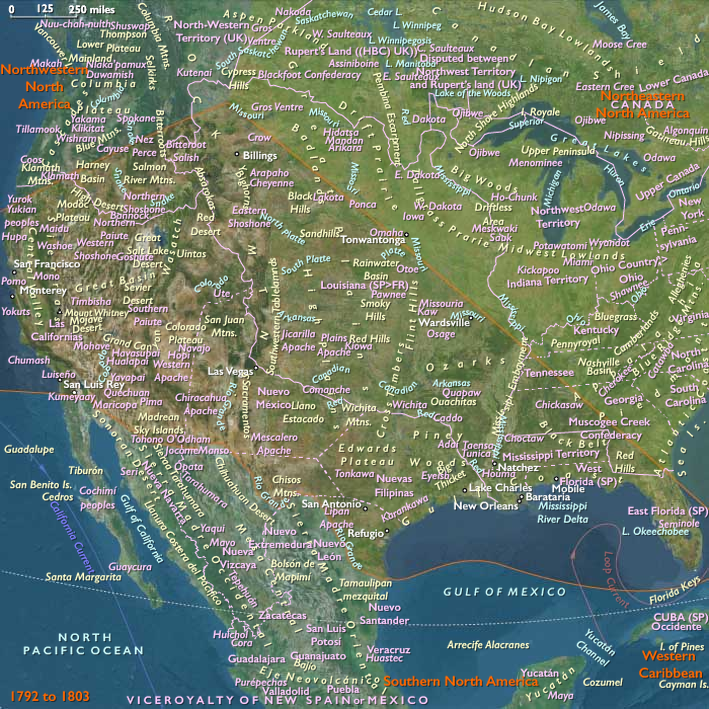
Jefferson's Louisiana Purchase of 1803 doubles the size of the nation at the cost of fifteen million dollars, or about four cents per acre (two hundred and forty million in 2016 dollars, less than forty-two cents per acre).
Federalists oppose the expansion, but Jeffersonians hail the opportunity to create millions of new farms to expand the domain of land-owning yeomen; the ownership will strengthen the ideal republican society, based on agriculture (not commerce), governed lightly, and promoting self-reliance and virtue, as well as form the political base for Jeffersonian Democracy.
Effected on April 30, 1803, the Louisiana Purchase is announced to the American people on July 4; the Senate ratifies the Purchase Treaty on October 20.
President Thomas Jefferson, who thinks of himself as a man of the frontier, is keenly interested in expanding and exploring the West.
Pierre Samuel du Pont de Nemours, a French nobleman, had begun to help negotiate with France at the request of Jefferson.
Du Pont is living in the United States at this time and has close ties to Jefferson as well as the prominent politicians in France.
He engages in back-channel diplomacy with Napoleon on Jefferson's behalf during a visit to France and originates the idea of the much larger Louisiana Purchase as a way to defuse potential conflict between the United States and Napoleon over North America.
Jefferson dislikes the idea of purchasing Louisiana from France, as that could imply that France has a right to be in Louisiana.
Jefferson has concerns that a U.S. president does not have the constitutional authority to make such a deal.
He also thinks that to do so would erode states' rights by increasing federal executive power.
Throughout this time, Jefferson has had up-to-date intelligence on Napoleon's military activities and intentions in North America.
Part of his evolving strategy involves giving du Pont some information that has been withheld from Livingston.
Desperate to avoid possible war with France, Jefferson sends James Monroe to Paris in January 1803 to negotiate a settlement, with instructions to go to London to negotiate an alliance if the talks in Paris fail.
Spain had procrastinated until late 1802 in executing the treaty to transfer Louisiana to France, which has allowed American hostility to build.
Also, Spain's refusal to cede Florida to France meant that Louisiana would be indefensible.
Monroe had been formally expelled from France on his last diplomatic mission, and the choice to send him again conveys a sense of seriousness.
Jefferson's Louisiana Purchase of 1803 doubles the size of the nation at the cost of fifteen million dollars, or about four cents per acre (two hundred and forty million in 2016 dollars, less than forty-two cents per acre).
Federalists oppose the expansion, but Jeffersonians hail the opportunity to create millions of new farms to expand the domain of land-owning yeomen; the ownership will strengthen the ideal republican society, based on agriculture (not commerce), governed lightly, and promoting self-reliance and virtue, as well as form the political base for Jeffersonian Democracy.
Effected on April 30, 1803, the Louisiana Purchase is announced to the American people on July 4; the Senate ratifies the Purchase Treaty on October 20.
Locations
People
Groups
- Saint Domingue, French Colony of
- Illinois Country
- Louisiana (Spanish colony)
- Americans
- French First Republic
- United States of America (US, USA) (Washington DC)
- Louisiana (French colony)
- Louisiana, District of (U.S.A.)
Topics
- Haitian Revolution
- Party System, First (United States)
- Haitian French War of 1801-03
- Haitian Independence, Second War of
- Louisiana Purchase
Commodoties
Subjects
Regions
Subregions
Years: 1803 - 1803
Locations
People
Groups
- Saint Domingue, French Colony of
- Illinois Country
- Louisiana (Spanish colony)
- Americans
- French First Republic
- United States of America (US, USA) (Washington DC)
- Louisiana (French colony)
- Louisiana, District of (U.S.A.)
Topics
- Haitian Revolution
- Party System, First (United States)
- Haitian French War of 1801-03
- Haitian Independence, Second War of
- Louisiana Purchase
Commodoties
Subjects
Regions
Subregions