
Prague, under Charles I (IV, as German …
Years: 1360 - 1371
Prague, under Charles I (IV, as German emperor), has become the cultural center of central Europe.
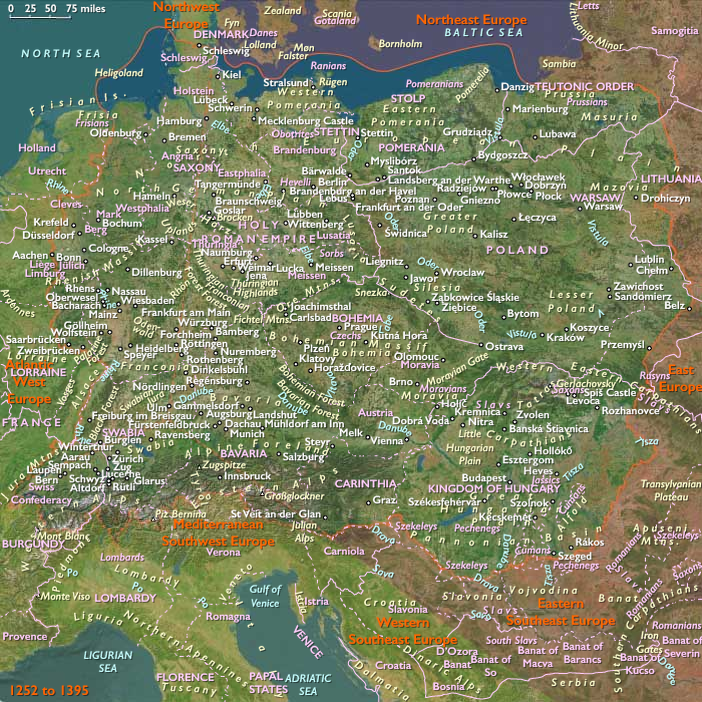
Bohemia’s ruling Luxembourg dynasty invites large numbers of Germans to settle in the mid-fourteenth century in the border districts of Bohemia, Moravia, and those parts of Silesia located within the kingdom, in particular in its cities and in the mountainous borderland areas later called by Germans the Sudetenland.
(The name is derived from that of the Sudetes mountains, which run along the northern Czech border as far as Silesia and contemporary Poland, although it encompasses areas well beyond those mountains.
The word Sudetenland will only came into existence in the early twentieth century, and will only come to prominence after the First World War, when the German-dominated Austria-Hungary is dismembered and the Sudeten Germans find themselves living in the new country of Czechoslovakia.)
The Bohemian Reformation (also known as the Czech Reformation), preceding the Protestant Reformation of the sixteenth century, is a Christian movement in the late medieval and early modern Kingdom and Crown of Bohemia (present-day Czech Republic) striving for a reform of the Roman Catholic Church.
Lasting for more than two hundred years, it will have a significant impact on the historical development of Central Europe.
Locations
People
Groups
Topics
Subjects
Regions
Subregions
Related Events
Showing 10 events out of 44045 total
Years: 1360 - 1371
Locations
People
Groups
Topics
Subjects
Regions
Subregions