
Possibly, even the Spartans are uneasy at …
Years: 426BCE - 426BCE
Possibly, even the Spartans are uneasy at what the main events of 427, at Mytilene and Plataea, have done for their image: they have been ineffective and brutal.
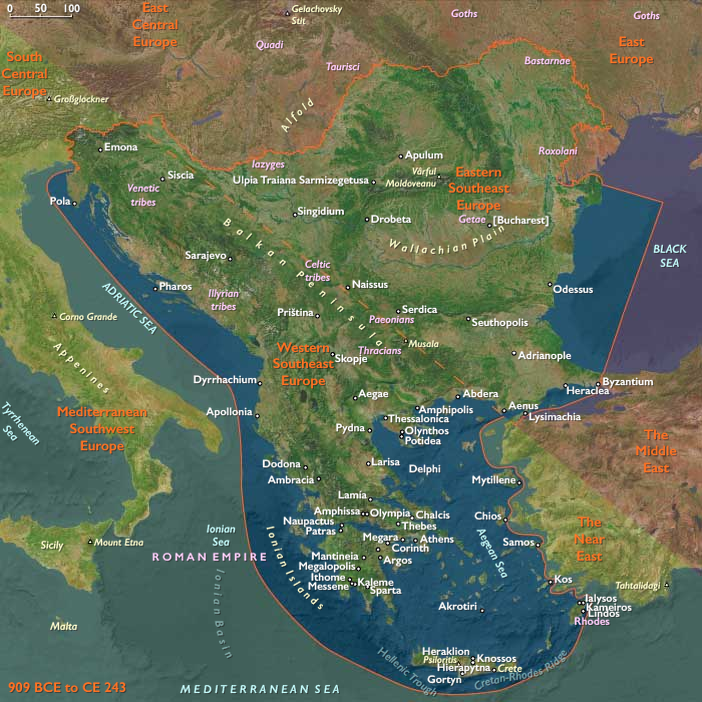
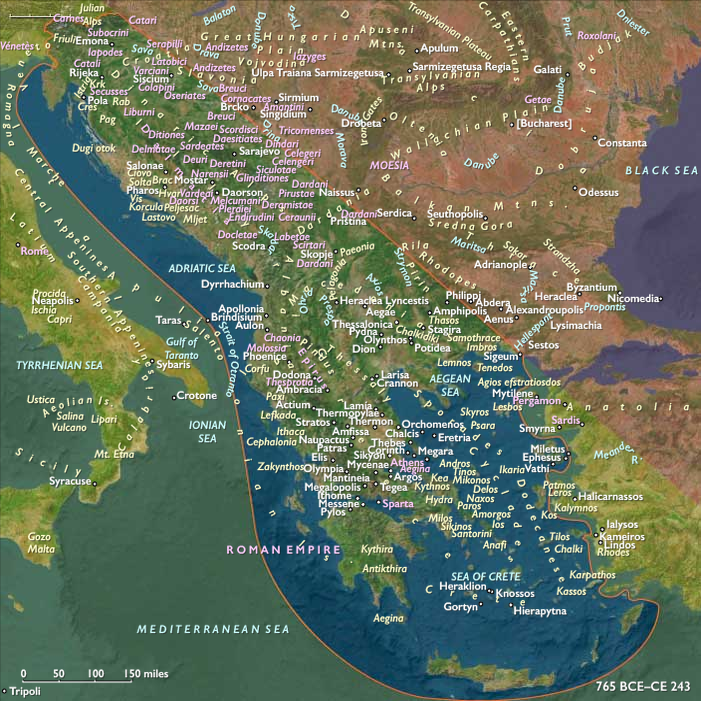
Perhaps in partial redress, but also in pursuit of a traditional line of policy, they issue a general invitation to participate in a large (ten thousand strong) colony at Heraclea in Trachis at the southern approach to Thessaly.
This colonizing effort has intelligible short-term military motives, namely, a perceived need to gain a hold on the Thracian region—the only part of the Athenian empire reachable by land-and a desire to deny Athens access to its larder on Euboea.
However, Thessaly has always featured and is always to feature in ambitious Spartan thinking; and Sparta may already have designs on the amphictyonic vote that one certainly finds Heraclea exercising in the fourth century.
By excluding Ionians, Achaeans, and some others, Sparta is presenting itself as a leader of Dorians, not just as a selfish promoter of Spartan interests.
This is the redress offered to a Greek world well disposed toward Sparta at the beginning of the war but now perhaps dismayed by the way things are going.
Unfortunately, the brutality of Spartan governors at Heraclea, who are harsh and unjust, frightens people away and helps to ruin the project.
Locations
Groups
- Ionians
- Dorians
- Greece, classical
- Achaeans (tribe)
- Sparta, Kingdom of
- Corinth, City-State of
- Thessalian League
- Peloponnesian League (Spartan Alliance)
- Athenian Empire (Delian League)
Topics
- Iron Age Europe
- Greek colonization
- Iron Age Cold Epoch
- Classical antiquity
- Peloponnesian War, Second or Great
- Archidamian War
Commodoties
Subjects
Regions
Subregions
Related Events
Showing 10 events out of 65161 total
Years: 426BCE - 426BCE
Locations
Groups
- Ionians
- Dorians
- Greece, classical
- Achaeans (tribe)
- Sparta, Kingdom of
- Corinth, City-State of
- Thessalian League
- Peloponnesian League (Spartan Alliance)
- Athenian Empire (Delian League)
Topics
- Iron Age Europe
- Greek colonization
- Iron Age Cold Epoch
- Classical antiquity
- Peloponnesian War, Second or Great
- Archidamian War
Commodoties
Subjects
Regions
Subregions