
Atlantic Southwest Europe: Dynastic Ambitions and Maritime …
Years: 1456 - 1467
Atlantic Southwest Europe: Dynastic Ambitions and Maritime Expansion (1456–1467)
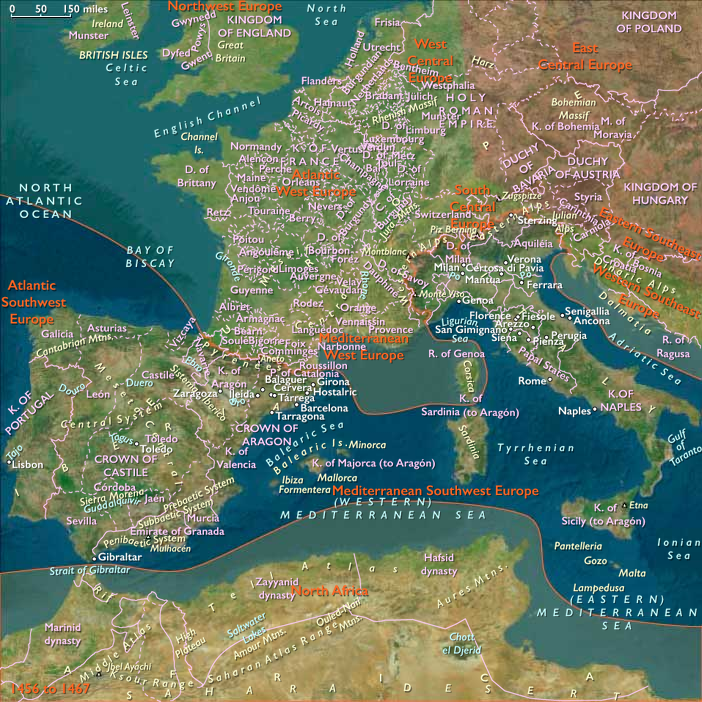
Between 1456 and 1467, Atlantic Southwest Europe was marked by Portugal’s intensified maritime expansion, continued political turbulence in Castile, and persistent dynastic struggles in Navarre. This era deepened Portugal’s integration into global trade networks, while Castile’s internal conflicts and Navarrese succession crises continued to shape regional stability and identity.
Political and Military Developments
-
Portugal:
- King Afonso V (r. 1438–1481) pursued aggressive expansion in North Africa, conquering strategic Moroccan coastal cities such as Alcácer Ceguer (1458) and Arzila (1471 preparations begun), reinforcing Portugal’s growing overseas empire and maritime strength.
- Internally, royal power stabilized, allowing Portugal to invest greater resources in naval technology, cartography, and maritime exploration under the sponsorship of Prince Henry the Navigator until his death (1460).
-
Northern Castile and León:
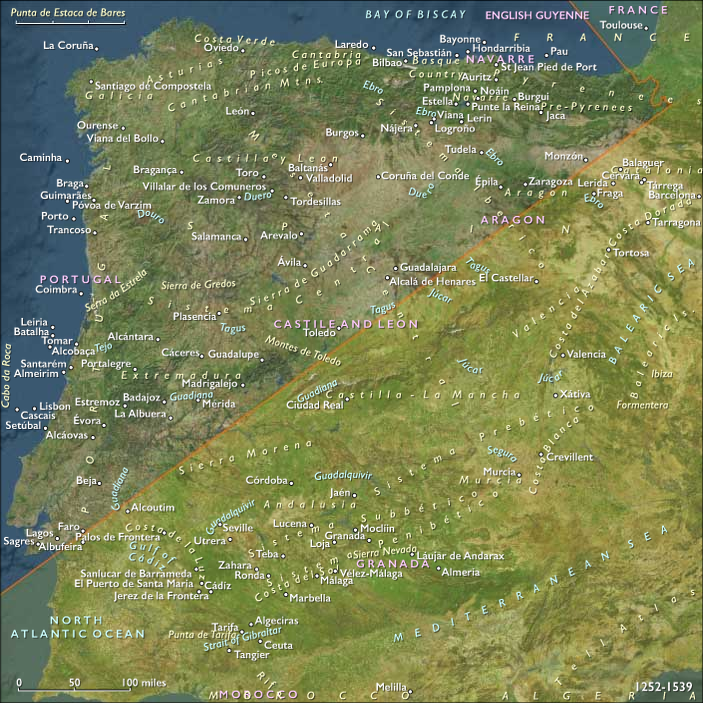
- The troubled reign of King Enrique IV (r. 1454–1474) deepened divisions within Castile, notably in northern regions such as Galicia and the Basque provinces, where noble families increasingly asserted regional autonomy amidst weakened central control.
- Enrique’s contested marriage and disputed succession gave rise to political factions that undermined royal authority, eventually leading to civil unrest and the preliminary steps toward civil war.
-
Navarre:
- Political tension persisted under King John II of Aragon’s controversial interference in Navarrese affairs, culminating in conflicts with his son Charles, Prince of Viana, whose mysterious death in 1461 provoked rebellion and turmoil.
- Navarre increasingly became a pawn in broader Iberian political struggles, destabilizing governance while strengthening regional identities and fueling future conflicts.
Economic and Maritime Expansion
-
Portuguese Maritime Dominance:
- Portugal consolidated its maritime empire, significantly profiting from Atlantic trade networks and the African gold and slave trade, which transformed Lisbon and Porto into prosperous, internationally renowned ports.
- Advances in shipbuilding and navigation enabled more ambitious voyages, underpinning Portugal’s economic expansion and establishing foundations for future global dominance.
-
Trade in Northern Spain:
- Basque ports such as Bilbao, San Sebastián, and Santander maintained strong commercial links to northern Europe, particularly England and Flanders, benefiting economically despite ongoing political instability within Castile.
- The export of wool, iron, and fish from the Basque territories and northern Castile continued robustly, reinforcing the economic vitality of these semi-autonomous regions.
Cultural and Social Developments
-
Advancement of Humanism:
- Portuguese courts increasingly patronized scholars, mapmakers, and explorers, significantly contributing to Renaissance humanism. Influential cartographers such as Fra Mauro and navigators trained in Portuguese nautical schools pushed forward European geographic understanding.
- Cultural and artistic influences from Italy and Flanders enriched royal and noble courts across northern Iberia, particularly in Portugal, fostering a vibrant cultural milieu.
-
Local Autonomy and Regional Identities:
- Basque, Galician, and Navarrese communities continued to defend their traditional legal privileges and cultural practices, reinforcing regional identities amidst Castile’s political weakness.
- Religious pilgrimages, particularly to Santiago de Compostela, remained significant, promoting cultural interchange and scholarly activity along well-traveled routes connecting Iberia with broader European intellectual networks.
Significance and Legacy
The period 1456–1467 was crucial for Atlantic Southwest Europe’s long-term trajectory. Portugal's strategic investments in maritime expansion established the framework for its future global empire, while Castilian political instability set the stage for later decisive civil conflicts. Concurrently, regional autonomy and cultural resilience in the Basque territories and Navarre solidified identities that would deeply influence subsequent political developments and regional interactions.
People
- Afonso V of Portugal
- Charles, Prince of Viana
- Fra Mauro
- Henry IV of Castile
- Henry the Navigator
- John II of Aragon
Groups
- Galicia, Kingdom of
- Islam
- Navarre, Kingdom of
- Basque people
- Christians, Roman Catholic
- Castile, Crown of
- Portugal, Avizan (Joannine) Kingdom of
- Asturias, Principality of
- Portuguese Empire
Topics
Commodoties
Subjects
Regions
Subregions
Years: 1456 - 1467
People
- Afonso V of Portugal
- Charles, Prince of Viana
- Fra Mauro
- Henry IV of Castile
- Henry the Navigator
- John II of Aragon
Groups
- Galicia, Kingdom of
- Islam
- Navarre, Kingdom of
- Basque people
- Christians, Roman Catholic
- Castile, Crown of
- Portugal, Avizan (Joannine) Kingdom of
- Asturias, Principality of
- Portuguese Empire
Topics
Commodoties
Subjects
Regions
Subregions