
Atlantic Southwest Europe (1828–1971 CE) Interior …
Years: 1828 - 1971
Atlantic Southwest Europe (1828–1971 CE)
Interior Vineyards, Coal Valleys, and Capitals under Dictatorships
Geography & Environmental Context
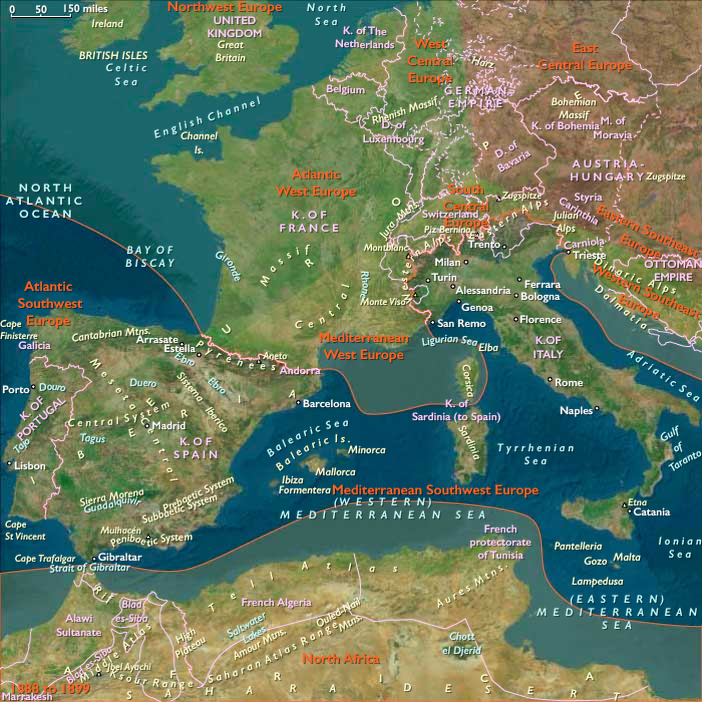
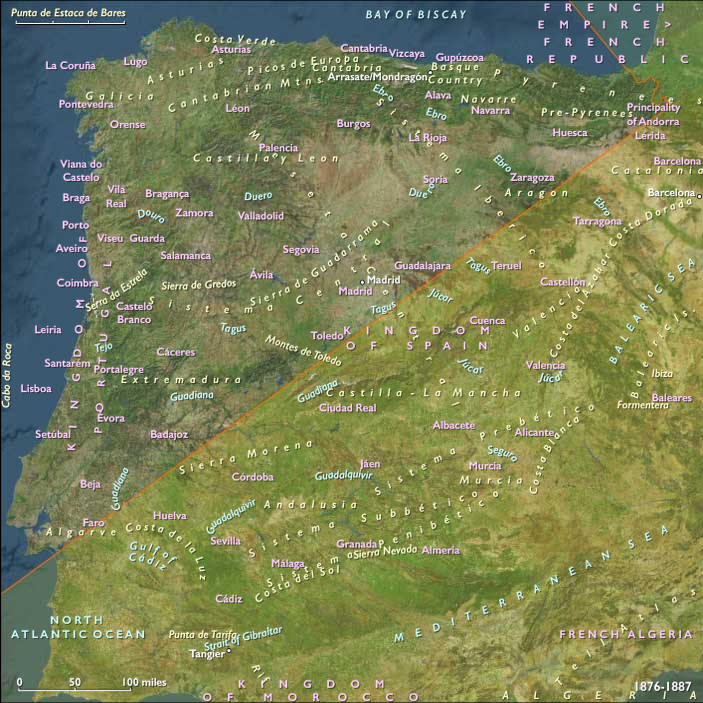
Atlantic Southwest Europe comprises northern Spain and central to northern Portugal (including Lisbon). It is an interior-leaning Atlantic rim: Galicia, Asturias, Cantabria, León, and the northern Meseta in Spain; Minho, Trás-os-Montes, Beira, and the Tagus–Douro valleys in Portugal—plus Lisbon as an estuarine capital. The landscape mixes rain-fed hills, granitic uplands, river terraces, and vineyard slopes (notably the Douro), with cool, wet winters and mild summers that favor grains, vines, and pasture.
Climate & Environmental Shifts
A temperate, ocean-modulated regime brought high rainfall to the northwest and drier interiors to the south and east. Crop failures periodically followed cold spells (1830s) and vine disease (phylloxera in the 1870s–1890s). Post-1945 damming moderated river floods and expanded irrigation, while mid-century reforestation (eucalyptus and pine, especially in Galicia and northern Portugal) altered fire regimes and rural economies.
Subsistence & Settlement
-
Farms & holdings: A mosaic of small plots—minifundio in Galicia/Minho—produced rye, maize, potatoes, wine, olives, and garden crops; communal pastures supported cattle and dairy. In some Portuguese districts, larger latifúndio-style estates lingered on the margins of the region.
-
Vine and olive belts: The Douro’s schist terraces supplied fortified wines; Dão and Bairrada developed quality table wines. Phylloxera devastation forced grafting onto American rootstocks and vineyard restructuring.
-
Mining & industry: Asturias and León expanded coal and iron (19th–early 20th c.), feeding steelworks and railways; textile workshops and paper mills dotted Minho and Beira; Lisbon drew food-processing, printing, and later electrical goods.
-
Urban network: Lisbon dominated administration, finance, and culture; Porto led wine trade and manufacturing; Oviedo, León, Santiago de Compostela, Braga, and Guimarães anchored regional services, schools, and markets.
Technology & Material Culture
Railways (Douro line to the Upper Douro; Minho and Beira lines; León–Asturias coal routes) linked interior valleys to capitals. Wine technology modernized with grafting, sulfur, and temperature-aware cellaring; cooperative dairies spread in Minho and Galicia. Hydropower projects (e.g., mid-century Douro/Tagus systems; Zêzere’s Castelo de Bode) electrified towns and mills. Rural material life shifted from stone farmsteads and hand looms to radio, bicycles, and, after 1950, tractors and household appliances—unevenly distributed.
Movement & Interaction Corridors
-
River corridors: The Douro and Tagus valleys funneled grain, wine, and timber toward Porto and Lisbon; Spain’s northern coal lines moved fuel to interior foundries and power.
-
Emigration: Recurring out-migration to the Americas (19th c.) and, after 1945, to France, Germany, Switzerland, and Luxembourg relieved rural pressure and sent remittances home.
-
Pilgrimage & learning: Roads to Santiago de Compostela sustained hospitality trades; universities in Santiago, Coimbra, and Lisbon shaped professional elites.
-
State arteries: Customs, conscription, and schooling integrated hinterlands into centralized regimes in Madrid and Lisbon.
Cultural & Symbolic Expressions
-
Portugal: Liberal Wars (1828–1834) gave way to constitutional monarchism, then the Estado Novo (from 1933), which promoted ruralist ideals and fado as urban folklore, while censoring dissent. Coimbra fado, literary modernism, and Lisbon cafés nurtured counter-cultures beneath official narratives.
-
Spain (north): The Carlist Wars repeatedly mobilized conservative rural communities; the Spanish Civil War (1936–1939) ruptured Galicia–Asturias–León, followed by Franco’s dictatorship. Galician letters (Castelao, later Celso Emilio Ferreiro) and regional languages persisted within censorship’s limits; craft festivals, romerías, and confraternities sustained local identity.
-
Common threads: Brotherhoods, harvest feasts, wine confraternities, and student tunas (song groups) bridged town and countryside; post-1945 football clubs, radio, and television reknit cultural space.
Environmental Adaptation & Resilience
Terracing and dry-stone walls conserved thin soils on vine slopes; crop rotations (maize–beans–fodder) stabilized yields; chestnut groves, dairy cooperatives, and small orchards buffered income. After phylloxera, grafting and hillside replanting rescued wine. Hydropower, rural electrification, and postwar road-building reduced isolation; remittances financed cisterns, masonry houses, and tractors. Forest cooperatives and parish firefighting faced new plantation fire risks.
Political & Military Shocks
-
Portugal: Liberal Wars (1828–1834); late-century republican agitation culminating in 1910 revolution; Estado Novo consolidation (1933–1971 within this period), wartime neutrality, and colonial wars beginning in the 1960s.
-
Spain: Carlist conflicts (1833–1876), industrial strikes in Asturias (early 20th c.), Civil War (1936–1939) with severe repression in the aftermath; autarky (1940s) followed by development plans (1960s) that spurred roads, dams, and migration.
These shocks redirected land tenure, taxation, and conscription, reshaping everyday life from village commons to university lecture halls.
Transition
From 1828 to 1971, Atlantic Southwest Europe shifted from smallholder mosaics and coal valleys into a region of terraced wines, electrified interiors, and authoritarian capitals. The Douro’s rebuilt vineyards, Lisbon’s bureaucratic and cultural gravity, Asturias’s coal districts, and Galicia–Minho’s emigrant networks defined its arc. Wars and dictatorships constrained politics, yet households adapted through cooperative dairies, hydropower, remittances, and education. By 1971, despite persistent rural poverty pockets, the region stood knitted to Western European markets and migration circuits—its hillsides of vine and maize, and its capitals’ ministries and cafés, poised for the democratic transformations and EEC integrations soon to follow.
People
Groups
- Galicia, Kingdom of
- Basque people
- Portuguese Mozambique
- Angola (Portuguese colony)
- Portuguese Guinea
- Portugal, Bragança Kingdom of
- Spain, Bourbon Kingdom (first restoration) of
- Brazilian Empire
- Spain, Bourbon Kingdom (second restoration) of
- Portuguese East Africa (Moçambique)
- Portugal, (First) Republic of
- Spain (Spanish Republic, Second)
- Portugal, (New) State of
- Moçambique (Portuguese East Africa)
- ETA (Euskadi Ta Askatasuna, "Basque Homeland and Freedom”)
Topics
- Carlist War, First
- Carlist War, Second
- Carlist War, Third
- Depression, Great
- Spanish Civil War of 1936-39
- Angolan War of Independence
Commodoties
Subjects
Regions
Subregions
Years: 1828 - 1971
People
Groups
- Galicia, Kingdom of
- Basque people
- Portuguese Mozambique
- Angola (Portuguese colony)
- Portuguese Guinea
- Portugal, Bragança Kingdom of
- Spain, Bourbon Kingdom (first restoration) of
- Brazilian Empire
- Spain, Bourbon Kingdom (second restoration) of
- Portuguese East Africa (Moçambique)
- Portugal, (First) Republic of
- Spain (Spanish Republic, Second)
- Portugal, (New) State of
- Moçambique (Portuguese East Africa)
- ETA (Euskadi Ta Askatasuna, "Basque Homeland and Freedom”)
Topics
- Carlist War, First
- Carlist War, Second
- Carlist War, Third
- Depression, Great
- Spanish Civil War of 1936-39
- Angolan War of Independence
Commodoties
Subjects
Regions
Subregions