Portugal’s Maritime Expansion: The Driving Forces Behind the Age of Discovery
By the 15th century, Portugal had emerged as Europe’s leading seafaring nation, driven by a combination of geographic necessity, economic ambition, religious zeal, and military tradition. The Portuguese would soon launch the Age of Discovery, opening new trade routes, establishing global colonies, and changing world history.
Geographic and Economic Factors Favoring Maritime Expansion
1. Portugal’s Long Coastline and Seafaring Tradition
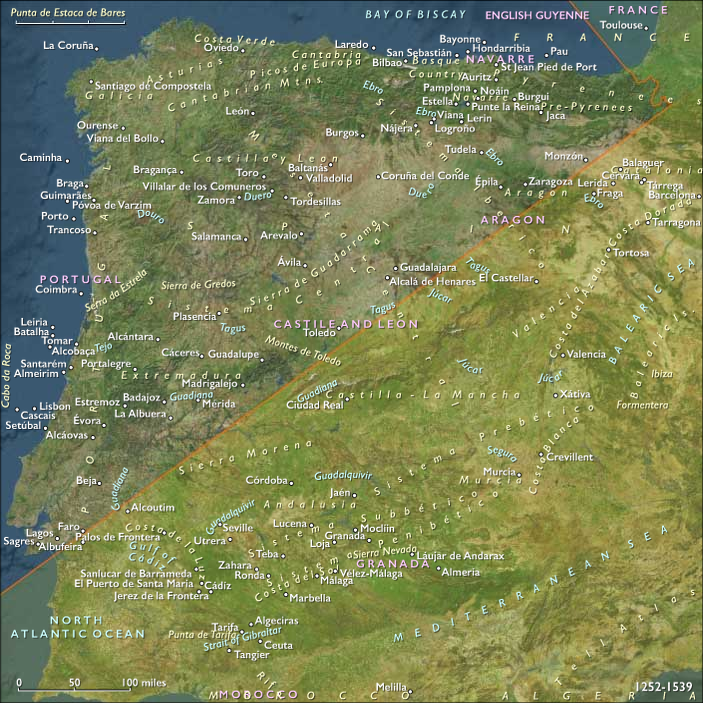
- Portugal’s long Atlantic coastline, natural harbors, and westward-flowing rivers made it ideal for developing a strong naval and merchant fleet.
- Over generations, Portuguese sailors had honed their skills in deep-sea navigation and shipbuilding, making them natural leaders of exploration.
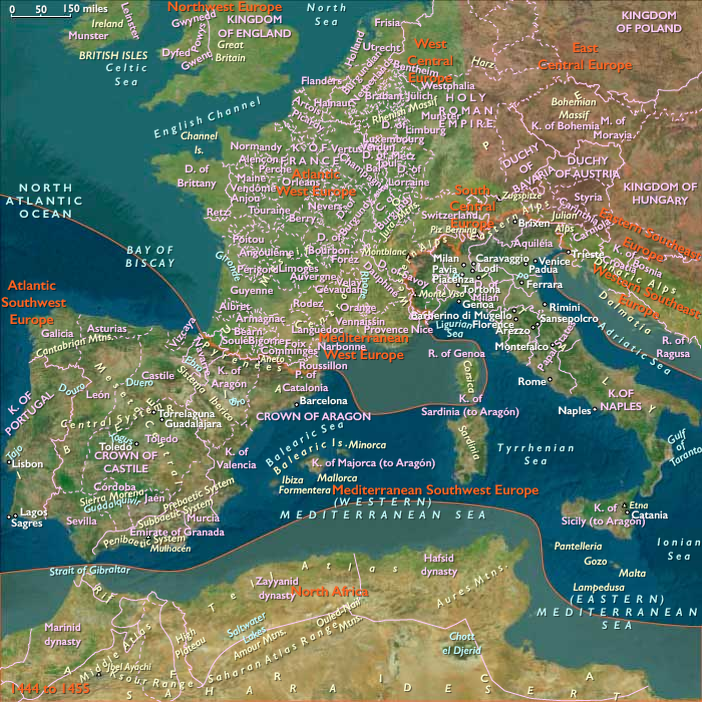
- As the southwesternmost country in Europe, Portugal faced two choices for trade:
- Land routes through Castile and Aragon, which were politically difficult.
- Maritime routes, where Portugal could use its superior naval expertise to reach markets in England, Flanders, Italy, and the Hanseatic League towns.
2. The Crusading Spirit and Military Ambitions
- Portugal’s long struggle to expel the Moors (the Reconquista) had instilled a deep-rooted Christian militancy in its ruling class.
- The conquest of Ceuta in 1415 was seen as a continuation of the Crusades, linking Portuguese expansion with the fight against Islamic control of trade routes.
- Portuguese kings and nobles sought new conquests overseas, driven by:
- Religious duty—spreading Christianity to new lands.
- Martial glory—gaining fame in battle against Muslim forces.
- Economic reward—securing trade wealth from Africa and the East.
3. Breaking the Venetian and Ottoman Trade Monopoly
- By the mid-15th century, Portugal had a pressing need to circumvent the costly trade routes controlled by Muslim and Italian merchants.
- Venice and Genoa dominated Mediterranean trade, serving as middlemen for Asian silk and spices.
- After Constantinople fell to the Ottomans in 1453, overland trade with Asia became even more difficult and expensive.
- The alternative was to sail around Africa and establish direct access to gold, spices, and silk.
4. The Demand for Spices: A Driving Economic Force
- Spices such as pepper, cinnamon, cloves, and nutmeg were in high demand in Europe.
- Used for:
- Preserving food before refrigeration.
- Medicine and perfume production.
- Religious rituals and luxury consumption.
- Spices were among the most profitable goods of the era, rivaling gold in value.
Portugal’s Role as a Pioneer of Exploration
- Prince Henry the Navigator (1394–1460) spearheaded Portugal’s exploration of the African coast, seeking:
- Gold from West Africa.
- A sea route to India.
- Potential Christian allies like the legendary Prester John.
- By the 1460s, Portuguese ships had reached Cape Verde and the Gambia River, setting the stage for:
- Bartolomeu Dias rounding the Cape of Good Hope (1488).
- Vasco da Gama reaching India (1498).
Conclusion: A Nation Poised for Global Expansion
Portugal’s strategic location, naval expertise, economic ambitions, and crusading spirit made it the first European power to launch large-scale overseas exploration. The search for gold, spices, and new markets led Portugal to establish the first global maritime empire, shaping the modern world.