
King Manuel I and the Forced Conversion …
Years: 1496 - 1496
December
King Manuel I and the Forced Conversion of Portuguese Jews (1496–1497)
King Manuel I of Portugal (r. 1495–1521) was a deeply religious monarch, known for his missionary sponsorship, crusading ambitions, and grand architectural projects, such as the Monastery of Jerónimos. However, his reign also marked the forced conversion and expulsion of Jews and Muslims from Portugal, a dramatic shift from the relative tolerance under previous kings.
Initial Favorable Treatment of Jews Under Manuel I
- When Manuel ascended the throne in 1495, he initially had good relations with the Jewish community.
- One of his first acts as king was to release all Jews who had been imprisoned during the reign of his predecessor, John II.
- The Jewish population in Portugal was highly educated, contributing to finance, medicine, science, and commerce.
The Marriage Alliance That Changed Everything (1496)
- Manuel sought to marry Infanta Isabella of Aragon, the eldest daughter of Ferdinand and Isabella of Spain and heiress to the future unified Spanish throne.
- However, the Catholic Monarchs had expelled all Jews from Spain in 1492, and they refused to marry their daughter to a king who still tolerated Jews and Muslims.
- As a condition of the marriage, Manuel agreed to expel or forcibly convert all Jews and Muslims in Portugal.
The Decree of Expulsion and Forced Conversions (December 1496)
- In December 1496, Manuel issued an edict requiring all Jews to either convert to Christianity or leave Portugal.
- However, the decree imposed harsh conditions:
- Jews who chose to leave had to abandon their children, who would be taken and raised as Christians.
- They could only leave on ships designated by the king, giving the Crown complete control over their departure.
The Lisbon Port Trap: Forced Baptisms (1497)
- When Jews who had opted for expulsion arrived at the port of Lisbon, they were met by clerics and soldiers.
- Instead of allowing them to board ships, authorities used:
- Coercion, threats, and deception to force baptisms.
- Violence and physical force to prevent departures.
- Promises of safety if they accepted conversion.
- Most Jews were forcibly baptized, and their legal presence in Portugal "technically ended"—though many continued practicing Judaism in secret.
The Creation of the "New Christians"
- After the mass conversion of Jews, they and their descendants became known as "New Christians" (Cristãos-Novos).
- A grace period of 30 years was granted, during which no official inquiries into their faith were allowed.
- However, many Old Christians remained suspicious, leading to rising anti-Semitic sentiment and persecution.
- In 1536, under King John III, Portugal established the Portuguese Inquisition, targeting crypto-Jews ("Marranos") suspected of secretly practicing Judaism.
Consequences of Manuel I’s Policy
-
Portugal Lost a Skilled and Educated Population
- Many Jewish doctors, merchants, and scholars fled Portugal (often to the Ottoman Empire, Italy, and the Netherlands).
- Portugal’s scientific and economic progress suffered.
-
Crypto-Judaism and the Portuguese Inquisition
- Many converted Jews (Conversos) secretly practiced their faith, leading to accusations of heresy.
- By 1536, the Inquisition targeted these New Christians, leading to persecution, imprisonment, and executions.
-
The Marriage to Isabella and the End of Religious Tolerance
- Manuel’s marriage to Isabella in 1497 secured his ties to Spain but came at the cost of Portugal’s historic religious pluralism.
Conclusion: A Turning Point in Portuguese Religious Policy
- Manuel I, despite his initial tolerance, ultimately succumbed to political pressure from Spain, enforcing one of the largest forced conversions in Iberian history.
- While his reign led to Portugal’s Golden Age of Exploration, his religious policies resulted in suffering, exile, and the eventual establishment of the Portuguese Inquisition.
- The expulsion and forced conversion of Jews and Muslims marked the end of an era of relative coexistence in Portugal and set the stage for religious persecution in the following centuries.
Locations
People
- Ferdinand II of Aragon
- Francisco Álvares
- Isabella I of Castile
- Isabella, Queen consort of Portugal and the Algarves
- Manuel I of Portugal
Groups
- Jews
- Muslims, Sunni
- Christians, Roman Catholic
- Aragon, Crown of
- Castile, Crown of
- Portugal, Avizan (Joannine) Kingdom of
- Portuguese Empire
- Christians, New
Subjects
Regions
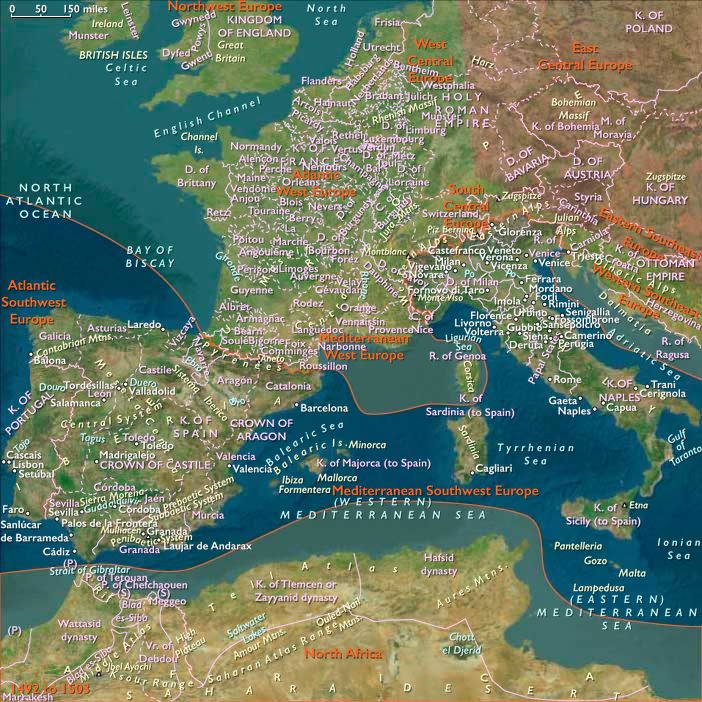
Subregions
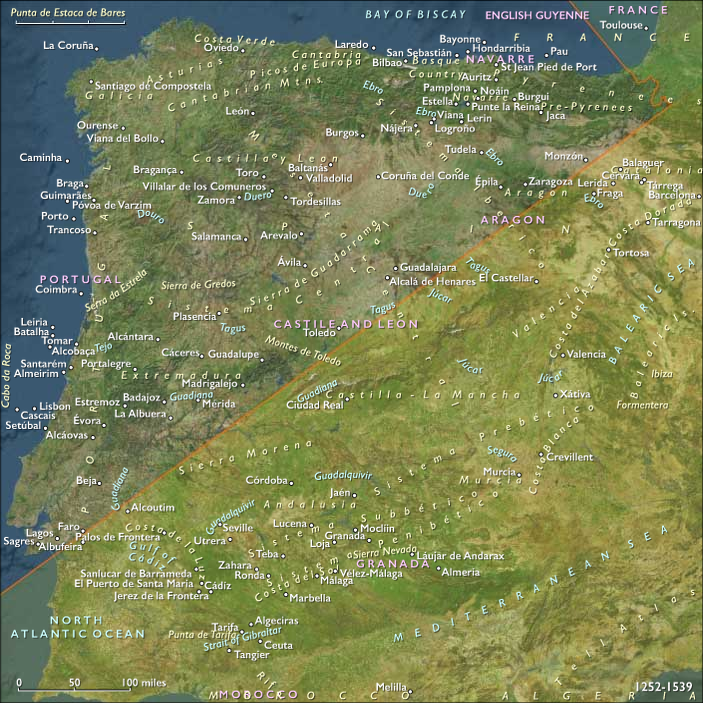
Related Events
Showing 10 events out of 40163 total
Years: 1496 - 1496
December
Locations
People
- Ferdinand II of Aragon
- Francisco Álvares
- Isabella I of Castile
- Isabella, Queen consort of Portugal and the Algarves
- Manuel I of Portugal
Groups
- Jews
- Muslims, Sunni
- Christians, Roman Catholic
- Aragon, Crown of
- Castile, Crown of
- Portugal, Avizan (Joannine) Kingdom of
- Portuguese Empire
- Christians, New
Subjects
Regions
Subregions