
Atlantic Southwest Europe: Maritime Ambition, Imperial Expansion, …
Years: 1492 - 1503
Atlantic Southwest Europe: Maritime Ambition, Imperial Expansion, and Political Consolidation (1492–1503)
Between 1492 and 1503, Atlantic Southwest Europe entered an era of dramatic maritime discovery, imperial ambition, and political consolidation. Spain's unification under Ferdinand and Isabella culminated in the momentous voyage of Christopher Columbus, while Portugal, under King João II and his successor Manuel I, expanded maritime exploration significantly, solidifying its global commercial presence. Navarre, facing persistent threats, sought survival amidst growing Spanish and French dominance.
Political and Military Developments
-
Spain (Castile, León, and Northern Provinces):
- The reign of Ferdinand II of Aragon and Isabella I of Castile (joint rule 1479–1504) reached its zenith with the completion of the Reconquista, marked by the fall of Granada (1492), ending Muslim rule in Iberia.
- In northern Spain, including Basque Country and northern Rioja, the Catholic Monarchs pursued centralization, yet respected regional fueros (local laws), thus maintaining a delicate balance between royal authority and regional autonomy.
-
Portugal:
- Following the death of João II (1495), King Manuel I (r. 1495–1521) ascended to the throne, intensifying Portugal’s maritime and imperial ambitions.
- Manuel strengthened royal authority, significantly curtailed noble privileges, and secured Portugal’s commercial interests through diplomatic means, notably the Treaty of Tordesillas (1494) with Spain, which divided newly discovered territories in the Atlantic between the two powers.
-
Navarre:
- Queen Catherine of Foix continued her delicate diplomacy to maintain Navarrese independence, negotiating carefully between powerful neighbors.
- Increasingly isolated, Navarre faced mounting external threats, setting the stage for future conflicts over its sovereignty.
Economic and Maritime Expansion
-
Spanish Maritime and Imperial Expansion:
- The most momentous event of the era was Columbus's voyage (1492), financed by Ferdinand and Isabella. The discovery of the Americas opened vast territories for colonization, dramatically expanding Spain’s wealth, influence, and maritime ambitions.
- Northern ports, particularly those in Galicia and Basque Country, experienced a surge in shipbuilding and trade, fueled by transatlantic commerce and fisheries, notably the cod trade from Newfoundland.
-
Portuguese Exploration and Commerce:
- Portugal’s maritime exploration reached unprecedented heights: Vasco da Gama’s expedition (1497–1499) established a direct sea route to India, profoundly reshaping global trade.
- Lisbon emerged as Europe's premier commercial port, benefiting immensely from spice trade profits, dramatically transforming Portugal’s economy.
-
Navarre’s Economic Challenges:
- Navarre remained economically dependent on regional trade, agriculture, and cross-border commerce with France and northern Spain, though increasingly vulnerable politically.
Cultural and Social Developments
-
Spanish Religious and Cultural Uniformity:
- Ferdinand and Isabella intensified religious centralization, notably through the Alhambra Decree (1492), which expelled Jews who refused conversion, profoundly reshaping Spain’s demographic and cultural landscape.
- Cultural patronage flourished, exemplified by the support of artists, scholars, and writers, notably the humanist scholar Antonio de Nebrija, whose grammar (1492) standardized Castilian Spanish.
-
Portuguese Cultural Renaissance:
- Under Manuel I, Portugal experienced a vibrant cultural renaissance. Architectural projects such as the Jerónimos Monastery and the expansion of the University of Coimbra reflected prosperity and artistic creativity.
- The Portuguese court attracted renowned intellectuals, scientists, and navigators, reinforcing Lisbon as a center of European learning and innovation.
-
Navarre’s Cultural Autonomy:
- Despite pressures, Navarre sustained its unique traditions, laws, and institutions, demonstrating cultural resilience even as political autonomy diminished.
Significance and Legacy
The years 1492–1503 represented a watershed moment for Atlantic Southwest Europe, fundamentally altering its global position. Spain’s initiation of transatlantic colonization transformed European geopolitics and economics. Portugal’s maritime empire reached new heights, establishing Lisbon as a leading global commercial and cultural hub. Navarre’s fragile independence underscored the challenges faced by smaller states amid rising European powers. The era’s legacy persisted in the global colonial systems, economic transformations, and cultural shifts that characterized the dawn of early modern Europe.
People
- Antonio de Nebrija
- Catherine of Navarre
- Christopher Columbus
- Ferdinand II of Aragon
- Isabella I of Castile
- John II of Portugal
- Manuel I of Portugal
- Vasco da Gama
Groups
- Jews
- Islam
- Navarre, Kingdom of
- Basque people
- Christians, Roman Catholic
- Aragon, Crown of
- Castile, Crown of
- Granada, Emirate of, or Nasrid Kingdom of
- Portugal, Avizan (Joannine) Kingdom of
- Portuguese Empire
Topics
- Reconquista, the
- Renaissance Architecture
- Age of Discovery
- Colonization of the Americas, Portuguese
- Granada War
- Granada, Fall of
- Colonization of the Americas, Spanish
- Colonization of Asia, Portuguese
Commodoties
Subjects
Regions
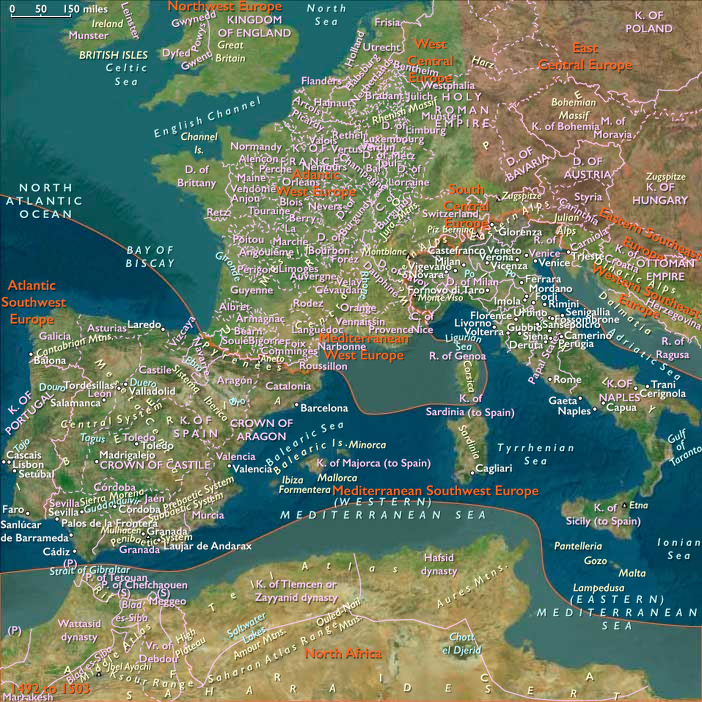
Subregions
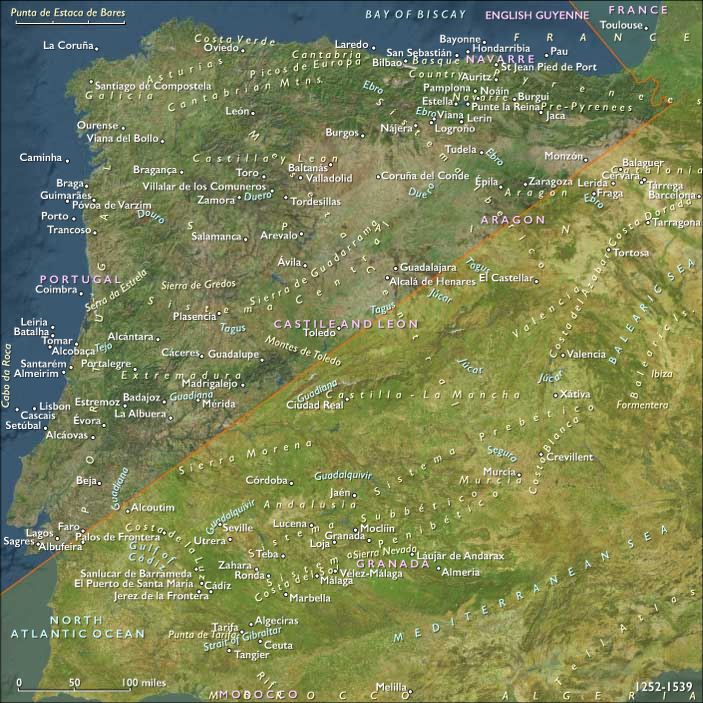
Related Events
Showing 10 events out of 40412 total
Years: 1492 - 1503
People
- Antonio de Nebrija
- Catherine of Navarre
- Christopher Columbus
- Ferdinand II of Aragon
- Isabella I of Castile
- John II of Portugal
- Manuel I of Portugal
- Vasco da Gama
Groups
- Jews
- Islam
- Navarre, Kingdom of
- Basque people
- Christians, Roman Catholic
- Aragon, Crown of
- Castile, Crown of
- Granada, Emirate of, or Nasrid Kingdom of
- Portugal, Avizan (Joannine) Kingdom of
- Portuguese Empire
Topics
- Reconquista, the
- Renaissance Architecture
- Age of Discovery
- Colonization of the Americas, Portuguese
- Granada War
- Granada, Fall of
- Colonization of the Americas, Spanish
- Colonization of Asia, Portuguese
Commodoties
Subjects
Regions
Subregions