
Filters:
Sugar prices rise in Europe, but Brazilian …
Years: 1540 - 1683
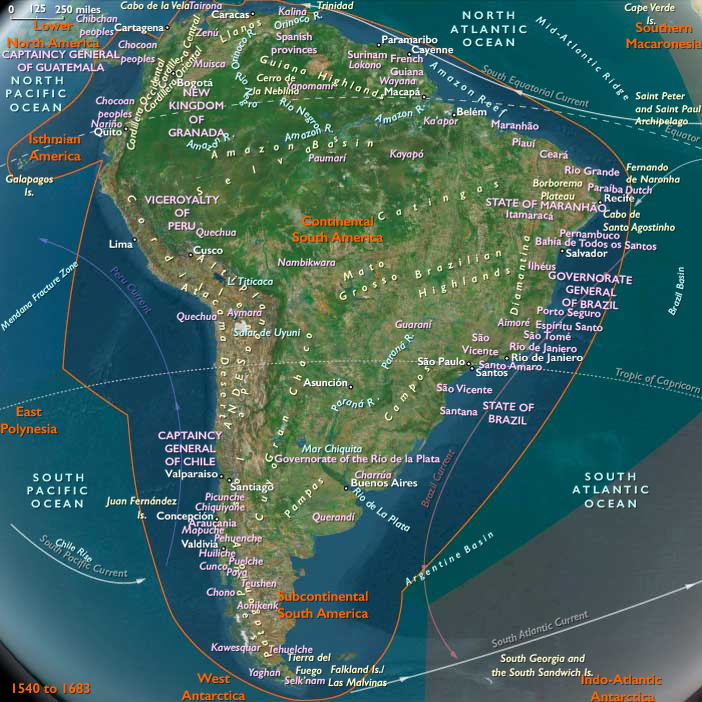
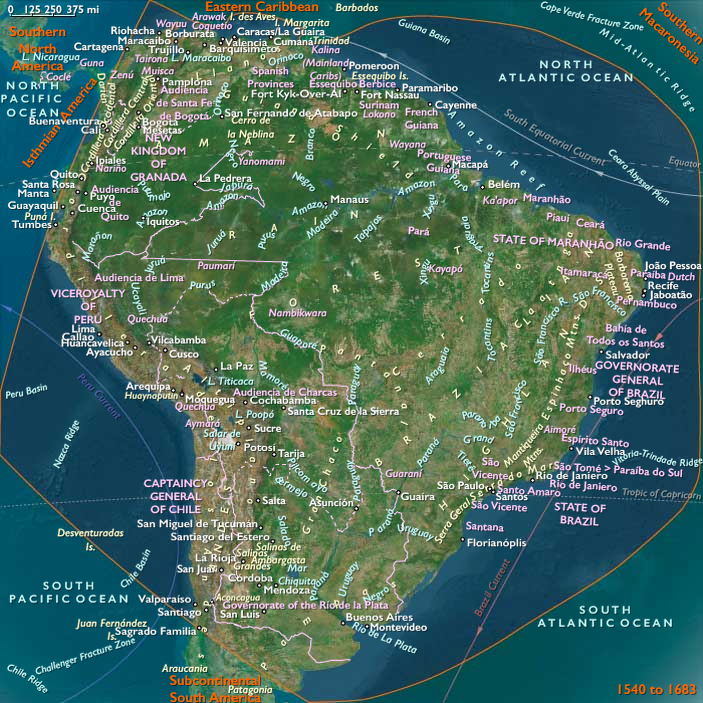
Sugar prices rise in Europe, but Brazilian planters cannot respond and permanently lose their leading market position.
The Dutch and English set up plantations in Suriname and Barbados, taking advantage of the techniques developed in Brazil and their better access to capital, merchant fleets, and the northern European market.
There will be years of recovery (1665-80, 1698-1710), but sugar is no longer the foundation of the Brazilian economy.
Northeastern Brazil enters into a long stagnation, and Portugal, which now depends heavily on Brazil after its losses to the Dutch in the East Indies, watches its economy deteriorate.
The Dutch and English set up plantations in Suriname and Barbados, taking advantage of the techniques developed in Brazil and their better access to capital, merchant fleets, and the northern European market.
There will be years of recovery (1665-80, 1698-1710), but sugar is no longer the foundation of the Brazilian economy.
Northeastern Brazil enters into a long stagnation, and Portugal, which now depends heavily on Brazil after its losses to the Dutch in the East Indies, watches its economy deteriorate.
Locations
Groups
- Brazil, Indigenous people in
- Dutch people
- Portuguese people
- English people
- Portuguese Empire
- Brazil, Colonial
- Spaniards (Latins)
- Spain, Habsburg Kingdom of
- Portugal, Habsburg (Philippine) Kingdom of
- Netherlands, United Provinces of the (Dutch Republic)
- Dutch East India Company in Indonesia
- Dutch West India Company
- Barbados (English colony)
- England, (Stewart, Restored) Kingdom of
- Dutch Guiana
Topics
- Age of Discovery
- Colonization of the Americas, Portuguese
- Colonization of the Americas, English
- Colonization of the Americas, Dutch
Commodoties
Subjects
Regions
Subregions
Years: 1540 - 1683
Locations
Groups
- Brazil, Indigenous people in
- Dutch people
- Portuguese people
- English people
- Portuguese Empire
- Brazil, Colonial
- Spaniards (Latins)
- Spain, Habsburg Kingdom of
- Portugal, Habsburg (Philippine) Kingdom of
- Netherlands, United Provinces of the (Dutch Republic)
- Dutch East India Company in Indonesia
- Dutch West India Company
- Barbados (English colony)
- England, (Stewart, Restored) Kingdom of
- Dutch Guiana
Topics
- Age of Discovery
- Colonization of the Americas, Portuguese
- Colonization of the Americas, English
- Colonization of the Americas, Dutch
Commodoties
Subjects
Regions
Subregions