
Pope Nicholas, who has encouraged the missionary …
Years: 867 - 867
Pope Nicholas, who has encouraged the missionary activity of the Church throughout Europe, has sanctioned the union of the Sees of Bremen and Hamburg, and confirmed to St. Anschar, Archbishop of Bremen, and his successors the office of papal legate to the Danes, Swedes, and Slavs.
In many other ecclesiastical matters, he has issued letters and decisions, and he has taken active measures against bishops who were neglectful of their duties.
At Rome, Nicholas has rebuilt and endowed several churches, and constantly sought to encourage religious life.
He has led a pious personal life guided by a spirit of Christian asceticism.
Regino of Prüm reports that Nicholas was highly esteemed by the citizens of Rome and by his contemporaries generally.
He dies on November 13, 867.
His elderly successor, a member of a noble Roman family, becomes Pope Adrian II.
Like his predecessor, Adrian will be forced to submit, in temporal affairs, to the interference of the emperor, Louis II, who places him under the surveillance of Arsenius, bishop of Orta, his confidential adviser, and Arsenius's son Anastasius, the librarian.
Adrian had married in his youth, and his wife and daughter are still living at his election.
They are carried off and assassinated by Anastasius's brother, Eleutherius.
Locations
People
Groups
- Franks
- Slavs, West
- Slavs, South
- Papal States (Republic of St. Peter)
- Danes (Scandinavians)
- Swedes (North Germanic tribe)
- Roman Empire, Eastern: Phrygian or Armorian dynasty
- Hamburg, Archbishopric of, and Bremen, Bishopric of
Subjects
Regions
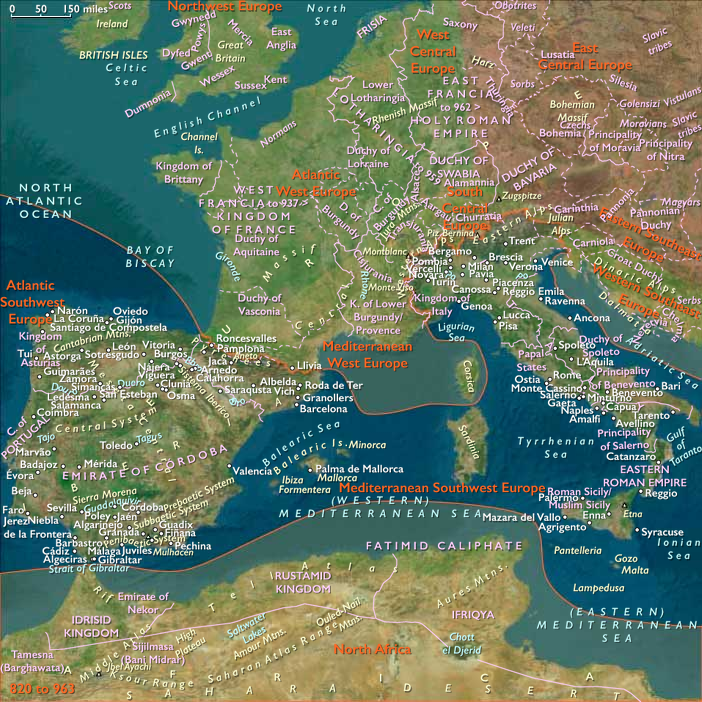
Subregions
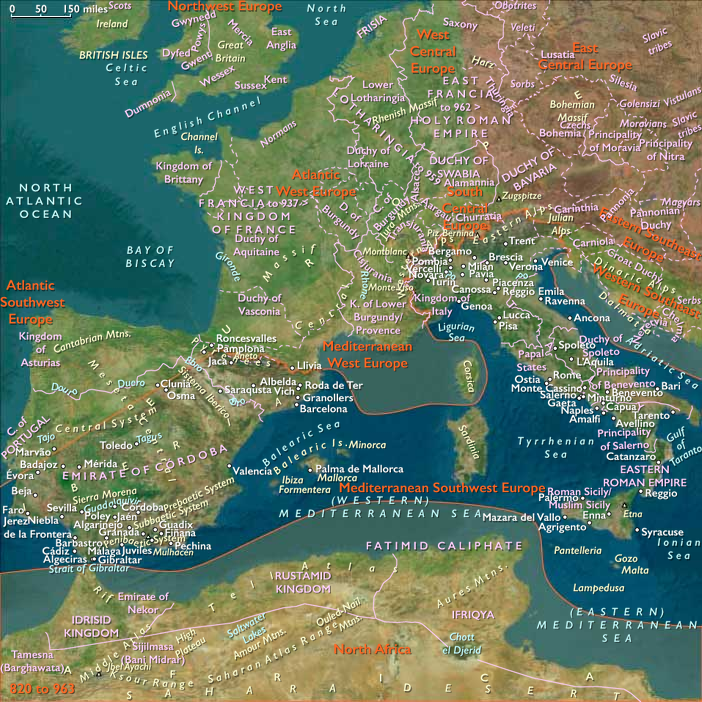
Years: 867 - 867
Locations
People
Groups
- Franks
- Slavs, West
- Slavs, South
- Papal States (Republic of St. Peter)
- Danes (Scandinavians)
- Swedes (North Germanic tribe)
- Roman Empire, Eastern: Phrygian or Armorian dynasty
- Hamburg, Archbishopric of, and Bremen, Bishopric of
Subjects
Regions
Subregions