
Pope Gregory XI's return to Rome in …
Years: 1415 - 1415
April
Pope Gregory XI's return to Rome in 1377, followed by his death and the controversial election of his successor, Pope Urban VI, had resulted in the defection of a number of cardinals and the election of a rival pope based at Avignon in 1378.
After thirty years of schism, the Council of Pisa had sought to resolve the situation by deposing the two claimant popes and elected a new pope, Alexander V. The council had claimed that, in such a situation, a council of bishops had greater authority than just one bishop, even if he were the bishop of Rome.
Though Alexander and his successor, John XXIII, have gained widespread support, especially at the cost of the Avignon pope, the schism remains, now involving not two but three claimants: Gregory XII at Rome, Benedict XIII at Avignon and John XXIII.
Therefore, many voices, including Sigismund, King of Germany and Hungary (and later Holy Roman Emperor) have pressed for another council to resolve the issue.
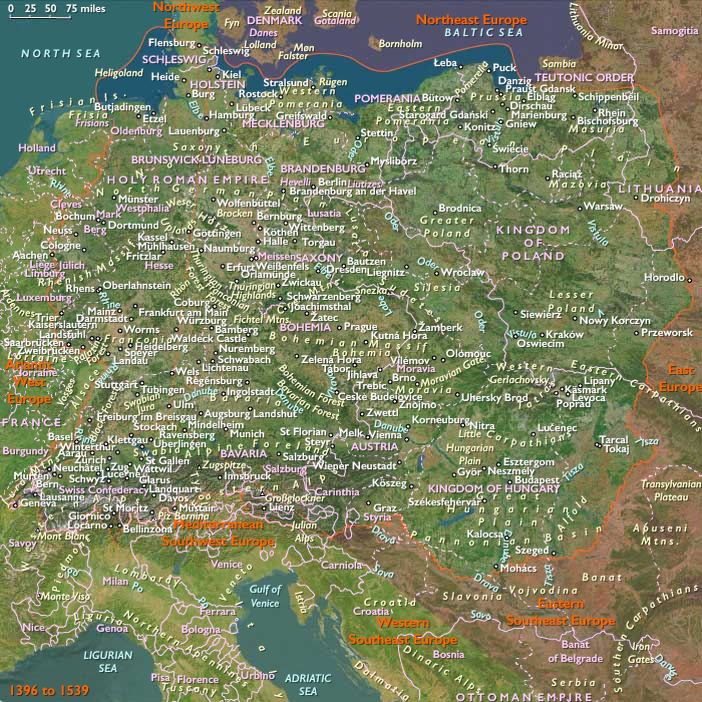
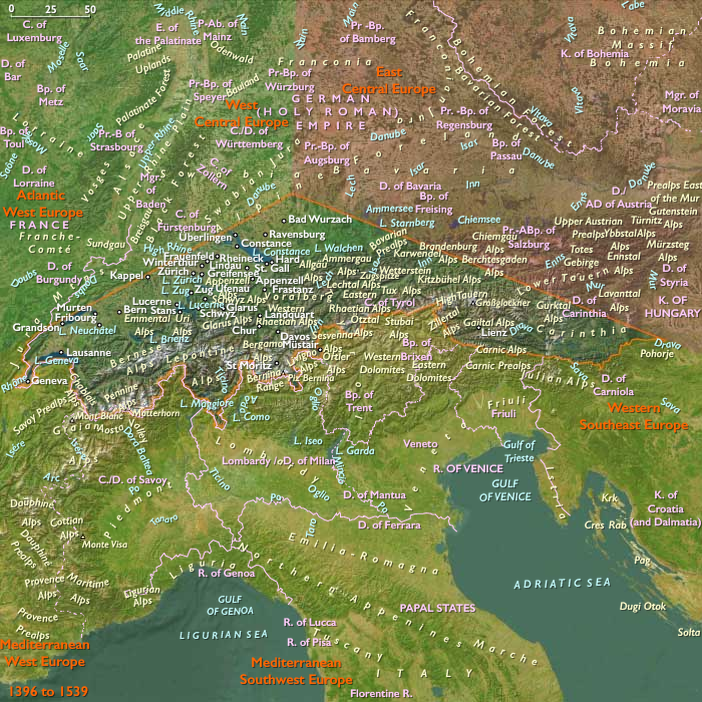
That council, called by John XXIII, is held from November 16, 1414 to April 22, 1418, in Constance, Germany.
According to Joseph McCabe, the council was attended by roughly 29 cardinals, 100 "learned doctors of law and divinity," 134 abbots, and 183 bishops and archbishops.
An innovation at the Council was that instead of voting as individuals, the bishops voted in national blocks, explicitly confirming the national pressures that had fueled the schism since 1378.
Pierre d'Ailly, cardinal of the University of Paris, dominates the early sessions of the council; his chancellor, Jean le Charlier de Gerson, also plays a leading role, advocating conciliarism as the only solution to the critical situation.
The famous decree Haec Sancta Synodus, which gives primacy to the authority of the Council and thus becomes a source for ecclesial conciliarism, is promulgated in the fifth session, April 6, 1415.
This decree, however, is not considered valid by the Magisterium of the Catholic Church, since it is never approved by Pope Gregory XII or his successors, and is passed by the Council in a session before his confirmation.
The Church declares the first sessions of the Council of Constance an invalid and illicit assembly of bishops, gathered under the authority of John XXIII.
Locations
People
Groups
Topics
- Bohemian Reformation
- Western Schism or Papal Schism (also known as the Great Schism of Western Christianity)
Commodoties
Subjects
Regions
Subregions
Years: 1415 - 1415
April
Locations
People
Groups
Topics
- Bohemian Reformation
- Western Schism or Papal Schism (also known as the Great Schism of Western Christianity)
Commodoties
Subjects
Regions
Subregions