
Filters:
Pope Benedict IX had been briefly forced …
Years: 1044 - 1044
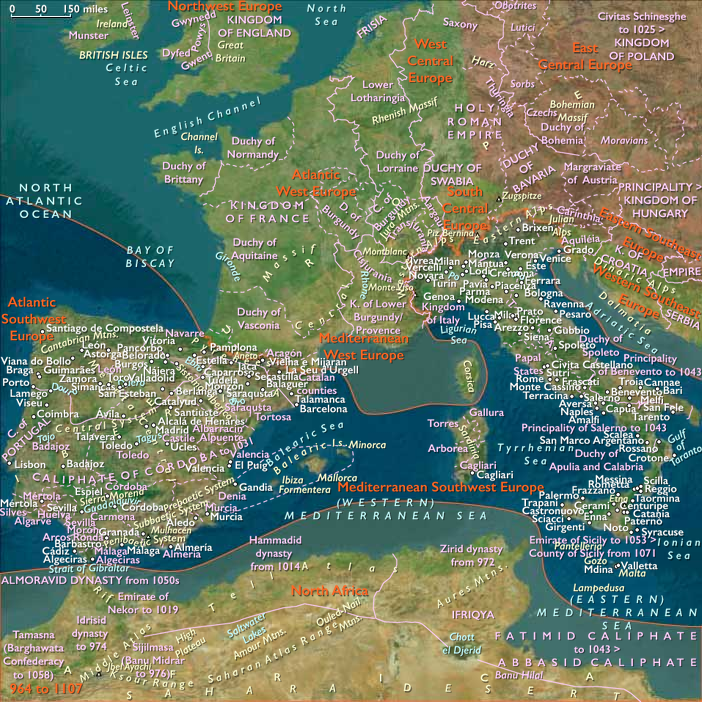
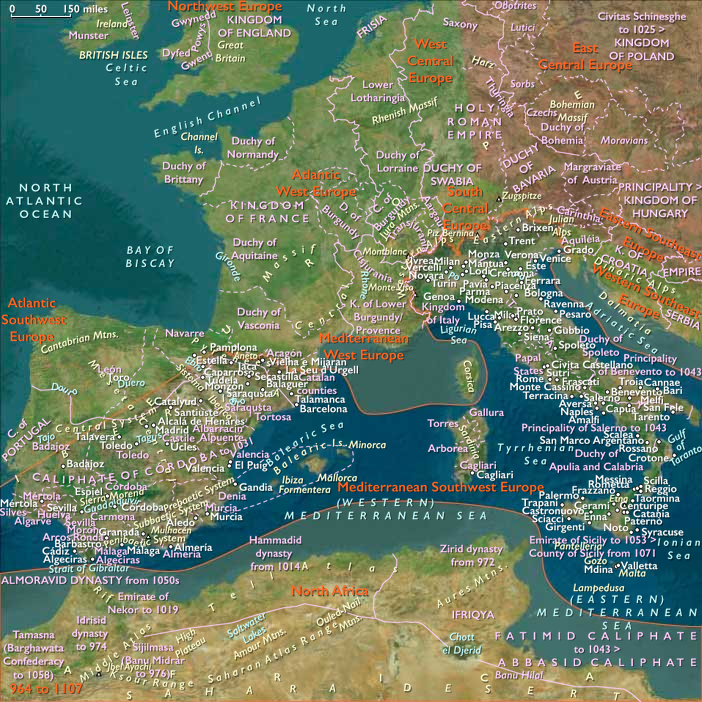
Pope Benedict IX had been briefly forced out of Rome in 1036, but had returned with the help of Emperor Conrad II.
In September 1044, the opposition forces him out of the city again and elects John, Bishop of Sabina, as Pope Sylvester III.
Locations
People
Groups
- Christianity, Chalcedonian
- Papal States (Republic of St. Peter)
- German, or Ottonian (Roman) Empire
- Italy, Kingdom of (Holy Roman Empire)
Subjects
Regions
Subregions
Related Events
Showing 10 events out of 24 total
Years: 1044 - 1044
Locations
People
Groups
- Christianity, Chalcedonian
- Papal States (Republic of St. Peter)
- German, or Ottonian (Roman) Empire
- Italy, Kingdom of (Holy Roman Empire)
Subjects
Regions
Subregions