
Pope Alexander II had first preached the …
Years: 1064 - 1064
Pope Alexander II had first preached the Reconquista in 1063 as a "Christian emergency."
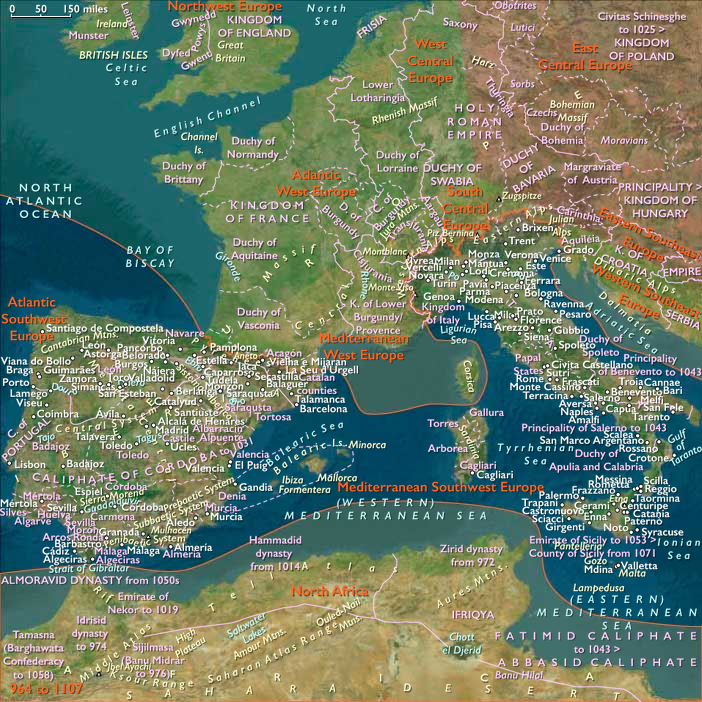
It was also preached in Burgundy, probably with the permission of participation of Hugh of Cluny, where the abbot's brother, Thomas de Chalon, leads the army.
Certainly zeal for the crusade had spread elsewhere in France, for Amatus of Montecassino notes that the "grand chivalry of the French and Burgundians and other peoples" (grant chevalerie de Francoiz et de Borguegnons et d'autre gent) is present at the siege of Barbastro.
Thus, a large army, primarily of Frenchmen and Burgundians, along with a papal contingent, mostly of Italo-Normans, and local Spanish armies, Catalan and Aragonese, is present at the siege when it begins in 1064.
The leader of the papal contingent was a Norman by the name of William of Montreuil.
The leader of the Spaniards is Sancho Ramírez, King of Aragon, whose realm is greatly threatened by the Moors to the south.
The largest component, the Aquitainian, is led by the Duke Guy Geoffrey, aka William VIII.
During William VIII's rule over Aquitaine, the alliance with the southern kingdoms of modern Spain is a political priority, as shown by the marriage of all his daughters to Iberian kings.Though the makeup of this grand army has been subject to much dispute, that it contained a large force of Frankish knights is generally agreed upon.
This expedition is the first campaign organized by the papacy against a Muslim city, and the precursor of the later Crusades movement.
Historian Reinhart Dozy first began a study of the War in the mid-nineteenth century based on the scarce primary sources, mainly Amatus and Ibn Hayyan.
Dozy first suggested the participation of a papal element based on Ibn Hayyan's reference to the "cavalry of Rome."
Subsequent historiography has stressed the Cluniac element in the War, primarily the result of Ferdinand I of León's recent attempts to introduce the Cluniac reform to Spain and inspired by the death of Ramiro I of Aragon following the failed Siege of Graus.
This interpretation has been criticized in more recent decades, especially the papal connection and Italian involvement.
It has been suggested that Alexander was preoccupied with the Antipope Cadalus at the time and did not preach a plenary indulgence for warriors of the Reconquista until the 1073 campaign of Ebles II of Roucy.
It has also been theorized that it was not William of Montreuil, but Guy Geoffrey, who was the "Roman" leader implied by Ibn Hayyan.
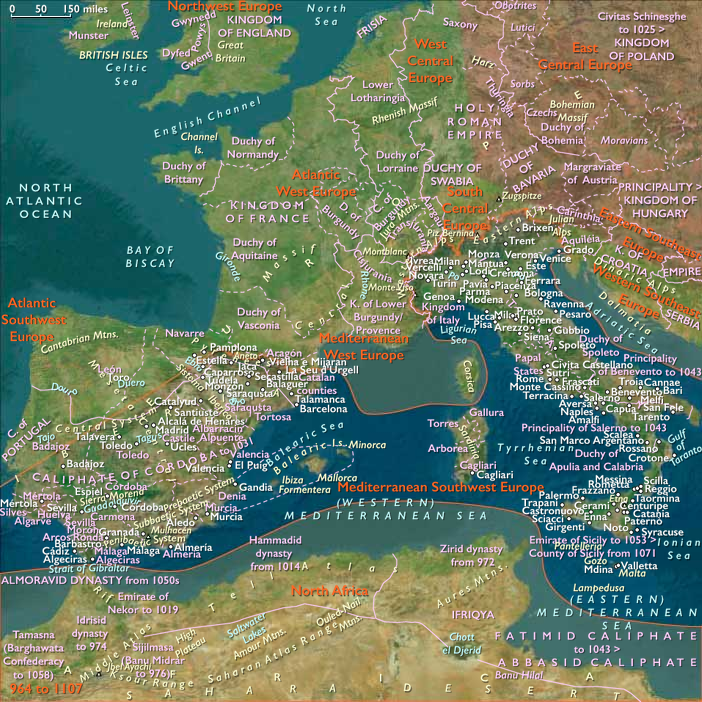
The duke of Aquitaine leads the army through the Pyrenees at Somport, joining the Catalan army at Girona early in 1064.
The entire army then marches past Graus, which had resisted assault twice before, and moves against Barbastro, at this time part of the taifa of Lleida ruled by al-Muzaffar.
The city is besieged for forty days until it surrenders, according to both Muslim and Christian sources.
Terms are given by the Christians to spare the lives of the Muslims and respect their properties, but the pact is quickly broken.
Another source tells us that the garrison offered to surrender their property and families in exchange for letting them leave the town, and so it was agreed with the besiegers.
However, the Crusaders didn't honor the treaty and killed the soldiers as they came out.
Crusader soldiers plunder and sack the city without mercy.
Thousands of Muslims, i.e.
residents and what little garrison remains, are massacred (reportedly fifty thousand) and the victors divide an enormous amount of booty.
Not only that, the plight of the women seems to have been especially tough as a consequence of the siege and victory of the crusaders.
During the siege, an indefinite but large number had died of thirst related diseases and the surviving females are subjected to degrading treatment after victory, converting them into servant and sex slaves, or sometimes even exposing them to the torture of their husbands.
The Kitab al-Rawd al-Mitar records the capture of a good many Saracen girls and Saracen treasures.
Armengol III of Urgel is given the lordship of the city.
Locations
People
Groups
- Moors
- Burgundians
- Islam
- Muslims, Sunni
- Papal States (Republic of St. Peter)
- Urgell, County of
- German, or Ottonian (Roman) Empire
- French people (Latins)
- Aquitaine, (Angevin) Duchy of
- Aragón, Kingdom of
- Christians, Roman Catholic
Topics
Commodoties
Subjects
Regions
Subregions
Years: 1064 - 1064
Locations
People
Groups
- Moors
- Burgundians
- Islam
- Muslims, Sunni
- Papal States (Republic of St. Peter)
- Urgell, County of
- German, or Ottonian (Roman) Empire
- French people (Latins)
- Aquitaine, (Angevin) Duchy of
- Aragón, Kingdom of
- Christians, Roman Catholic
Topics
Commodoties
Subjects
Regions
Subregions