
Filters:
France and Great Britain had participated in …
Years: 1763 - 1763
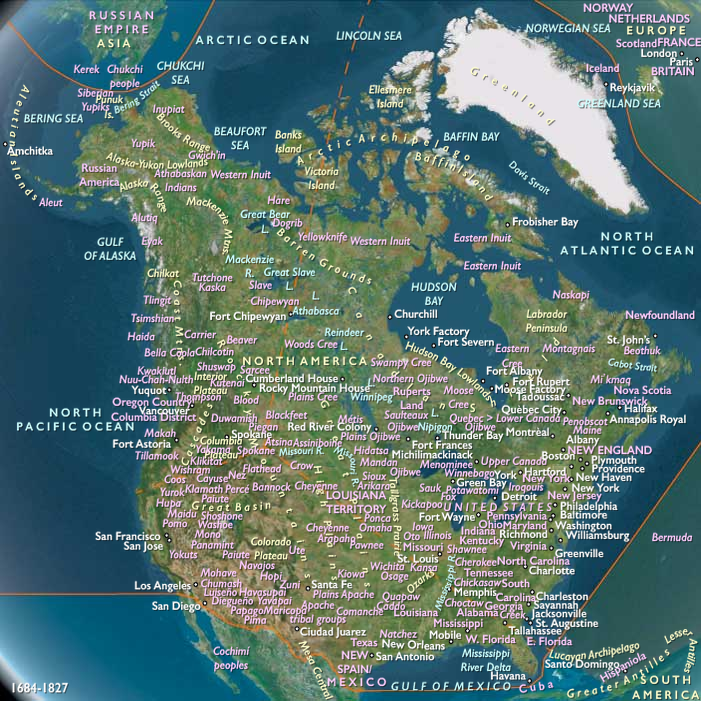
France and Great Britain had participated in a series of wars in Europe that also involved the French and Indian Wars in North America.
The largest of these wars is the worldwide Seven Years' War, in which France has lost New France in North America to Great Britain.
Peace with the Shawnee and Lenape who had been combatants had come in 1758 with the Treaty of Easton, where the British had promised not to settle further beyond the ridge of the Alleghenies—a demarcation later to be confirmed by the Royal Proclamation of 1763, though it is little respected.
Most fighting in the North American theater of the war, generally referred to as the French and Indian War in the United States, had come to an end after British General Jeffrey Amherst captured Montreal, the last important French settlement, in 1760.
British troops proceed to occupy the various forts in the Ohio Country and Great Lakes region previously garrisoned by the French.
Even before the war officially ends with the Treaty of Paris (1763), the British Crown has begun to implement changes in order to administer its vastly expanded North American territory.
While the French have long cultivated alliances among certain of the natives, the British post-war approach is essentially to treat the natives as a conquered people.
Before long, natives who had been allies of the defeated French find themselves increasingly dissatisfied with the British occupation and the new policies imposed by the victors.
The largest of these wars is the worldwide Seven Years' War, in which France has lost New France in North America to Great Britain.
Peace with the Shawnee and Lenape who had been combatants had come in 1758 with the Treaty of Easton, where the British had promised not to settle further beyond the ridge of the Alleghenies—a demarcation later to be confirmed by the Royal Proclamation of 1763, though it is little respected.
Most fighting in the North American theater of the war, generally referred to as the French and Indian War in the United States, had come to an end after British General Jeffrey Amherst captured Montreal, the last important French settlement, in 1760.
British troops proceed to occupy the various forts in the Ohio Country and Great Lakes region previously garrisoned by the French.
Even before the war officially ends with the Treaty of Paris (1763), the British Crown has begun to implement changes in order to administer its vastly expanded North American territory.
While the French have long cultivated alliances among certain of the natives, the British post-war approach is essentially to treat the natives as a conquered people.
Before long, natives who had been allies of the defeated French find themselves increasingly dissatisfied with the British occupation and the new policies imposed by the victors.
People
Groups
- Iroquois (Haudenosaunee, also known as the League of Peace and Power, Five Nations, or Six Nations)
- Wyandot, or Wendat, or Huron people (Amerind tribe)
- Miami (Amerind tribe)
- Lenape or Lenni-Lenape (later named Delaware Indians by Europeans)
- Ojibwa, or Ojibwe, aka or Chippewa (Amerind tribe)
- Odawa, or Ottawa, people (Amerind tribe)
- Seneca (Amerind tribe)
- Kickapoo people (Amerind tribe)
- Potawatomi (Amerind tribe)
- Wea (Amerind tribe)
- Piankeshaw (Amerind tribe)
- Mascouten (Amerind tribe)
- Shawnees, or Shawanos (Amerind tribe)
- Ohio Country
- Britain, Kingdom of Great
- Mingo (Seneca-Cayuga Tribe of Oklahoma)
Topics
- Colonization of the Americas, British
- Seven Years' War
- Pontiac's War (Pontiac's Rebellion of Conspiracy)
Commodoties
Subjects
Regions
Subregions

Years: 1763 - 1763
People
Groups
- Iroquois (Haudenosaunee, also known as the League of Peace and Power, Five Nations, or Six Nations)
- Wyandot, or Wendat, or Huron people (Amerind tribe)
- Miami (Amerind tribe)
- Lenape or Lenni-Lenape (later named Delaware Indians by Europeans)
- Ojibwa, or Ojibwe, aka or Chippewa (Amerind tribe)
- Odawa, or Ottawa, people (Amerind tribe)
- Seneca (Amerind tribe)
- Kickapoo people (Amerind tribe)
- Potawatomi (Amerind tribe)
- Wea (Amerind tribe)
- Piankeshaw (Amerind tribe)
- Mascouten (Amerind tribe)
- Shawnees, or Shawanos (Amerind tribe)
- Ohio Country
- Britain, Kingdom of Great
- Mingo (Seneca-Cayuga Tribe of Oklahoma)
Topics
- Colonization of the Americas, British
- Seven Years' War
- Pontiac's War (Pontiac's Rebellion of Conspiracy)
Commodoties
Subjects
Regions
Subregions