
Polynesian seafarers are skilled ocean navigators and …
Years: 796 - 807
Polynesian seafarers are skilled ocean navigators and astronomers.
At a time when Western boats rarely go out of sight of land, Polynesians often travel long distances.
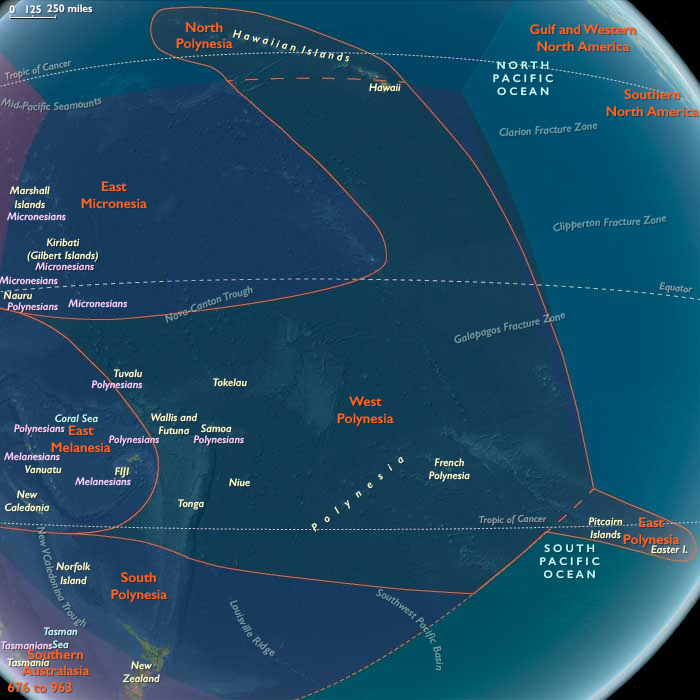
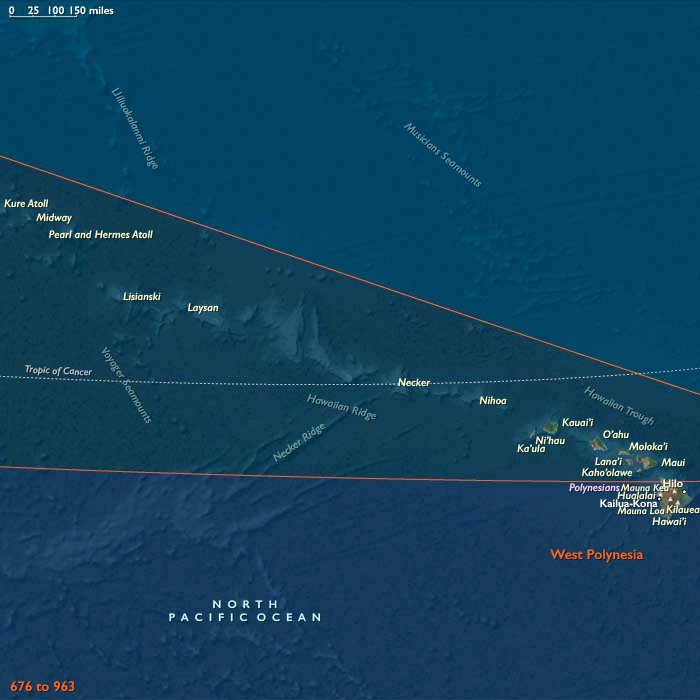
The early settlement history of Hawaiʻi is still not completely resolved.
Substantial archaeological as well as paleoecological evidence confirms Hawaiian settlement no later than 800 CE, and quite possibly as early as 300–500 CE (Kirch 1985; Athens 1997).
Some believe that the first Polynesians arrived in Hawaiʻi in the third century from the Marquesas.
The colonists brought along with them clothing, plants and livestock and established settlements along the coasts and larger valleys.
Upon their arrival, the settlers grew kalo (taro), maiʻa (banana), niu (coconut), ulu (breadfruit), and raised pua'a (pork), moa (chicken), and ʻīlio (poi dog), although these meats were eaten less often than fruits, vegetables, and seafood.
Popular condiments include pa'akai (salt), ground kukui nut, limu (seaweed), and ko (sugarcane) which is used as both a sweet and a medicine.
In addition to the foods they brought, the settlers also acquired ʻuala (sweet potato), which has yet to be adequately explained, as the plant originates in South America.
A few researchers have argued that the presence of the sweet potato in the ancient Hawaiian diet is evidence of pre-Columbian transoceanic contact with the Americas.
As soon as they arrived, the new settlers built hale (homes) and heiau (temples).
Archaeologists currently believe that the first settlements were on the southern end of the Big Island of Hawai'i and that they quickly extended northwards, along the seacoasts and the easily accessible river valleys.
As the population increased, settlements were made further inland.
Locations
Topics
Commodoties
Subjects
Regions
Subregions
Years: 796 - 807
Locations
Topics
Commodoties
Subjects
Regions
Subregions