
Polybius, a witness to the the final …
Years: 142BCE - 142BCE
Polybius, a witness to the the final reduction of Carthage, had returned to Greece shortly after the destruction of Corinth in the same year and made use of his Roman connections to lighten the conditions here; entrusted with the difficult task of organizing the new form of government in the Greek cities, in this office he has gained for himself the highest recognition.
As the geographer Pausanias states, Achaean gratitude found expression in the erection of statues in his honor at Tegea, Pallantium, Mantineia, Lycosura—where the inscription declared that “Greece would never have come to grief, had she obeyed Polybius in all things, and having come to grief, she found succor through him alone”—and Megalopolis, where it was recorded that “he had roamed over all the earth and sea, had been the ally of the Romans, and had quenched their wrath against Greece.”
He seems to have spent the succeeding years in Rome, engaged on the completion of his historical work, and occasionally undertaking long journeys through the Mediterranean countries in the interest of his history, more particularly with a view to obtaining firsthand knowledge of historical sites.
It also appears that he sought out and interviewed war veterans in order to clarify details of the events he was writing about, and was given access to archival material for the same purpose.
In his major historical work, containing forty books (of which the first five are extant, in addition to large fragments of the remaining volumes) Polybius presents the facts and causes of Rome's rapid rise to world dominion from 221 to 168, with an introduction describing Roman history from 264 to 220 and a conclusion, related in Books XXX–XXXIX, summarizing the recent events from 168 to 146.
Polybius probably conceived his revision after 146, having by this date completed his narrative down to the end of the Second Punic War.
At least Books I–VI seem to have been published by about 150; there is no information as to when the rest of the work, including the revised plan in Book III, appeared.
A rationalist who rejects religious superstitions, he emphasizes the causes, circumstances, and consequences of events, and the inevitability of change.
The didactic historian expresses his conviction that the Romans prevailed over their opponents because of a superior constitution and military organization.
Locations
People
Groups
Topics
Subjects
Regions
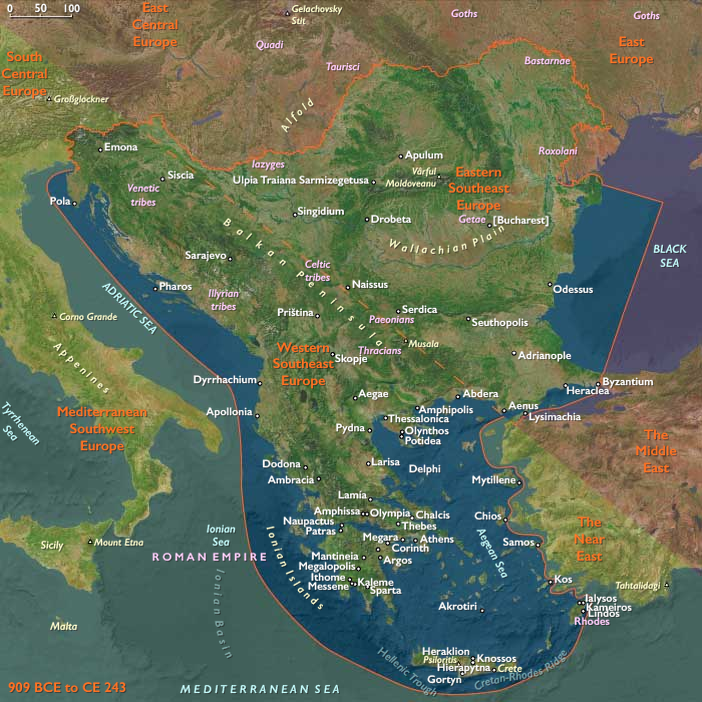
Subregions
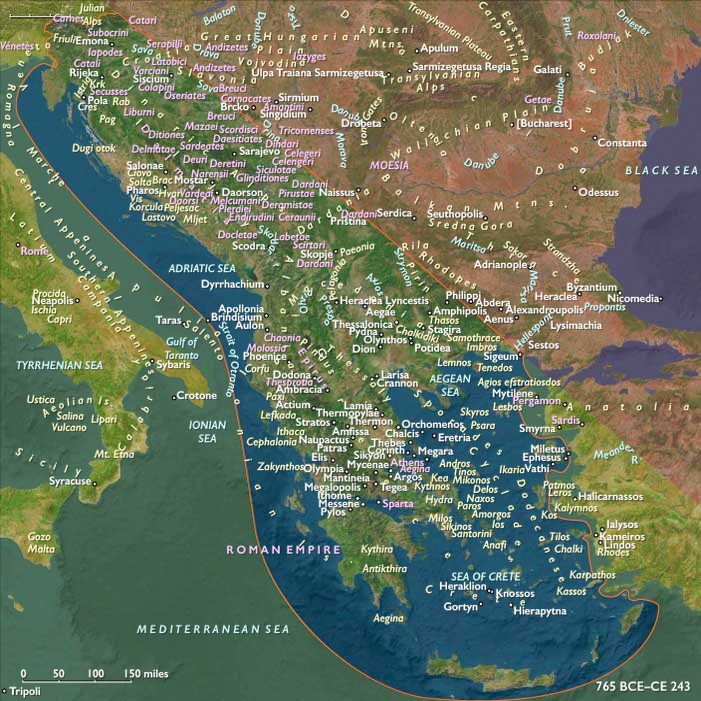
Related Events
Showing 1 events out of 1 total
Years: 142BCE - 142BCE
Locations
People
Groups
Topics
Subjects
Regions
Subregions