
The Spanish Invasion …
Years: 1762 - 1762
The Spanish Invasion of Portugal and the Defense of Britain's Oldest Ally (1762)
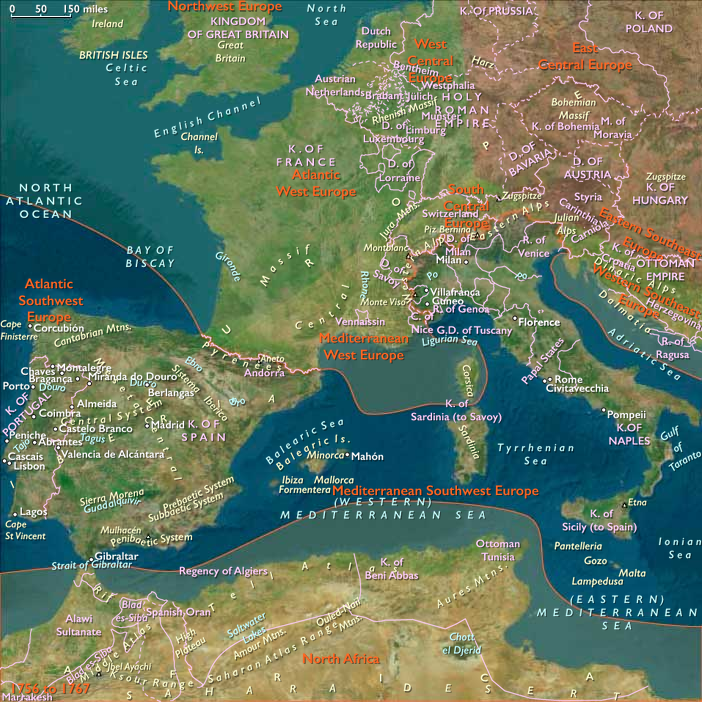
As Britain and Spain entered open war in 1762, the most immediate threat was a Spanish invasion of Portugal, which had remained neutral for most of the conflict despite its historic alliance with Britain. Encouraged by France, Spain sought to open a new front that would force Britain to divert troops away from its campaigns against France, particularly in North America and the Caribbean.
Spain’s Strategy – Attacking Portugal Instead of Gibraltar
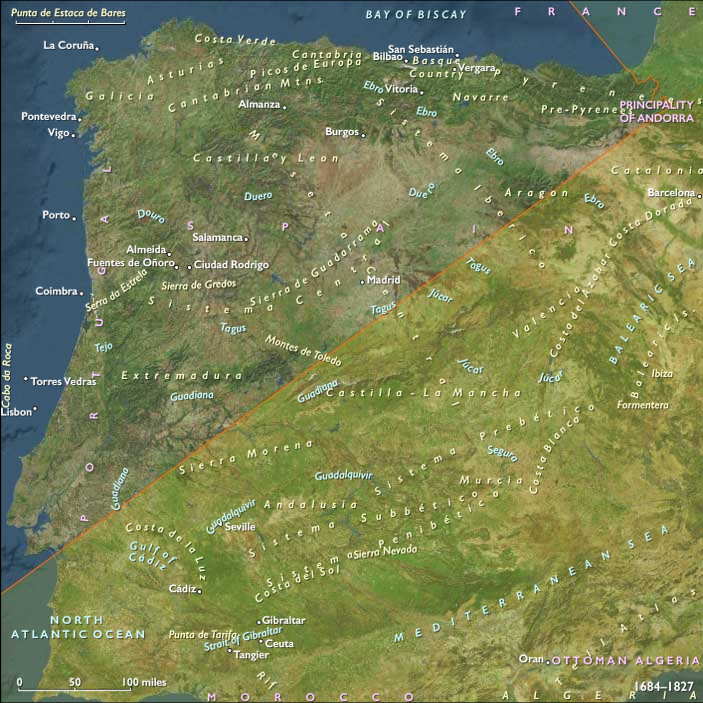
Although Spain had long sought the capture of Gibraltar, the heavily fortified British stronghold presented a formidable challenge. Instead, France persuaded Spain to invade Portugal, believing its long but rugged borderwas vulnerable and easy to overrun. By capturing key Portuguese cities, Spain hoped to force Lisbon to break its alliance with Britain and potentially gain strategic leverage in the broader war.
Britain Responds to the Threat
Recognizing the danger, Britain moved swiftly to reinforce Portugal, dispatching supplies, military officers, and troops to help organize its defense. The original Spanish plan was to capture Almeida, then advance toward the Alentejo and Lisbon, but the strategy shifted to Porto, aiming to strike directly at British trade interests.
The Spanish Advance and British-Portuguese Resistance
In the spring of 1762, under the command of the Marquis of Sarria, Spanish troops crossed from Galicia into northern Portugal, quickly capturing several towns. However, their advance on Porto was slow and disorganized, hampered by:
- Difficult terrain
- Heavy flooding of the River Esla
- Supply and coordination problems
By May 9, Spanish forces invested and captured the key border fortress of Almeida, dealing a serious blow to Portuguese defenses.
The British-Portuguese Counterattack
Britain responded by dispatching 8,000 troops to Portugal:
- 6,000 troops arrived from Belle Île, under Lord Loudoun
- 2,000 more troops came from Ireland
As reinforcements landed, a British-Portuguese counterattack, led by John Burgoyne, struck back at the Spanish, capturing the town of Valencia de Alcántara. This bold maneuver disrupted Spanish supply lines and demonstrated that Portugal’s defenses were stronger than anticipated.
French Intervention and the Bourbon Retreat
France, eager to support its Spanish ally, sent reinforcements, but these forces, like their Spanish counterparts, suffered high rates of attrition due to:
- Disease
- Desertion
- Logistical failures
By November 1762, with supply and communication lines stretched thin, the Bourbon allies recognized the futility of their campaign. Facing increasing resistance and unable to secure a decisive victory, they withdrew from Portugal and sued for peace.
A War Without Major Battles
Despite the large number of troops involved, the campaign saw no major battles. Instead, the Spanish invasion was characterized by logistical failures, difficult terrain, and an underestimation of British-Portuguese resistance. In the end, Britain's swift military response, Portugal’s resilience, and the Spanish-French inability to sustain the campaign ensured that Portugal remained unconquered, reaffirming its place as Britain’s oldest ally.
People
Groups
- France, (Bourbon) Kingdom of
- Portugal, Bragança Kingdom of
- Spain, Bourbon Kingdom of
- Britain, Kingdom of Great
Topics
Subjects
Regions
Subregions
Related Events
Filter results
Showing 10 events out of 26365 total
A combined force of ten thousand seven hundred men under William Draper sets off from India in late July, arriving in Manila Bay in September 1762.
They have to move swiftly before the monsoon season hits.
The British storm the city, capturing it, on October 6.
A large amount of plunder is taken from the city after the Battle of Manila.
Spanish forces regroup under Simon Anda, who had escaped from Manila during the siege.
Rebellions fomented by the British are sabotaged by Spanish agents and crushed by Spanish forces.
The British are prevented from extending their authority beyond Manila and the nearby port of Cavite.
All agreements made between the British commander and Archbishop Rojo are dismissed as illegal.
Eventually the British forces started to suffer troop desertions and dissensions within the command.
She is the second daughter of Emperor Sakuramachi.
Her mother is Nijō Ieko.
Her older sister had died young, and her younger brother is Emperor Momozono.
The empress and her emperor brother are the last lineal descendants of Emperor Nakamikado.
Empress Go-Sakuramachi's Imperial family lives with her in the dairi of the Heian Palace.
Princess Toshiko accedes to the throne when Emperor Momozono abdicates in favor of his sister.
Momozono's son, Prince Hidehito (later to be known as Emperor Go-Momozono) is only five years old at this time.
Hidehito's empress aunt is expected to occupy the throne until her nephew will be able to take on the burden of responsibility.
Peter III of Russia, briefly Czar in 1762, is overthrown by supporters of his wife, Catherine II (the Great).
The death of Elizabeth of Russia in January 1762 changes the whole political situation in Europe.
A Russo-Prussian alliance, formalized on May 5, threatens to make Russia an enemy not an ally of Sweden.
The secret committee had thus decided on March 13 of this year that Sweden will seek a separate peace.
Via the queen's mediation, the Swedes sign the peace of Hamburg with Prussia and Mecklenburg on May 22, accepting their defeat—Prussia and Sweden are restored to the status quo ante bellum.
Britain threatens to withdraw its subsidies if Prussia does not consider offering concessions to secure peace.
As the Prussian armies have dwindled to just sixty thousand men and with Berlin itself about to come under siege, Frederick's survival is severely threatened, but at the death of the Russian Empress Elizabeth on January 5, 1762, her Prussophile successor, Peter III, at once ends the Russian occupation of East Prussia and Pomerania and mediates Frederick's truce with Sweden.
He also places a corps of his own troops under Frederick's command.
Frederick is now able to muster a larger army, of one hundred and twenty thousand men, and concentrate it against Austria.
He drives them from much of Saxony, while his brother Henry wins a victory in Silesia in the Battle of Freiberg (October 29, 1762).
At the same time, his Brunswick allies capture the key town of Göttingen and compound this by taking Cassel.
However, he then immediately returns to Swedish Pomerania and on April 7 comes to a truce on his own initiative—this truce of Ribnitz will last until the peace.
He calls it "peopling Prussia" (Peuplierungspolitik).
About a thousand new villages will be founded in his reign that will ultimately attract three hundred thousand immigrants from outside Prussia.
The use of improved technology has enabled him to create new farmland through a massive drainage program in the country's Oderbruch marsh-land.
The construction of embankments and drainage work had begun in 1735 but was primarily carried out between 1747 and 1762.
This program has created roughly sixty thousand hectares (one hundred and fifty thousand acres) of new farmland, but has also eliminated vast swaths of natural habitat, destroyed the region's biodiversity, and displaced numerous native plant and animal communities.
Frederick sees as this project as the "taming" and "conquering" of nature, which, in its wild form, he regards as "useless" and "barbarous" (an attitude that reflects his enlightenment-era, rationalist sensibilities).
He presides over the construction of canals for bringing crops to market, and introduces new crops, especially the potato and the turnip, to the country.
For this, he is sometimes called Der Kartoffelkönig (the Potato King).
The 1762 Franco-Spanish Invasion of Portugal – A War on Two Continents
Following the 1755 Lisbon Earthquake, Prime Minister Sebastião José de Carvalho e Melo, the Marquis of Pombal, focused almost entirely on the reconstruction of Portugal, neglecting the country’s armed forces, which he saw as secondary to economic and administrative reform. This left Portugal militarily unprepared for the conflicts to come.
Spain and France Nullify the Treaty of Madrid (1761)
By 1761, diplomatic tensions between Spain and Portugal escalated. The Treaty of Madrid (1750), which had sought to define colonial boundaries in South America, was rendered void by the Treaty of El Pardo (1761). Spain, seeking to expand its influence in the Americas, now viewed Portugal’s close economic ties to Britain as a threat.
Encouraged by France, Spain agreed to invade Portugal, hoping that by opening a new front, Britain would be forced to divert military resources away from its war with France. The invasion of Portugal would take place in two theaters:
-
The European Front (Portugal) – The Main Theater
- On May 5, 1762, a triple Franco-Spanish invasion of Portugal was launched.
- The campaign ended in humiliating defeat for the Bourbon forces.
-
The South American Front – A Secondary Theater
- Spanish forces invaded Portuguese-controlled Brazil and Uruguay.
- The conflict resulted in a stalemate, with Portuguese victories in Northern and Western Brazil, but Spanish victories in Southern Brazil and Uruguay.
The European Campaign: A Spanish Disaster
Despite Portugal’s military weakness, the European invasion quickly fell apart due to:
- Portuguese resilience and British military assistance
- Spanish overconfidence and logistical failures
- Harsh terrain and disease
Spain and France failed to capture key Portuguese cities, while the British-Portuguese counteroffensive dealt them a humiliating defeat, forcing a retreat by the end of the year.
The South American Theater: A Stalemate
While Spain failed in Europe, the colonial war in South America was more evenly matched:
- Portuguese forces triumphed in Northern and Western Brazil, successfully defending their territories.
- However, Spain managed to secure victories in Southern Brazil and Uruguay, expanding its influence in the Río de la Plata region.
Consequences of the 1762 War
- The European defeat shattered Spain’s hope of removing Portugal from the war.
- In South America, the war altered colonial boundaries but did not deliver a decisive victory to either side.
- For Portugal, the war highlighted the vulnerability of its military, reinforcing its dependence on British protection.
- For Pombal, it marked a turning point, forcing him to reassess military policy after years of neglect.
Ultimately, the 1762 war reaffirmed Portugal’s survival as an independent power, while the colonial conflict laid the groundwork for future territorial disputes between Spain and Portugal in South America.
The 1762 Franco-Spanish Invasion of Portugal – A War on Two Continents
Following the 1755 Lisbon Earthquake, Prime Minister Sebastião José de Carvalho e Melo, the Marquis of Pombal, focused almost entirely on the reconstruction of Portugal, neglecting the country’s armed forces, which he saw as secondary to economic and administrative reform. This left Portugal militarily unprepared for the conflicts to come.
Spain and France Nullify the Treaty of Madrid (1761)
By 1761, diplomatic tensions between Spain and Portugal escalated. The Treaty of Madrid (1750), which had sought to define colonial boundaries in South America, was rendered void by the Treaty of El Pardo (1761). Spain, seeking to expand its influence in the Americas, now viewed Portugal’s close economic ties to Britain as a threat.
Encouraged by France, Spain agreed to invade Portugal, hoping that by opening a new front, Britain would be forced to divert military resources away from its war with France. The invasion of Portugal would take place in two theaters:
-
The European Front (Portugal) – The Main Theater
- On May 5, 1762, a triple Franco-Spanish invasion of Portugal was launched.
- The campaign ended in humiliating defeat for the Bourbon forces.
-
The South American Front – A Secondary Theater
- Spanish forces invaded Portuguese-controlled Brazil and Uruguay.
- The conflict resulted in a stalemate, with Portuguese victories in Northern and Western Brazil, but Spanish victories in Southern Brazil and Uruguay.
The European Campaign: A Spanish Disaster
Despite Portugal’s military weakness, the European invasion quickly fell apart due to:
- Portuguese resilience and British military assistance
- Spanish overconfidence and logistical failures
- Harsh terrain and disease
Spain and France failed to capture key Portuguese cities, while the British-Portuguese counteroffensive dealt them a humiliating defeat, forcing a retreat by the end of the year.
The South American Theater: A Stalemate
While Spain failed in Europe, the colonial war in South America was more evenly matched:
- Portuguese forces triumphed in Northern and Western Brazil, successfully defending their territories.
- However, Spain managed to secure victories in Southern Brazil and Uruguay, expanding its influence in the Río de la Plata region.
Consequences of the 1762 War
- The European defeat shattered Spain’s hope of removing Portugal from the war.
- In South America, the war altered colonial boundaries but did not deliver a decisive victory to either side.
- For Portugal, the war highlighted the vulnerability of its military, reinforcing its dependence on British protection.
- For Pombal, it marked a turning point, forcing him to reassess military policy after years of neglect.
Ultimately, the 1762 war reaffirmed Portugal’s survival as an independent power, while the colonial conflict laid the groundwork for future territorial disputes between Spain and Portugal in South America.
Proving a talented artist while his family was in poverty, he was apprenticed to a fan painter to support the family financially.
However, in around 1742, he had been able to travel to Italy (albeit on foot) for his artistic improvement, working there as a cicerone and a painter, learning Latin, Italian and Greek, and studying Italian and Roman art and architecture.
There he produced his first major work, his illustrated treatise on the Egyptian obelisk of Psammetichus II within A. M. Bandini's De obelisco Caesaris Augusti, and met Nicholas Revett, a young East Anglian nobleman and amateur architect on his Grand Tour.
In 1748 Stuart joined Revett, Gavin Hamilton and the architect Matthew Brettingham the younger on a trip to Naples to study the ancient ruins and, from there,they traveled through the Balkans (stopping at Pula) to Greece.
Visiting Salonica, Athens, and an Ionic temple on the River Ilissus among others, they made accurate measurements and drawings of the ancient ruins.
Stuart and Revett returned to London in 1755 and publish their work, The Antiquities of Athens and Other Monuments of Greece, in 1762.
There are more than five hundred subscribers to its first volume and, although few of the subscribers are architects or builders, thus limiting its impact as a design sourcebook, it will later help fuel the Greek Revival in European architecture.
Its illustrations are among the first of their kind and the work is welcomed by antiquaries, scholars, and gentleman amateurs.
William Hogarth satirises its fastidious depiction of architectural detail in his 1761 engraving Five Orders of Periwigs.
The Parlement issues its Extraits des assertions assembled from passages from Jesuit theologians and canonists, in which they are alleged to teach every sort of immorality and error.
On August 6, 1762, the final arrêt is proposed to the Parlement by the Advocate General Joly de Fleury, condemning the Society to extinction, but the king's intervention brings eight months' delay and in the meantime a compromise is suggested by the Court.
If the French Jesuits will separate from the Society headed by the Jesuit General directly under the pope's authority and come under a French vicar, with French customs, as with the Gallican Church, the Crown will still protect them.
The French Jesuits, rejecting Gallicanism, refuse to consent.
Years: 1762 - 1762
People
Groups
- France, (Bourbon) Kingdom of
- Portugal, Bragança Kingdom of
- Spain, Bourbon Kingdom of
- Britain, Kingdom of Great
Topics
Subjects
Regions
Subregions