
Phraates, weakened in his struggle against Antiochus, …
Years: 128BCE - 128BCE
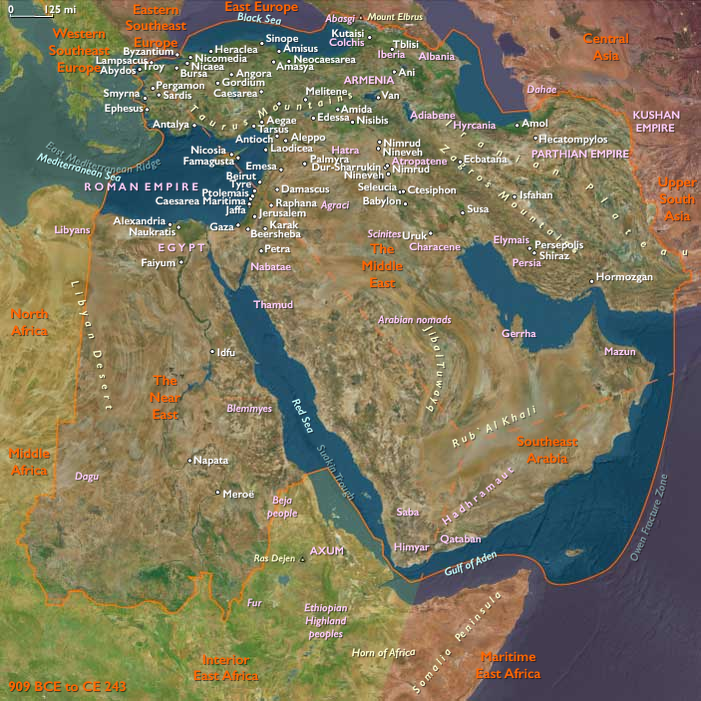
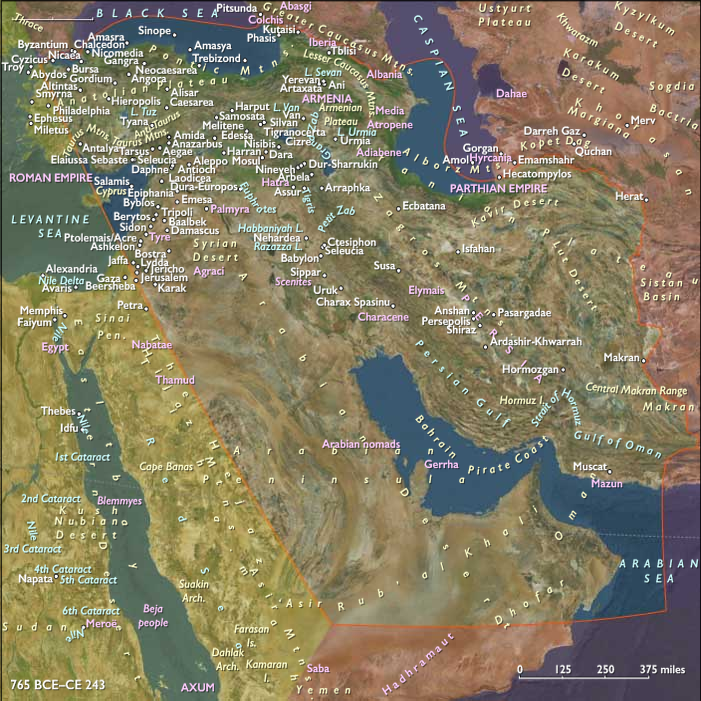
Phraates, weakened in his struggle against Antiochus, had called upon the powerful Saka nomads to the north of his frontiers for aid, promising them payment.
The reinforcements having arrived too late to be of use, he sends them back, which provokes them to revolt and pillage the countryside.
The Greek prisoners drafted by Phraates into his army participate in the pillage, and Phraates loses his life fighting them in 128 in a great battle inside and around Media.
His uncle succeeds him as Artabanus I.
Locations
People
Groups
- Iranian peoples
- Persian people
- Scythians, or Sakas
- Greeks, Hellenistic
- Parthian Empire
- Seleucid Empire
Topics
Commodoties
Subjects
Regions
Subregions
Related Events
Showing 10 events out of 63004 total
Years: 128BCE - 128BCE
Locations
People
Groups
- Iranian peoples
- Persian people
- Scythians, or Sakas
- Greeks, Hellenistic
- Parthian Empire
- Seleucid Empire
Topics
Commodoties
Subjects
Regions
Subregions