
Integration of the Duchy of Anjou into …
Years: 1480 - 1480
Integration of the Duchy of Anjou into the French Crown (1480)
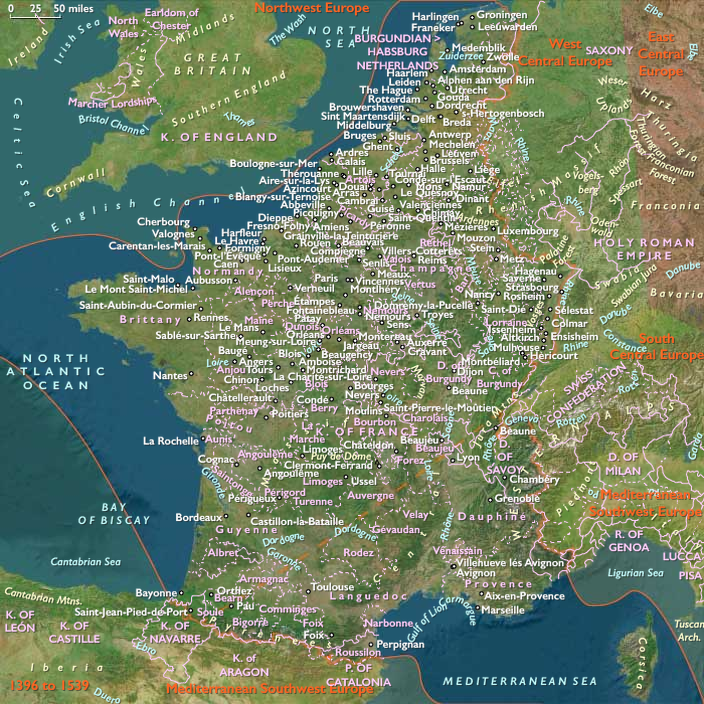
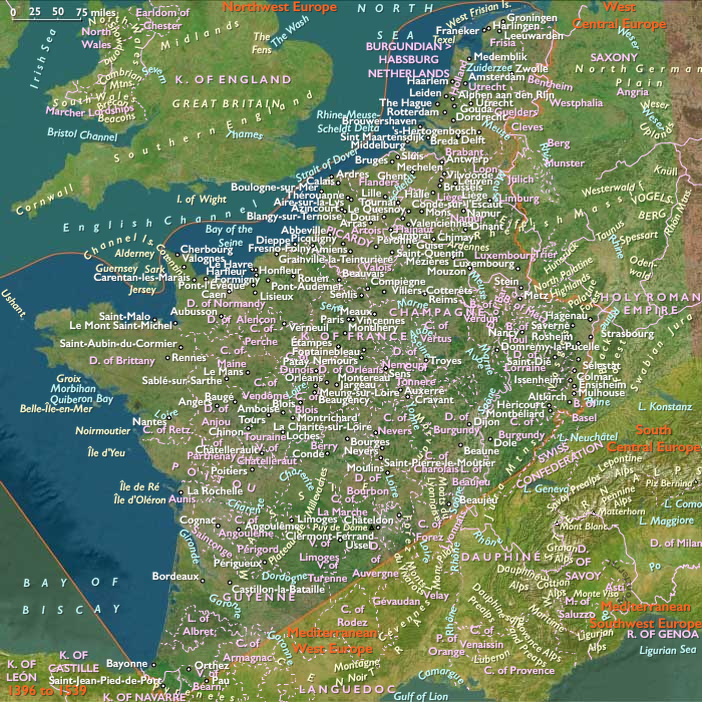
The integration of the influential Duchy of Anjou into the French royal domain in 1480 marked a significant step in the consolidation of the French kingdom under Louis XI. Anjou, initially elevated from a county to a duchy in 1360 by John II for his son Louis I, had been held by the House of Anjou through multiple generations. Each generation pursued broader ambitions, notably claims to Naples and the Kingdom of Provence, diverting their attention from their ancestral duchy and ultimately facilitating its absorption into the French crown.
Historical and Dynastic Background
The Duchy of Anjou, raised to ducal status on October 25, 1360, had consistently been linked with ambitious dynastic aspirations beyond France’s borders. Louis I of Anjou, son of King John II of France, became Count of Provenceand laid claim to the throne of Naples, aspirations continued by his successors, particularly Louis II and Louis III, both of whom spent their lives in pursuit of their Neapolitan ambitions, at the expense of their French holdings.
Upon the childless death of Louis III in 1434, the Duchy passed to his brother René of Anjou, a significant cultural patron and figure of refinement but also heavily preoccupied with Mediterranean claims. René, known as "the Good King René," was uniquely devoted to Anjou itself for many years, actively defending the duchy against English incursions during the Hundred Years’ War, until 1471, when he chose, somewhat mysteriously, to permanently leave Anjou and relocate his court to Provence.
René of Anjou and the Fate of the Duchy (1470s–1480)
René's departure from Anjou in 1471 followed meticulous inventories of his possessions, as he transferred the most valuable treasures to Provence. His son, Louis III, had already died childless in 1434, leaving René as the primary guardian of the Anjou legacy. René's grandson and natural heir, Nicholas of Anjou, had predeceased him in 1473. This tragic event may have contributed to René’s eventual decision to formally reconcile with King Louis XI of France in 1476, likely agreeing that Anjou would revert to the French crown upon his death.
Final Incorporation into the French Royal Domain (1480)
Upon René of Anjou’s death on July 10, 1480, Louis XI swiftly integrated the Duchy of Anjou into the French royal domain. This integration marked the culmination of decades of Louis XI’s patient political maneuvering, finally securing the strategically located territory for France. The duchy’s absorption significantly bolstered the royal domains, reducing the influence of semi-independent dynasties and reinforcing royal authority across France’s western provinces.
Political and Administrative Consequences
The definitive annexation of Anjou in 1480 symbolized a broader historical trend towards territorial consolidation and the growth of centralized royal governance in late medieval France. It effectively ended nearly 120 years of semi-independent Angevin rule, removing one of the last significant feudal lordships from the French landscape. This consolidation exemplified Louis XI’s successful policy of territorial expansion and internal centralization, paving the way for the centralized administrative system of early modern France.
Economic and Cultural Significance
Integrating Anjou into the French royal domain not only strengthened the monarchy politically but also enriched it economically and culturally. Anjou, long prosperous from agriculture, commerce, and regional trade, contributed materially to the kingdom's overall wealth. Culturally, the duchy’s heritage—including vibrant courtly patronage under René—enriched France's broader artistic and intellectual traditions, facilitating cultural exchange and further unifying the region with royal France.
Long-Term Historical Impact
The permanent incorporation of Anjou into the French crown represented the final chapter in the duchy’s colorful and complex medieval history. It exemplified the decisive shift from feudal independence toward monarchical centralization that defined late medieval and early modern Europe. The successful absorption of Anjou underscored the French crown’s growing administrative sophistication and territorial cohesion, setting enduring foundations for the centralization policies of subsequent monarchs, notably under the Valois and Bourbon dynasties.
Thus, the reintegration of Anjou into royal control in 1480 marked an important turning point, decisively affirming royal supremacy in late medieval Atlantic West Europe and paving the way for France’s emergence as a dominant and unified early modern state.
Locations
People
Groups
Subjects
Regions
Subregions
Related Events
Showing 10 events out of 77 total
Years: 1480 - 1480
Locations
People
Groups
Subjects
Regions
Subregions