
Filters:
Philip the Bold’s Role in the Flemish …
Years: 1385 - 1385
Philip the Bold’s Role in the Flemish Revolts and the Peace of Tournai (1379–1385)
Between 1379 and 1382, Philip the Bold, Duke of Burgundy, played a key role in helping his father-in-law, Louis II, Count of Flanders, suppress revolts in Flanders, particularly in Ghent, where Philip van Artevelde led a rebellion against feudal rule. These revolts culminated in the Battle of Roosebeke (1382), where Philip the Bold’s forces crushed the Flemish rebels. However, lasting peace was not achieved until 1385, with the signing of the Peace of Tournai.
Philip the Bold’s Campaign Against the Flemish Revolts (1379–1382)
- The Flemish cities, particularly Ghent, sought greater autonomy from the Count of Flanders, rebelling against feudal rule and high taxes.
- Philip the Bold organized and led an army to support his father-in-law, Count Louis II, in putting down the uprising led by Philip van Artevelde.
- The conflict escalated into a full-scale war, drawing in French royal forces under Charles VI.
- At the Battle of Roosebeke (November 27, 1382):
- Philip commanded part of the French army, alongside Constable Olivier de Clisson.
- The French forces annihilated the Flemish militia, killing Philip van Artevelde and massacring thousands of rebels.
The Aftermath: The Peace of Tournai (1385)
- Despite the defeat of the Ghent rebels at Roosebeke, resistance continued, and full pacification of Flanders was not achieved until 1385.
- In 1384, Count Louis II of Flanders died, and Philip the Bold inherited Flanders through his marriage to Margaret III, Louis’s daughter.
- As both Duke of Burgundy and Count of Flanders, Philip now had an interest in restoring stability to his new territories.
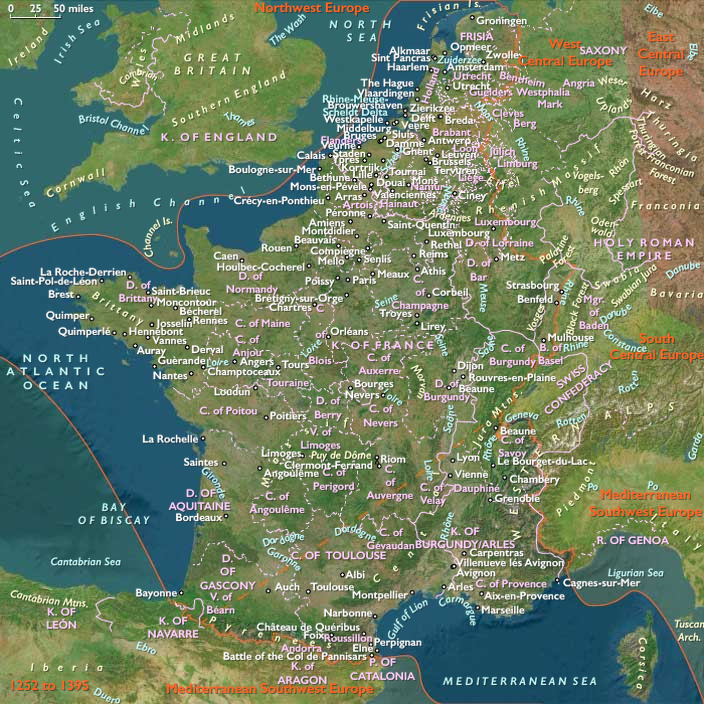
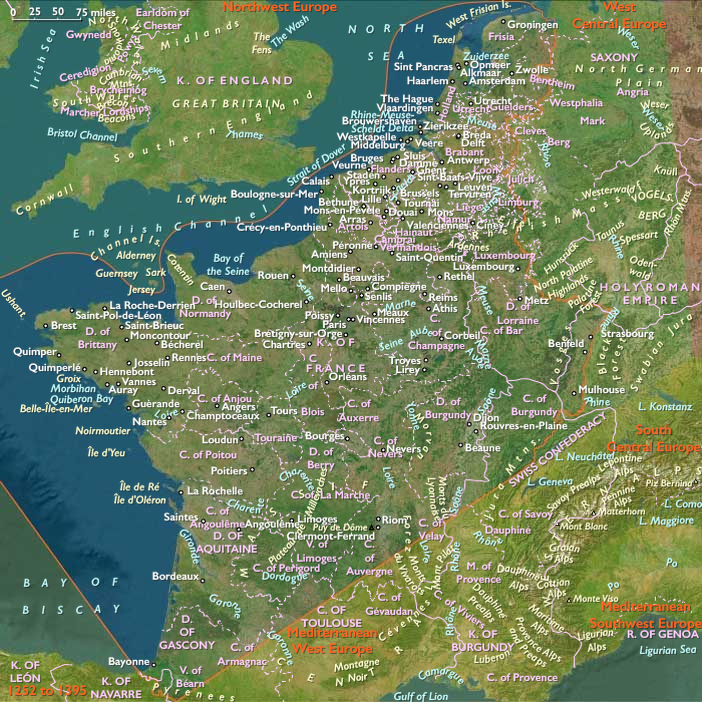
- The Peace of Tournai (1385) formally ended the Flemish revolts, securing Burgundian control over Flanders and reaffirming Flemish loyalty to Philip.
Impact and Legacy
- The suppression of the Flemish revolts allowed Philip the Bold to consolidate his power, creating the foundation of the Burgundian Netherlands.
- The Peace of Tournai marked the beginning of Burgundian rule over Flanders, integrating its wealthy trading cities into the growing Burgundian state.
- Philip’s victory over the rebels strengthened his position in both France and the Holy Roman Empire, setting the stage for the expansion of Burgundian influence in the coming decades.
Philip the Bold’s role in suppressing the Flemish revolts (1379–1382) and securing peace in 1385 ensured that Flanders remained a vital part of the emerging Burgundian state, laying the groundwork for its future dominance in European politics and trade.
Locations
People
Groups
Topics
Subjects
Regions
Subregions
Years: 1385 - 1385
Locations
People
Groups
Topics
Subjects
Regions
Subregions