
Filters:
Philip II’s Triumphant Return to Paris After …
Years: 1214 - 1214
July
Philip II’s Triumphant Return to Paris After the Battle of Bouvines (1214 CE)
After his decisive victory at the Battle of Bouvines on July 27, 1214, Philip II of France returned to Paris in triumph, marking one of the greatest moments of his reign. His defeat of the Anglo-Flemish-German coalition not only secured Capetian dominance in France but also solidified his reputation as the most powerful monarch in Western Europe.
The Triumphal Procession into Paris
- Philip marched through the streets of Paris, his army victorious and his enemies humiliated.
- His captive prisoners, including Count Ferdinand of Flanders and Renaud of Boulogne, were paraded behind him in chains, symbolizing France’s triumph over its enemies.
- The people of Paris came out to greet their king, celebrating his heroic leadership and military success.
Political and Symbolic Impact
- The public display of prisoners reinforced Philip’s authority, showing that he had overcome not just the Plantagenets, but also the Holy Roman Emperor and rebellious vassals.
- Philip’s position as the dominant monarch in Western Europe was now unchallenged.
- The triumph increased national unity, as the victory was seen as a great moment for France, not just for the king.
Long-Term Consequences
- Philip’s victory at Bouvines secured Capetian control over Normandy, Anjou, and Poitou, permanently weakening England’s hold in France.
- It also led to John of England’s loss of noble support, culminating in the Magna Carta in 1215.
- The triumph established Paris as the center of a rising, centralized French monarchy, setting the stage for future Capetian expansion.
Philip’s return to Paris in 1214 was not just a military celebration; it was a defining moment in the rise of France as the leading power in medieval Europe.
Locations
People
- Blanche of Castile
- Frederick II
- Infante Ferdinand of Portugal
- John of England
- Louis VIII of France
- Otto IV of Brunswick
- Pandulf Verraccio
- Philip II of France
- Pope Innocent III
- Renaud of Boulogne
Groups
- Papal States (Republic of St. Peter)
- Flanders, County of
- Holy Roman Empire
- France, (Capetian) Kingdom of
- Christians, Roman Catholic
- Portugal, Burgundian (Alfonsine) Kingdom of
- England, (Plantagenet, Angevin) Kingdom of
Topics
- Guelphs and Ghibellines
- German Civil War of 1197-1214
- Anglo-French War of 1202-14
- Bouvines, Battle of
Commodoties
Subjects
Regions
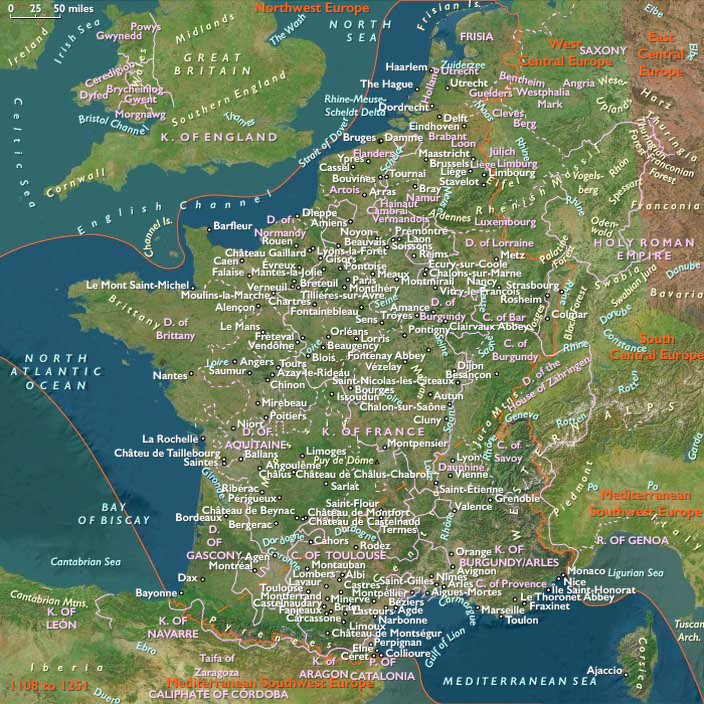
Subregions
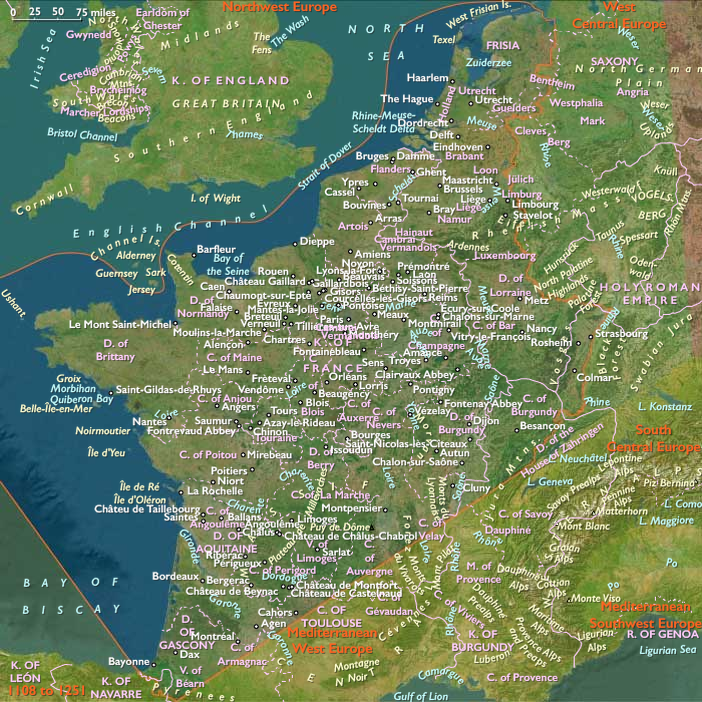
Years: 1214 - 1214
July
Locations
People
- Blanche of Castile
- Frederick II
- Infante Ferdinand of Portugal
- John of England
- Louis VIII of France
- Otto IV of Brunswick
- Pandulf Verraccio
- Philip II of France
- Pope Innocent III
- Renaud of Boulogne
Groups
- Papal States (Republic of St. Peter)
- Flanders, County of
- Holy Roman Empire
- France, (Capetian) Kingdom of
- Christians, Roman Catholic
- Portugal, Burgundian (Alfonsine) Kingdom of
- England, (Plantagenet, Angevin) Kingdom of
Topics
- Guelphs and Ghibellines
- German Civil War of 1197-1214
- Anglo-French War of 1202-14
- Bouvines, Battle of
Commodoties
Subjects
Regions
Subregions